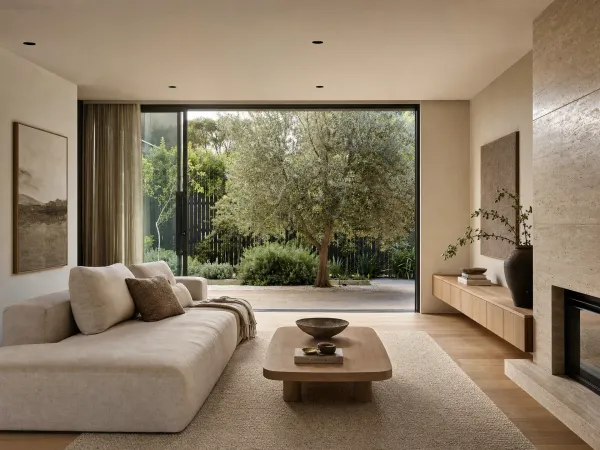
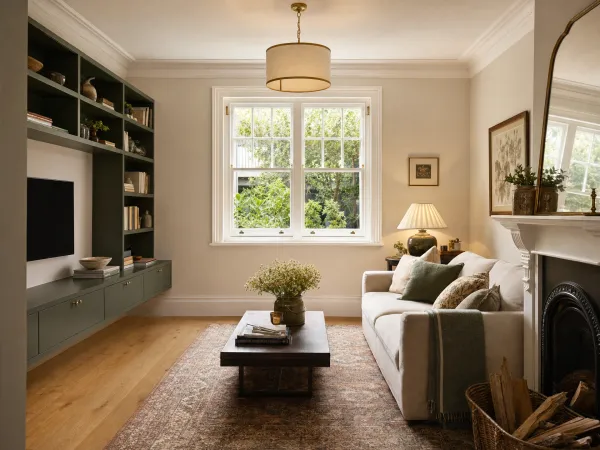
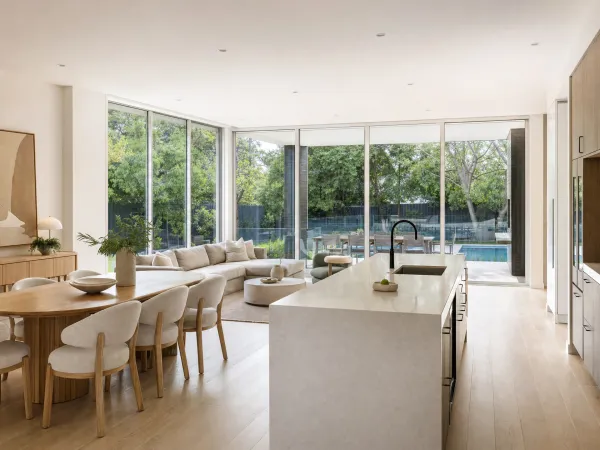
Modern bathroom design that doesn't date
What modern bathroom design actually means in Australia in 2026, the seven decisions that define it, what it costs, the AU rules behind it, and how to picture it.
What this guide is, and what it isn’t
If you’ve landed here, you’re probably about to spend $20,000 to $80,000 on a bathroom and you want to know what “modern” actually means in 2026 before you sign anything.
This is everything we know, laid out in order. It defines what a modern Australian bathroom looks like now (warm minimalism, not the 2010 white-and-chrome version), the seven decisions that define one, the materials and finishes that hold up, the AU rules that sit behind every choice (AS 3740, NCC ventilation, WELS), the realistic 2026 costs, the regrets we hear over and over, and the cheapest way to see the finished room before you commit.
It is not a “20 trending ideas” listicle. We run a photorealistic 3D visualisation service used by Australian builders, agents and designers, and we’ll mention it once where it’s actually relevant. Everything else is what we’d tell a friend who was about to brief their first bathroom builder.
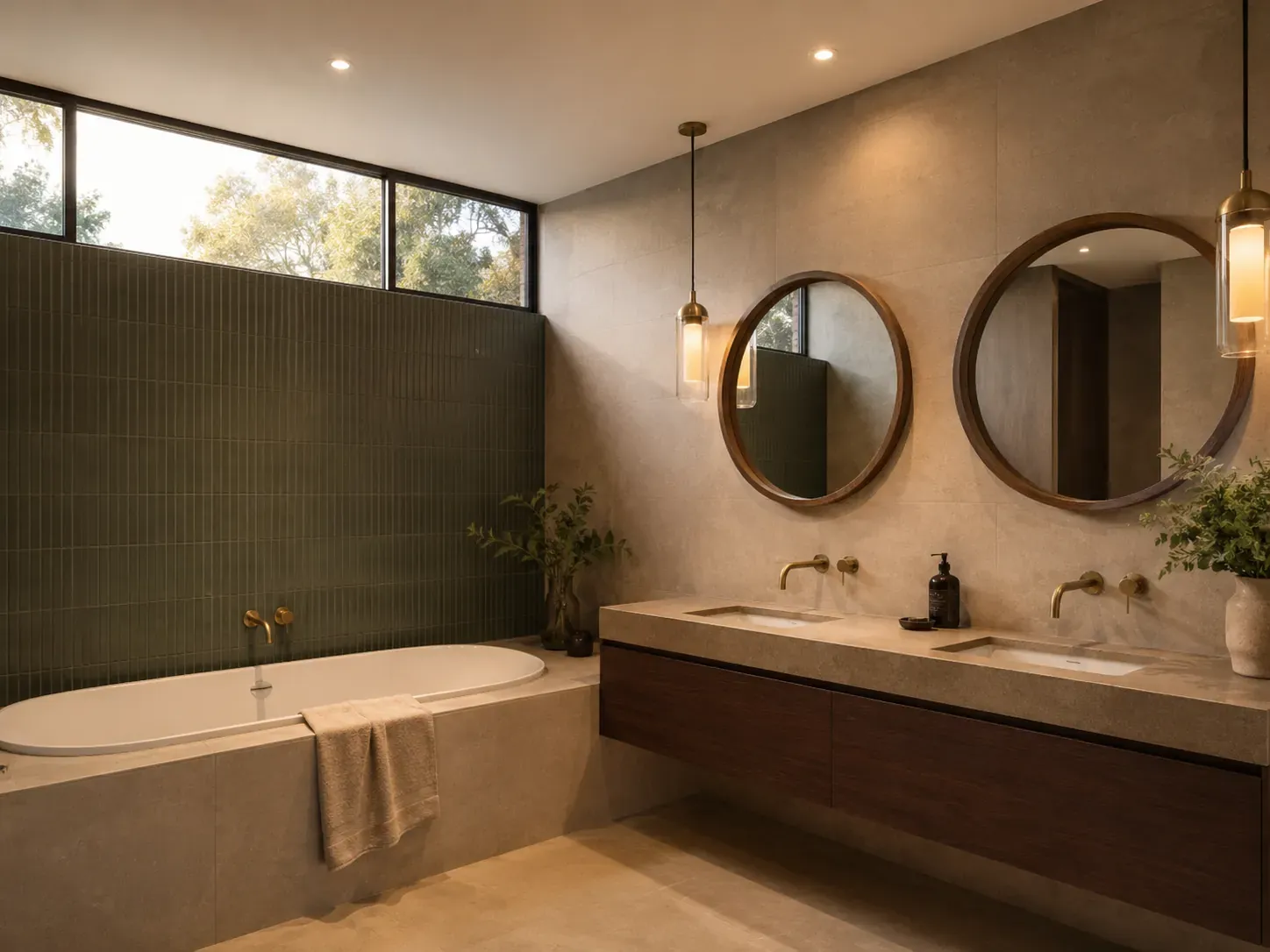
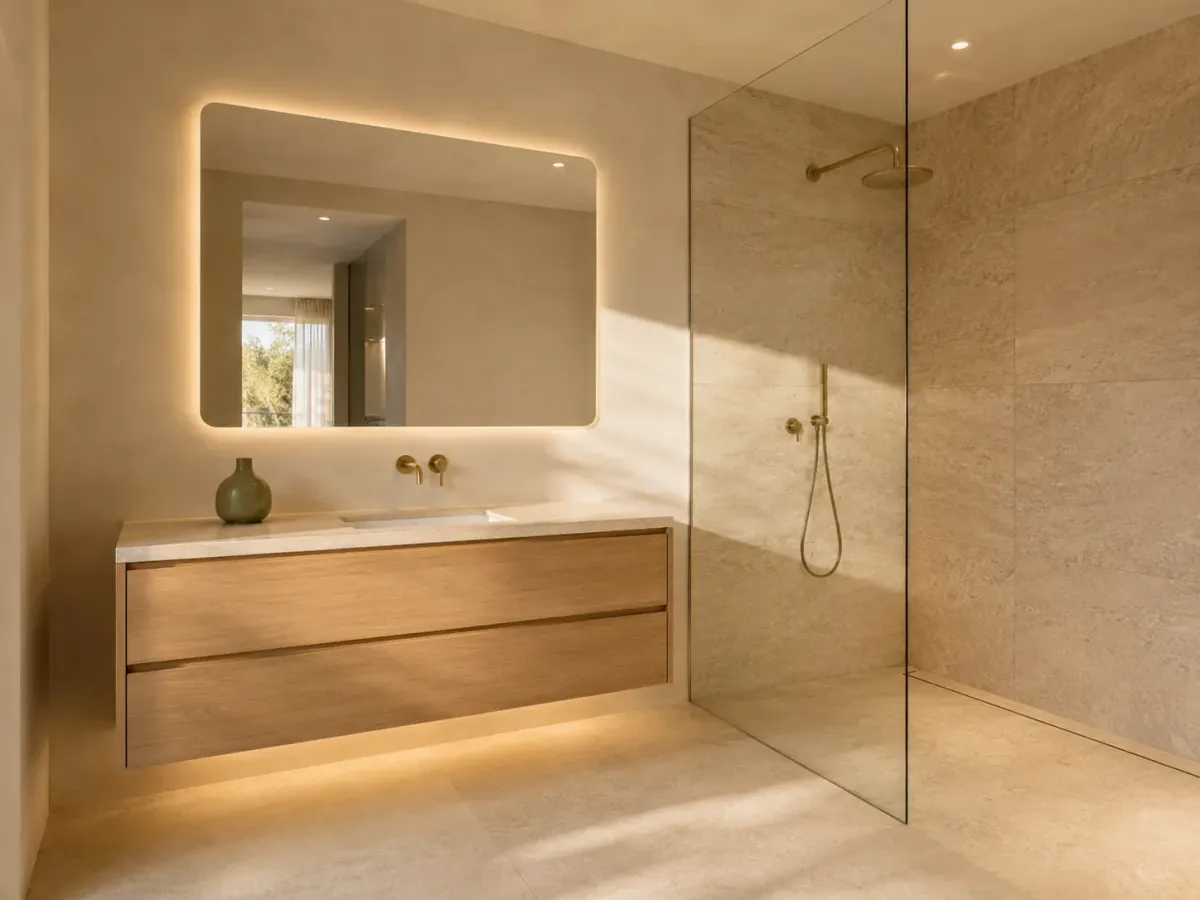
Warm minimalism: clean lines, natural materials, restrained palette.
What “modern” actually means in 2026
“Modern” is a word that gets thrown around so loosely it has almost lost meaning. In bathroom design it has a specific definition and you’ll save yourself a lot of confused conversations with builders if you use it accurately.
Modern bathroom design has fixed principles. Clean lines, uncluttered surfaces, no ornament for ornament’s sake, function-led layouts, natural materials, restrained palette. Those rules were set decades ago and they haven’t moved. A bathroom built to those principles in 2018 still reads as modern in 2026.
What has moved is the surface treatment. The 2010 version of modern (stark white tile, cool grey accents, polished chrome, glossy white cabinetry, glass everywhere) is now read as dated even though the underlying principles are unchanged. The 2026 version of modern, often labelled “warm minimalism” or “organic modern”, keeps the same clean-line architecture but swaps the cold palette for warmth and the synthetic surfaces for tactile natural ones.
Pantone calling Cloud Dancer the 2026 colour of the year is one signal of where the broader shift is heading: soft off-white instead of pure white. Across Australian bathroom showrooms and the published 2026 trend pieces, the recurring pattern is the same: pale clays, soft ochres, warm beiges, sand, sage and deep greens replacing cool white; travertine, honed stone, light oak, fluted glass and unlacquered brass replacing high-gloss tile, mirror polish and chrome.
It helps to know what modern is not.
Contemporary is whatever is fashionable right now. It borrows from modern, industrial, mid-century, Scandinavian, Japandi and elsewhere, and the look shifts over time. A contemporary bathroom from 2020 may already feel dated; a modern one usually doesn’t. Designers and showrooms often use the words interchangeably, but the meaningful difference is permanence: modern stays put, contemporary moves with the season. Robern and Linea Studio both make this distinction clearly in their style explainers.
Traditional bathrooms are decorative and historically referenced (wainscoting, clawfoot baths, ornate vanities, mosaic borders, patterned floor tile). They read as the opposite of modern’s restraint.
Transitional is the deliberate blend of the two: a shaker vanity profile with a stone benchtop, a freestanding bath with matte-black tapware, classical proportions with modern materials. According to Houzz, transitional and contemporary now tie for second place in Australian bathroom search behaviour, with modern still on top.
For the rest of this guide, when we say modern we mean the warm-minimalist 2026 version: clean-line architecture, natural materials, calm restrained palette, every element earning its place.
The seven decisions that define a modern Australian bathroom
A modern bathroom is the cumulative result of seven specific choices, made in roughly this order. Get these right before you start picking individual products and the room will hang together. Skip straight to tile selections and the room ends up as a magpie nest of features that don’t talk to each other.
1. Palette
The single decision with the biggest visual impact. A modern 2026 palette uses three or four warm-neutral tones layered across the room, with one accent (often a deeper green, terracotta or charcoal) used in a confined zone.
Working examples: warm off-white walls and ceiling, sand-coloured large-format floor tile, light-oak vanity with a honed travertine top, brushed-brass tapware as the metal note. Or: limewashed warm-white walls, deep green feature wall behind the vanity, ivory floor tile, matte-black tapware with timber accents. Both read as unmistakably modern in 2026 and neither would have done five years ago.
What to avoid: a stark cool-white-and-grey palette (now reads as 2015), a high-contrast black-and-white scheme without a warm bridging tone (reads austere rather than calm), more than one accent colour (the room loses its centre of gravity).
2. Layout
The most underrated decision in any bathroom, modern or not. Layout determines how the room feels every day, what it costs to renovate, and whether the finishes get the chance to do their work. A beautiful palette in a bad layout still feels wrong; a restrained palette in a generous layout always reads as expensive.
Three layouts dominate Australian bathrooms.
The single-wall layout (vanity, toilet, shower along one wall) keeps all plumbing on a single stack, which is the cheapest to renovate. It works best in rooms 1.5 to 1.8 m wide and is the default for most ensuites and apartment bathrooms.
The galley layout (vanity on one wall, shower opposite, toilet at one end) gives the best circulation in rooms 1.8 to 2.4 m wide. It usually requires plumbing on two walls, so costs more, but the daily experience is noticeably more comfortable.
The wet-room layout (no shower screen, the whole floor graded to a linear or central drain) is the most architectural and reads the most modern. It costs more in waterproofing and drainage, requires careful tile selection (slip rating of P3 or higher across the wet zone) and is best in rooms of 4 square metres or more.
Keeping your existing layout typically saves $1,500 to $4,000 in trade time over moving plumbing to a different wall. If the existing layout works, modernise within it rather than fighting it.
3. Vanity
The vanity is the room’s centre of gravity. In modern bathrooms the dominant choice is a wall-hung (floating) vanity with slab-front drawers, in either light oak veneer or a matte-painted finish in the warm-neutral family, topped with a single full-width basin (under-mount or thin-edge integrated) or a hand-formed concrete-look benchtop.
Floating vanities visually expand the room because the eye reads the floor as continuing under them. Drawers are now standard over cupboards in mid-range and up because they offer full visibility and cleaner sightlines; cupboards force you to pull everything out to reach the back.
Standard widths for a single vanity sit at 600, 750, 900 and 1200 mm. A 1500 mm double-basin vanity needs about 1.8 m of clear wall and feels like a serious upgrade in an ensuite or main bathroom. Depths are usually 460 to 500 mm.
The shift toward custom and semi-custom vanities is the single biggest “modern” upgrade most bathrooms can make. A flat-pack vanity from a bathroom warehouse rarely lands the same as a joiner-built one in the same finish, because the proportions, drawer slides, plinth height and panel alignment are all slightly off.
4. Shower
Modern showers are walk-in, frameless, hobless (or single-step) and lit by good lighting. Either fixed-panel walk-in screens with no door, or a single hinged frameless screen on a 90-degree return. Frames in matte black if the rest of the tapware is matte black, otherwise frameless with polished or brushed-stainless hardware.
The hobless shower (a flush threshold between the bathroom floor and shower floor) is the most architectural choice and now standard at mid-range and up. It depends on getting the floor fall right (between 1:80 and 1:50) and on either a linear drain along one wall or a dished floor falling to a central waste. Done well, the floor reads as continuous and the room feels much larger.
Standard shower sizes: 900 by 900 mm is the comfortable minimum, 1000 by 1000 mm is more generous, 1200 by 900 mm suits a walk-in. Larger than 1500 mm long and you usually want both a rail-mounted handheld and an overhead rain head, which is now the default at mid-range and up.
5. Bath
Whether to keep one is the single most-debated decision in Australian bathroom design. Three rules cover most cases:
If this is the only bathroom in the house and you have young children or a family-buyer market for resale, keep one. A built-in bath flush to a tiled hob (often with the front panel finished in the same large-format tile as the floor) reads as a quietly modern choice and uses space more efficiently than freestanding.
If you have a second bathroom that already has a bath, dropping the second one and using the space for a properly generous walk-in shower is almost always the better daily-life choice.
A freestanding bath needs about 1.8 m of open space around it to look right and be cleanable, which means a bathroom of about 6 square metres or more. In a smaller room a freestanding bath becomes the dominant object and crowds everything else, which is the opposite of the calm modern look. Acrylic freestanding baths start around $900, stone-resin and stone-composite baths run $3,000 to $7,000 and beyond.
6. Tapware
The metal note that ties the room together. The 2026 default in Australian bathrooms is still matte black, with brushed brass having grown sharply as the warm alternative. Brushed nickel, gunmetal and chrome (especially polished chrome on its way back) are all reasonable modern choices.
Mixed-metal pairings of matte black with brushed brass are now a deliberate design move rather than a clash, often executed as matte black on the shower and toilet hardware with brushed brass on the vanity tapware and accessories. The rule is that one metal must dominate (roughly 70/30) so the room doesn’t read as confused.
Practical considerations matter more than people expect. Matte black shows water spots, fingerprints and toothpaste splatter more than any other finish; if daily wiping bothers you, brushed nickel or brushed brass is more forgiving. All Australian tapware must carry the WaterMark and meet WELS requirements (4 to 5 star is now standard at mid-range and up), and recent product standards require lead-free tapware in drinking-water applications.
7. Lighting
The decision that quietly determines whether the room reads as luxurious or institutional. Modern bathrooms use layered lighting: a soft ambient layer (recessed downlights on a dimmer, or a single warm-temperature ceiling fitting), a task layer (vanity lighting either side of or above the mirror, ideally a backlit LED mirror at mid-range and up), and an accent layer (low-level strip lighting under a wall-hung vanity, recessed strip in a niche, or wall-washer above a feature wall).
Colour temperature should be warm-white (2700K to 3000K) throughout. Daylight (5000K and above) is the wrong choice for a residential bathroom; it makes warm-neutral tones read as flat and harsh. All lighting near baths and showers must comply with the zone rules in AS/NZS 3000 (IP ratings rise as you get closer to water sources); your electrician will handle this, but it’s worth understanding so you can challenge a quote that doesn’t match the spec.
Backlit mirrors with integrated demist and motion-activated low-level lighting that comes on at night are now standard inclusions at mid-range and up. They’re the upgrade most homeowners say they would not give up after a renovation.
Materials and finishes
Once the seven core decisions are settled, materials are how the room actually gets built. The 2026 modern palette has a small number of dominant material moves.
Large-format porcelain tile (600 by 1200 mm or larger) on the shower walls and often the floor. Fewer grout lines, a more seamless surface, easier to clean, and a more architectural look. The trade-offs are real: heavier than standard tiles (often a two-person lift), more expensive per square metre, more demanding to install (the substrate must be flat or the tiles crack on install), and harder to replace if damaged. For small bathrooms the floor often stays smaller-format for slip rating (P3 or P4 in the wet zone) and the walls go large-format.
Honed natural stone or stone-look porcelain on benchtops. Travertine has returned to mainstream specification in modern Australian bathrooms after years out of fashion; honed limestone, soft-veined marble (with proper sealing), and engineered stone all read as modern in the right palette. Polished marble is now usually treated as a transitional choice rather than a modern one.
Light timber on the vanity. Oak veneer is the dominant 2026 choice, often with a deliberately visible grain. Tasmanian oak, blackbutt and white oak veneer all sit in this family. Avoid heavy red-toned timbers (jarrah, redgum) unless you’re consciously building a transitional or warmer-traditional room.
Fluted glass on the shower screen and occasionally on a vanity or storage door. Vertical-ridged glass diffuses the view without fully obscuring it and adds a tactile quality that flat glass does not. It’s a recognisable 2026 marker.
Black, brass or warm-stainless tapware and accessories. See the tapware section above.
Microcement, lime wash or Venetian-style plaster on at least one wall is increasingly common at mid-range and up. The surface gives the room a tactile quality that tile alone does not, but it requires careful application (a specialised trade in most cases) and care around water exposure.
The Australian rules every modern bathroom design must respect
The aesthetic decisions sit on top of a layer of regulation that determines what is legally and practically possible. None of this is optional.
Waterproofing of domestic wet areas is governed by AS 3740:2021. The shower walls must be waterproofed to at least 1800 mm above floor level, the whole shower floor must be waterproofed, and bathroom walls outside the shower must be waterproofed to at least 150 mm. Where the bathroom floor is timber-framed or above a habitable space, the whole bathroom floor must be waterproofed to at least 100 mm up the walls. The licensed waterproofer issues a Waterproofing Certificate on completion that proves the work meets AS 3740 and the NCC. Waterproofing is the most common building defect in Australian residential work; never accept a quote that doesn’t explicitly include waterproofing certified to AS 3740.
Ventilation under the NCC requires either a mechanical exhaust fan capable of 25 litres per second (90 cubic metres per hour) ducted directly to the outside, or an openable window equal to at least 5% of the floor area. The exhaust must discharge outside, not into the roof space (a common shortcut in older homes that contributes to roof-cavity condensation). Where the bathroom doesn’t have natural ventilation, the fan must be interlocked with the light switch and include a run-on timer that keeps it running for at least 10 minutes after the light is switched off.
Electrical work in wet areas follows AS/NZS 3000, which divides the room into zones around each water source. Power points generally need to sit 600 mm or more from the nearest water source and meet specified IP ratings; light fittings near the shower must meet higher IP ratings the closer they sit. Your electrician will handle compliance, but knowing the zones exist helps you place a backlit mirror, an under-vanity sensor strip and a heated towel rail without forcing a re-quote.
Water efficiency is governed by WELS. The Plumbing Code requires showerheads at no more than 9 L/min in new work (a 3-star WELS rating); 4-star and 5-star showerheads (7.5 L/min and below) are now common at mid-range and up. All tapware must carry the WaterMark. Lead-free tapware is now required in drinking-water applications under recent product standards.
Accessibility is governed by AS 1428.1 for projects that need it (livable housing certification, aged-in-place renovations, specified developments). Hobless showers, lever taps, contrasting tonal lighting and grab-rail blocking in the walls are all design decisions worth making whether or not the project is formally accessible; they cost almost nothing extra at the build stage and quietly future-proof the room.
For most freestanding-home renovations that keep the existing footprint and don’t move plumbing to a different wall, you won’t need a development application. Licensed trades and the waterproofing certificate are usually enough. For apartments, NSW strata classifies any work that touches waterproofing as a major renovation, which requires a special resolution from the owners corporation and can take 6 to 12 weeks. Check the by-laws before you sign a builder’s contract.
What a modern Australian bathroom costs in 2026
Realistic 2026 ranges for a standard 6 to 8 square metre Australian bathroom (inclusive of GST). These draw on hipages, the Housing Industry Association, Three Birds Renovations and the published price ranges across mid-tier AU renovation builders.
| Tier | Total budget (AUD inc. GST) | What you’re getting |
|---|---|---|
| Cosmetic refresh | $8,000 – $15,000 | Paint, regrout, new tapware, new vanity and toilet seat, sometimes resurfaced tiles. No new waterproofing, same layout. |
| Budget modern renovation | $18,000 – $28,000 | Full strip-out, new waterproofing, standard fixtures, off-the-shelf wall-hung vanity, standard porcelain tile, frameless shower screen. Existing layout retained. |
| Mid-range modern renovation | $28,000 – $45,000 | Semi-custom vanity, large-format porcelain, honed stone or porcelain benchtop, hobless walk-in shower, in-wall cistern, backlit mirror, layered lighting. Most common spend at this design tier. |
| Premium modern renovation | $45,000 – $80,000+ | Full custom joinery, natural stone vanity top, freestanding bath where space allows, designer tapware, fluted-glass screens, microcement or feature wall plaster, integrated heating. |
Per square metre, hipages reports a 2026 range of $2,300 to $4,600 across the country, with metro Sydney and Melbourne typically 10 to 20% above that. Labour and waterproofing routinely make up 40 to 50% of total cost. The line items most likely to push a mid-range budget into premium territory are the vanity (custom is typically twice the cost of off-the-shelf at the same width), the tile (large-format porcelain runs $90 to $250 per square metre supply only), and the freestanding bath (a meaningful number if you’re going for stone resin).
- Tiling & waterproofing$10,50033%
- Plumbing$7,00022%
- Fixtures & tapware$6,00019%
- Cabinetry & vanity$4,50014%
- Electrical & lighting$4,00013%
Cost of moving plumbing to a different wall is one of the larger hidden variables. Budget $1,500 to $4,000 in trade time alone before any of the new finishes get factored in.
The mistakes modern bathrooms quietly inherit
Most modern-bathroom regret is predictable. The pattern repeats across renovation forums (Whirlpool, ProductReview, r/AusRenovation) and the published builder content alike. The ones we hear most often:
The squeegee tax on frameless glass. A frameless glass shower screen is one of the strongest modern design moves and one of the highest-maintenance choices in the room. Without daily squeegeeing, water spots and soap scum build up fast and the glass clouds. Specify a low-iron, easy-clean (nano-coated) glass and accept that you’re committing to a daily 30-second pass with the squeegee, or pick a frameless screen with vertical fluting that hides spotting.
Matte black tapware that always looks dirty. Matte black is the most popular finish for a reason but it shows fingerprints, water spots and toothpaste splatter more than chrome or brushed finishes. If daily wiping bothers you, brushed nickel or brushed brass is significantly more forgiving while still reading as modern.
A freestanding bath in a room that’s too small. Specifying a freestanding bath in a bathroom under 6 square metres is the single most-regretted choice in published Australian renovation builder content. The bath becomes the dominant object, the space around it is too tight to clean properly, and the room feels smaller, not larger. If the room can’t accommodate one comfortably, a built-in bath flush to a tiled hob or a generous walk-in shower is the better modern choice.
Not enough storage. Modern minimalism reads beautifully in showroom photography because there’s nothing on any surface. In a real bathroom used by a real household, surfaces accumulate. Specify a vanity with deep drawers (one tall, one or two shallow), a mirrored cabinet with internal power points for toothbrushes and shavers, and a recessed shower niche large enough for the actual bottles in your shower. Storage deficiency is the most-cited post-renovation regret on Australian builder forums.
Stark cool white instead of warm white. A modern bathroom built with cool-white tiles, cool-white grout, polished chrome and 5000K downlights reads as cold and clinical regardless of how expensive the materials were. Warm off-white (the Pantone Cloud Dancer family), warm-grey grout, brushed metal and 2700K to 3000K lighting is what gives the room the calm, intentional quality that defines 2026 modern.
Skimping on waterproofing. The most expensive mistake in bathroom renovation, full stop. A waterproofing failure typically means a full strip-out within 2 to 5 years. Every bathroom job must include a waterproofing certificate from a licensed waterproofer to AS 3740. Never accept a contract that doesn’t explicitly list it.
Underspending on the exhaust fan. A 25 L/s fan ducted to the roof cavity (rather than out through the eaves or roof) drives moisture into the roof space and contributes to mould and timber damage. Specify a fan that meets the NCC discharge requirement and ducts outside the building envelope. The cost difference is small. The maintenance difference is significant.
Mid-build changes. Once the contract is signed and trades are on site, every variation costs the new work plus the builder’s margin (typically 10 to 20%) plus GST, often with rework time on top. Lock the layout, the finishes and the tapware before the contract is signed. Treat the contingency as the buffer against asbestos, water damage or dodgy pipework that always appears the day the tiles come up, not as discretionary upgrade money.
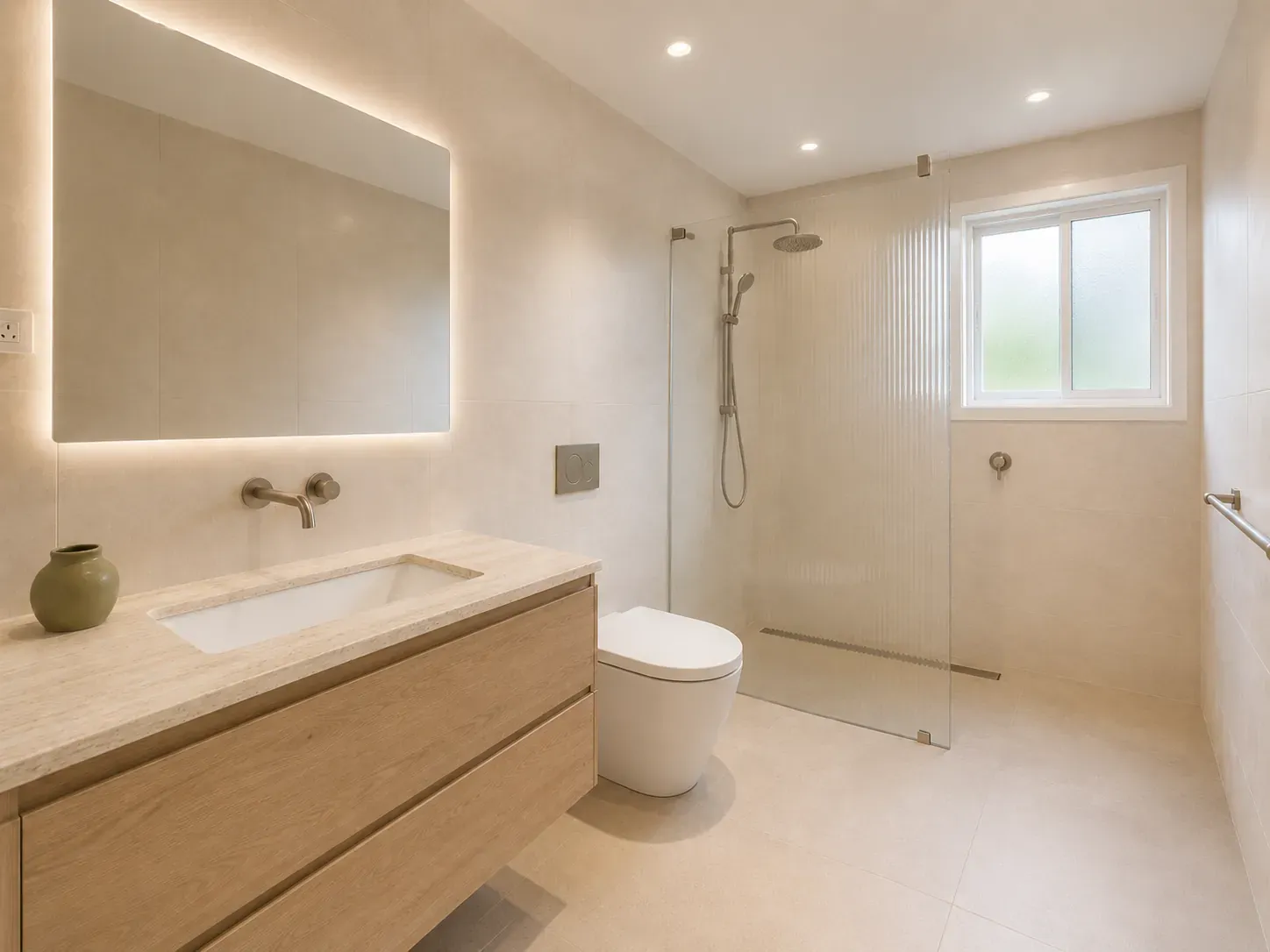
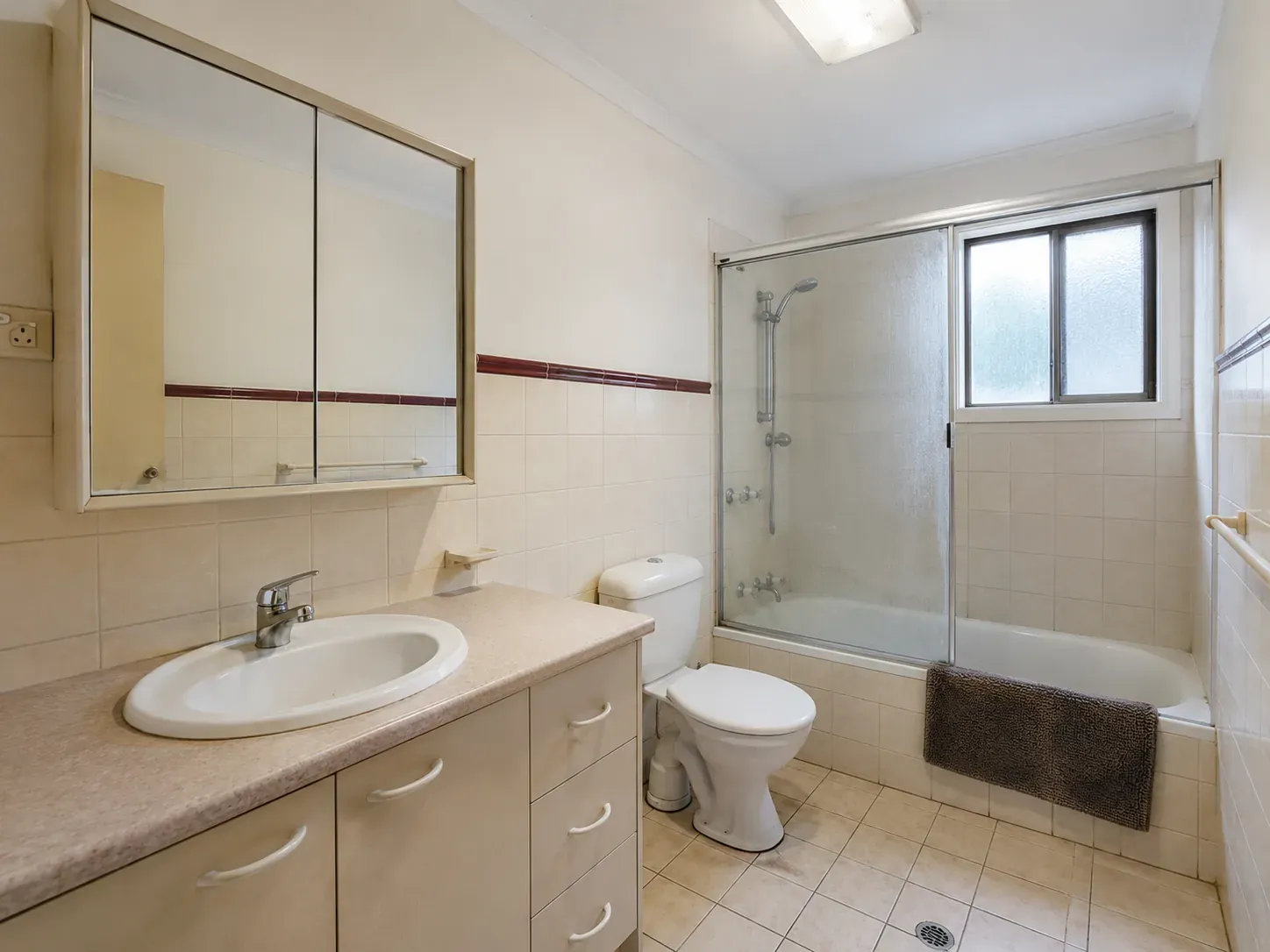 Before
After
Before
After
How to see your modern bathroom before you commit
Most regret is the result of a gap between the bathroom in your head and the bathroom that arrives. That gap is bridgeable with the right tools, and the cost of bridging it is trivial compared to the cost of getting it wrong.
The visualisation ladder, free to paid.
Build a Pinterest or Houzz board of 30 to 50 references in your warm-minimalist direction. Look for the consistent themes across the images you keep coming back to, not the one-off statement pieces. The pattern is the brief.
Order large tile samples (300 mm or larger, not the postage-stamp samples in the showroom) and a full A4 vanity colour swatch, and put them in your bathroom at the time of day you use it most. Warm-beige reads pink under certain LED downlights, sage green reads grey under warm white. You only catch this in your actual room.
Free 3D bathroom planners from Reece, Highgrove and Beaumont Tiles work if you’re buying their product lines. They give a reasonable approximation of the shapes in your space but rarely a photoreal one.
For a brand-agnostic, photoreal visualisation of your specific bathroom with your selected vanity, tile, tapware and lighting in place, a 3D rendering service like reIMG turns a phone photo and a written brief into a finished image, usually back within 24 hours and typically $100 to $150 a view. The cheapest moment to discover that the matte black tapware doesn’t work with the warm-oak vanity is before the contract is signed, not after the tiler has finished.
The point of every rung on the ladder is the same: shorten the gap between the bathroom in your head and the one you’re going to live with. A modern bathroom that comes together exactly as planned is almost always the result of someone having spent the visualisation hours upfront.
For more on planning the room itself, the small bathroom design guide covers the under-4-square-metre case in detail, the bathroom renovation ideas guide covers the trades-and-sequencing side, and the 3D floor plans guide covers how to read and use the architectural drawings your builder will hand you.
Frequently asked questions
What does modern bathroom design actually mean in 2026?
Modern bathroom design in 2026 is warm minimalism, not the cold white-and-chrome look of 2010. The fixed rules of modern style still hold: clean lines, uncluttered surfaces, every element serving a purpose, no ornament for ornament’s sake. What has changed is the palette. Soft off-whites, warm beiges, sand, terracotta, sage and deep greens have replaced cool white and stainless. Materials lean natural and tactile: travertine, light oak, honed stone, fluted glass. The aim is a room that feels intentional, calm and quietly luxurious rather than clinical. Modern is distinct from contemporary (which moves with current trends and is more eclectic) and from traditional (which is decorative and historically referenced).
How much does a modern bathroom cost in Australia in 2026?
For a standard 6 to 8 square metre bathroom, a modern budget renovation runs $18,000 to $28,000, a mid-range modern bathroom runs $28,000 to $45,000, and a premium modern bathroom (full stone vanity, large-format porcelain, freestanding bath, designer tapware) runs $45,000 to $80,000 or more. Per square metre, hipages reports a 2026 range of $2,300 to $4,600 across the country, with metro Sydney and Melbourne typically 10 to 20% above that. The Housing Industry Association’s national average for a bathroom renovation sits around $26,000. Labour and waterproofing account for 40 to 50% of total cost. Finishes are the visible spend but rarely the biggest line item.
What is the difference between modern and contemporary bathroom design?
Modern has fixed design principles that don’t change with trends: clean lines, uncluttered surfaces, function-first, natural materials, restrained palette. Contemporary is whatever is current, so it borrows from modern, industrial, mid-century, Scandinavian and elsewhere, and the look shifts over time. A modern bathroom from 2020 still looks modern in 2026. A contemporary bathroom from 2020 may already feel dated. In practice, designers and showrooms use the words loosely, but the meaningful difference is permanence: modern stays put, contemporary moves.
Are matte black taps still on trend in Australia?
Yes, matte black tapware remains the most-specified finish in Australian bathrooms in 2026, but warm metals (brushed brass, organic brass, gunmetal) have grown sharply alongside it and mixed-metal pairings of matte black with brushed brass are now a deliberate choice rather than a clash. Matte black has earned the staple label because it pairs with nearly every palette. The real consideration is maintenance: matte black shows fingerprints, water spots and toothpaste splatter more than chrome or brushed nickel, so it needs more frequent wiping. If that bothers you, brushed nickel or brushed brass is more forgiving day to day.
What is the best layout for a modern bathroom?
The best modern layout is the one that suits the room shape, the door position and the plumbing wall. For most Australian bathrooms, three options dominate. The single-wall layout (vanity, toilet, shower along one wall, all plumbing on one stack) is the cheapest to renovate and works well in rooms 1.5 to 1.8 m wide. The galley layout (shower opposite the vanity, toilet at one end) gives the best circulation in rooms 1.8 to 2.4 m wide. The wet-room layout (no shower screen, the whole floor falls to a central or linear drain) reads the most modern of the three but adds cost in waterproofing and drainage. Keeping the existing layout always saves money because moving plumbing to a different wall typically adds $1,500 to $4,000 in trade time alone.
What Australian rules apply to a modern bathroom design?
AS 3740:2021 governs waterproofing of domestic wet areas: the whole shower floor and shower walls to 1800 mm must be waterproofed, and bathroom walls to at least 150 mm. AS/NZS 3000 sets the electrical zones around baths and showers (where you can place power points, switches and lights). The National Construction Code requires either an exhaust fan extracting at 25 litres per second ducted to the outside (not into the roof space) or a window equal to at least 5% of the floor area. WELS sets minimum water efficiency for tapware, showerheads and toilets. The Plumbing Code requires showerheads at no more than 9 L/min in new work, equivalent to a 3-star WELS rating. Tapware must carry the WaterMark and be lead-free under recent product standards.
Is a freestanding bath worth it in a modern bathroom?
Only in a bathroom large enough to do it justice. Freestanding baths need about 1.8 m of open space around the tub to look right and be cleanable, which typically means a bathroom of 6 square metres or more. In a smaller room a freestanding bath becomes the dominant object and crowds the rest of the layout, which is the opposite of the calm, intentional feel a modern bathroom is aiming for. Acrylic freestanding baths start around $900 and stone-resin baths reach $7,000 and above. If the room is too small, a hobless walk-in shower delivers more day-to-day value and reads as modern.
How do I see what a modern bathroom design will look like in my actual room?
Use the visualisation ladder. Build a Pinterest board of 30 to 50 references in the warm-minimalist direction to lock the palette. Order large tile samples (300 mm or larger), a full vanity colour swatch and the actual tapware finish, and sit them in your bathroom at the time of day you use it most. Free 3D planners from Reece, Highgrove and Beaumont Tiles work if you’re buying their product. For a brand-agnostic photoreal visualisation of your specific room with your selected finishes, services like reIMG turn a phone photo and a brief into a finished image in 24 hours for around $100 to $150. The cheapest moment to discover that warm beige reads pink under your downlights is before the tiler arrives.