Real estate photo editing that earns the click
What professional real estate photo editing looks like in Australia in 2026: the standard workflow, honest per-image pricing, and the legal line.
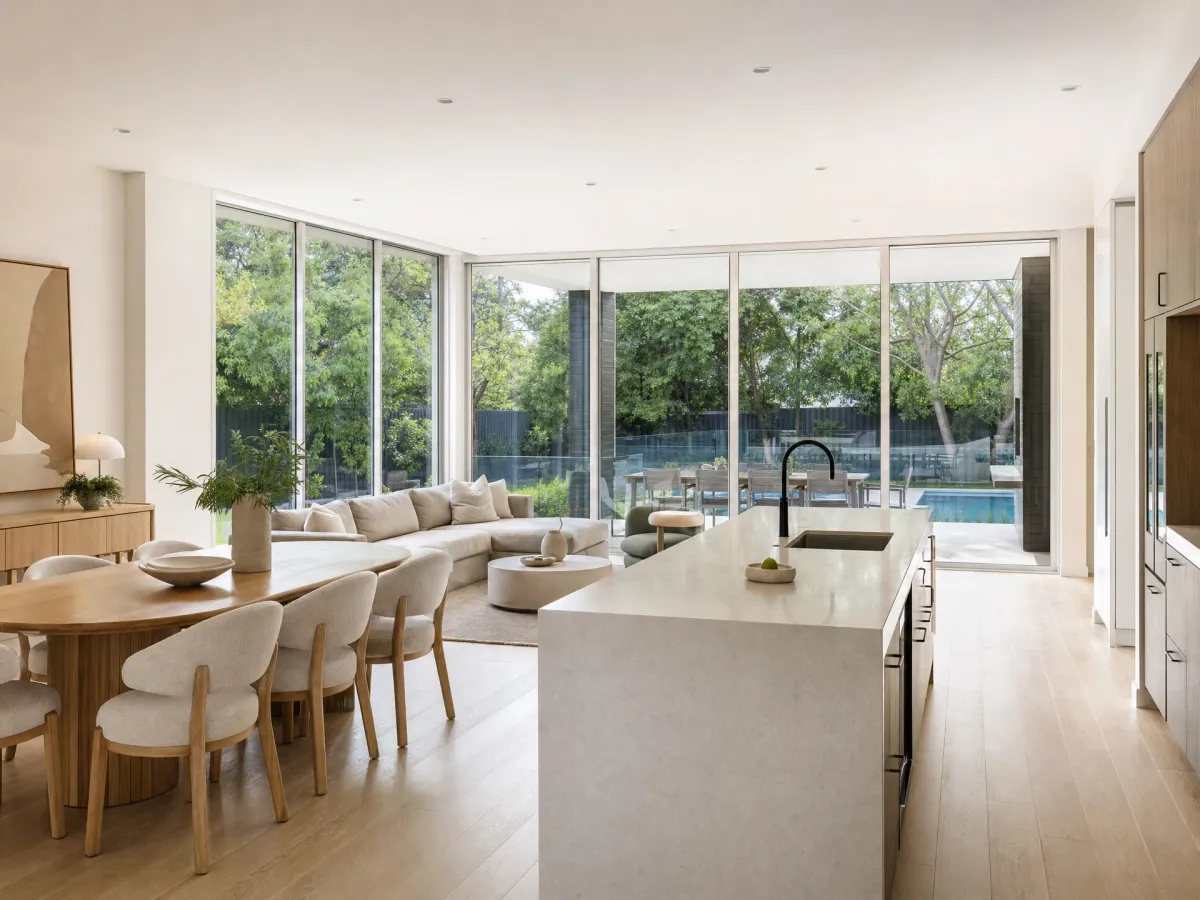
The photographer gets home at seven, uploads the day’s brackets over dinner, and sits down with sixty raw frames from a Coogee walk-up. Verticals lean out, windows blow highlights, the westerly light in the master bedroom throws an orange cast the buyer would never see on a Tuesday, and the vendor has already asked whether the pool tiles could look “a bit more blue”. The listing goes to realestate.com.au and Domain at nine tomorrow morning. The photos are fine. They are not yet a campaign.
Real estate photo editing is the step between fine and closed. It is the step where an average shoot becomes a listing that stops the scroll, where a clean set becomes a hero set, and where a shooter working alone starts to look like a studio. It is also the step Australian agents are quietly paying the most attention to in 2026, because REA Group’s PropTrack Buyer Impact Model, built on 1.3 million Australian sales between August 2023 and November 2025 and independently reviewed by Deloitte, now names image engagement as one of the strongest single predictors of an eventual purchase. The camera work sets the ceiling. The editing hits it.
This is the pillar guide to that step in Australia. It covers what a good edit actually does, how HDR and flambient blends differ in the tier they belong to, what standard and premium editing costs per image and per listing in AUD, where to draw the line between in-house work and outsourcing, what the tool landscape looks like in 2026, and where Australian Consumer Law now sits after the 2025 NSW rental reforms and the ACL penalty doubling that came into effect in March 2026. Where the topic is deep enough for a companion piece, this guide links out: to the real estate photography guide for the shoot side, to removing objects for the retouching-specific detail, and to sky replacement for the swap itself.
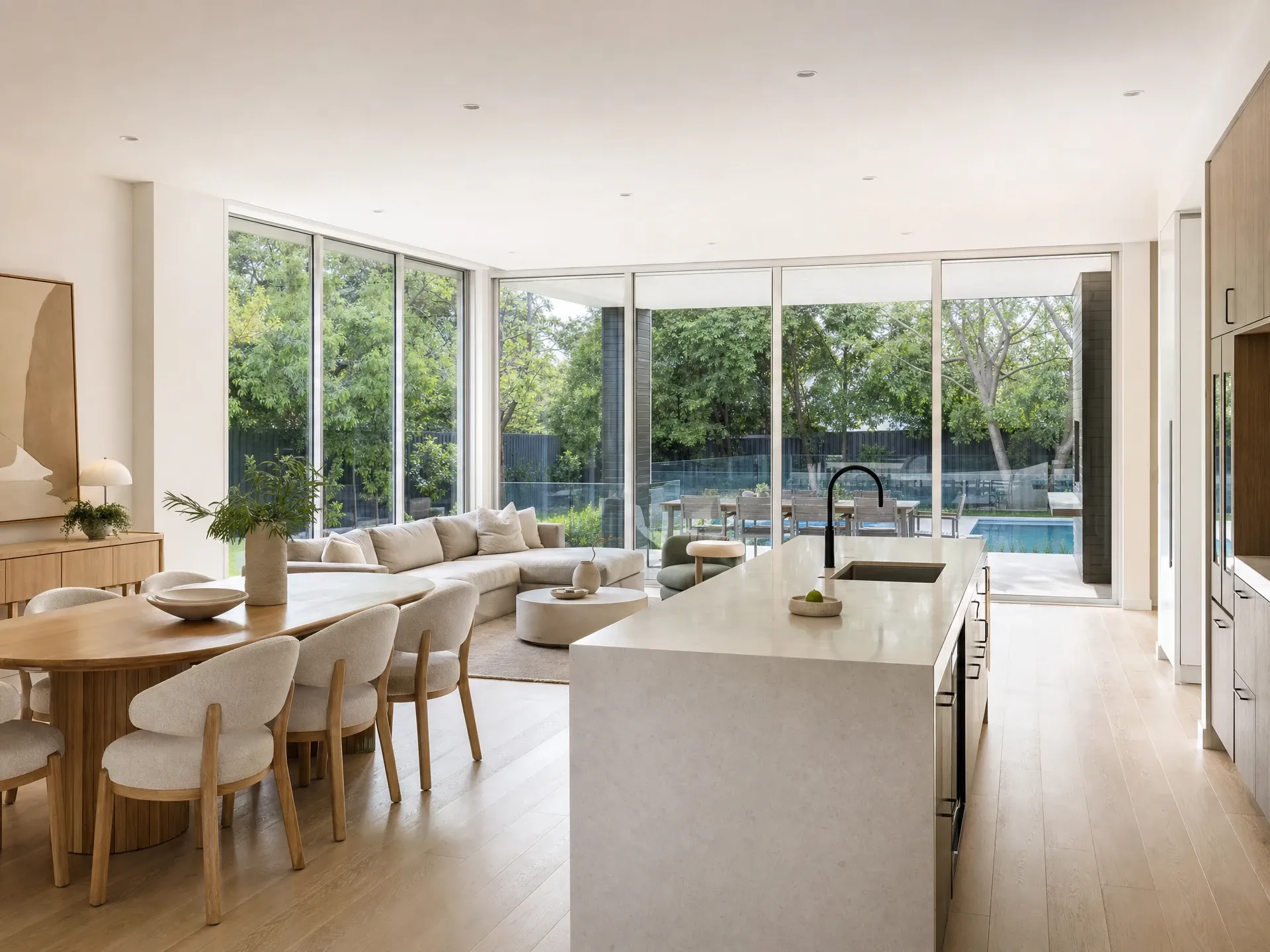
What the editing step is actually doing
Strip a listing photo down to its job and it is one thing: qualify a scrolling buyer in far enough to book an inspection. The imgix analysis of buyer behaviour found buyers spend roughly 60% of their time on a portal listing looking at images before they read a word of the copy, and 85% rank photos as the single most important factor in evaluating a property online. On top of that, PropTrack reports that eventual buyers view 28 times more images per listing than people who never end up bidding, and spend nearly seven cumulative hours on the listing they eventually buy.
The edit does the work the shoot cannot do on its own. A wide-angle lens leans verticals; the edit stands them up. A wall of glass blows to white against a dim interior; the edit brings the view back. A north-facing living room reads amber at four o’clock; the edit neutralises the cast so the buyer sees the room the way they will meet it on inspection. Nothing about that changes what the buyer inherits at the contract. It is the same room, corrected for the physics of the camera.
That correction has a commercial argument, not just an aesthetic one. The Australian listing calendar is faster than it was a year ago. Homes sold nationally in the three months to April 2026 in a median 27 days on market, down from 29 the year before, and every day off market compresses the window in which the photos have to earn their click. A hero shot that leans, blows out or reads yellow does not get a second chance on the portal thumbnail grid. That is what the editing step is protecting.
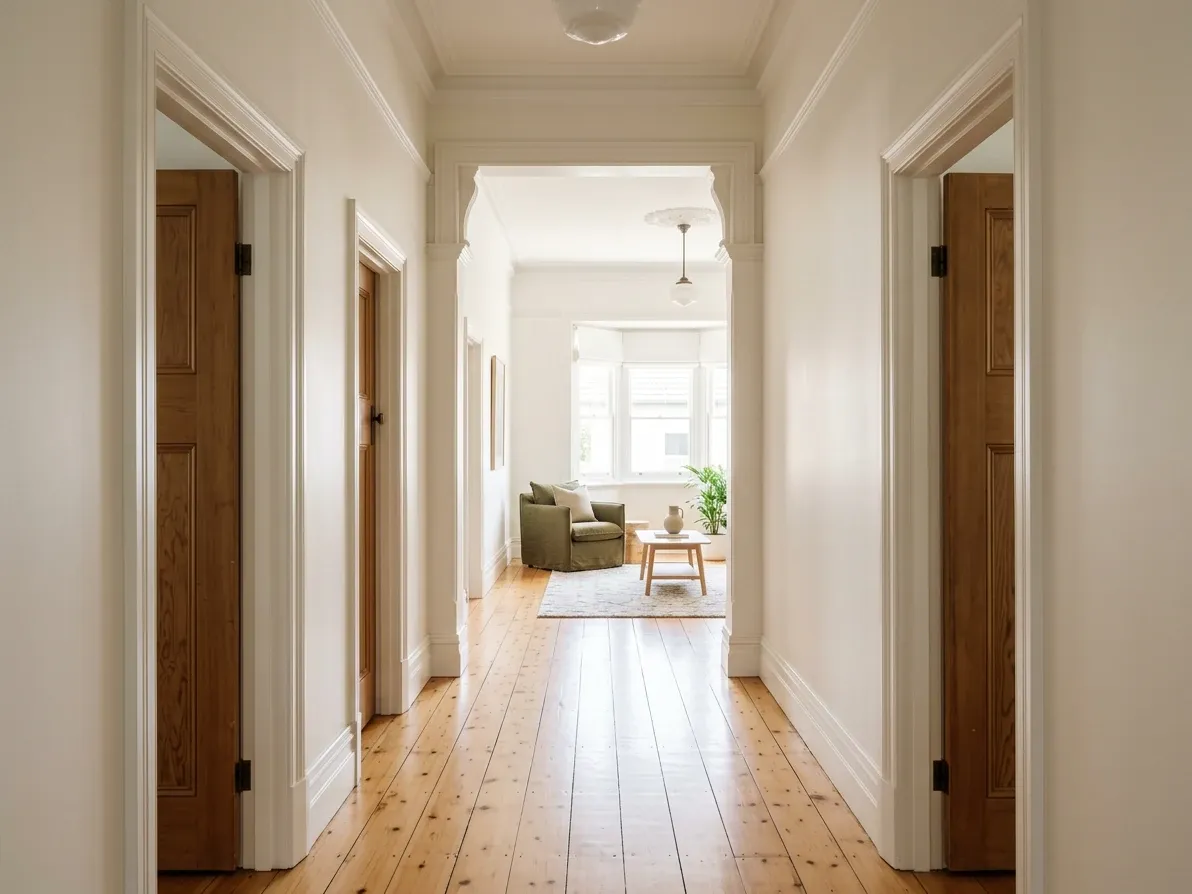
The standard edit: straight verticals, neutral whites, balanced light.
The standard edit: what “good” actually covers
There is a settled Australian house style for what the standard edit does, and the better services publish their checklists. Working from the PhotoUp real estate editing checklist, the Imagen 2026 workflow guide and the field-tested lists published by Australian providers, the standard edit covers:
HDR or flambient blend across the exposure bracket. The dynamic range is unpicked so highlights hold and shadows open. Windows read as views, not white squares. The dim corners of a Federation hallway lift without the walls going flat.
White balance neutralised. The yellow-tungsten wash that used to be the Australian house style has gone. Whites read as white, walls read true, and the temperature stays consistent from the kitchen to the master to the bathroom. According to Phixer’s editing mistake list, a consistent white balance across the whole set is the single strongest tell of a professional workflow.
Vertical and lens correction. Every doorframe and skirting board runs straight. Lightroom’s Upright tool or a manual Guided Upright pass handles it. Uncorrected verticals are now the fastest amateur tell in the Australian market.
Exposure and contrast balance. The room-to-room feel evens out. A dim laundry does not read as darker than a sun-drenched living. The eye moves through the set without a lurch.
Colour cast pull. Interior lighting throws a specific cast (warm from an incandescent, cool from a fluorescent, green from a mismatched LED) and the edit neutralises it so the material colours read true. A grey kitchen benchtop that reads brown in the raw file reads grey by the delivery.
Minor tidy-up. Sensor spots, lens dust, a stray hair on the floor, a small cord across a bench. Anything the photographer would have moved if they had noticed on the day.
Portal crop and resize. Every frame delivered at 4:3, 2000 by 1500 pixels for realestate.com.au and Domain, well inside the 5 MB file cap and above the 1600 by 1200 minimum resolution both portals require. This is the deliverable a portal will actually accept without downgrading.
That is the floor. Anything below it is not the standard edit; it is a delivery. Anything above it (sky replacement on the hero, a modest lawn green on the front exterior) is increasingly folded into standard on the mid and higher tiers rather than sold as an add-on. According to Melbourne market commentary from an established real estate photography guide, 99% of agents in that competitive metro market simply expect the swap as part of the base package now.
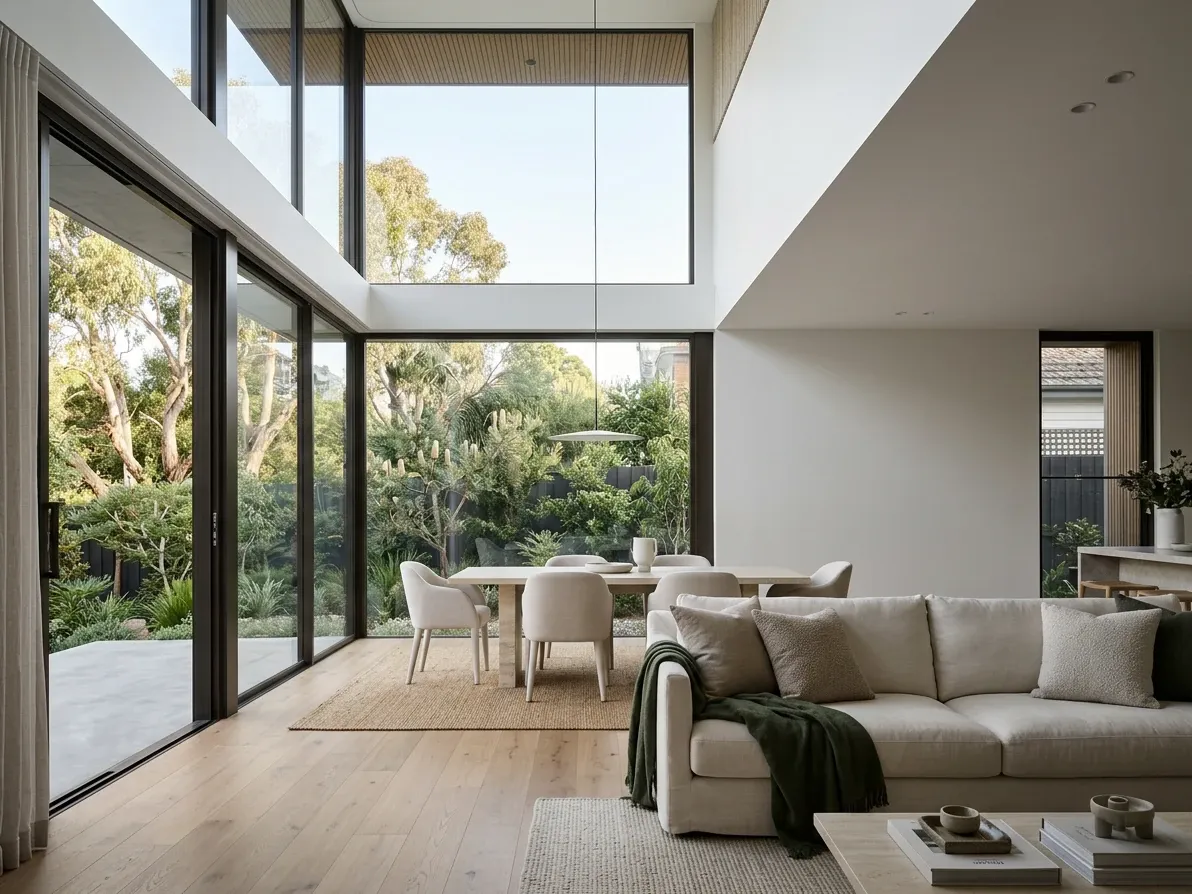
Flambient blends flash and ambient for the cleanest interior colour.
HDR, flash and flambient: which tier does the editor live in
The three settled approaches to the dynamic-range problem sit at three price points, and choosing between them is the single decision that most defines a photographer’s business model.
HDR bracketing is the volume tier. Three to seven exposures at two-stop intervals, merged in Lightroom, Aurora HDR or a specialist tool, one composite per shot. Fast on site, fast in post, the default for the A$1.60 to A$4 per image outsourcing tier and the A$150 to A$300 per shoot package tier. The failure mode is the over-cooked look when the merge is heavy-handed: halos around windows, a cartoonish wall tone, foliage that reads as painted. According to Esoft’s flambient guide, HDR remains the right call for overcast days where dynamic range is naturally compressed and the merge does less work.
Flash (single or multi-light) lights the interior directly with a speedlight bounced off the ceiling or a wall, and the window exposure is metered separately and hand-blended. Cleanest interior colour of the three, slower on site and slower to edit. Lives in the A$4 to A$8 per image tier for outsourced retouching and the A$400 plus per shoot package tier for the shoot side.
Flambient (flash plus ambient) is the industry gold standard for premium and editorial-grade Australian work. According to the PhotoUp workflow guide, the classic process shoots at least three frames per room (ambient bracket, flash, window) and hand-blends them in Photoshop, with the ambient layer set to Luminosity at 50% opacity to keep the flash-frame colour and detail while the ambient carries the natural warmth. Slowest edit, richest result. Dominates the A$10 to A$25 per image tier and almost universal in editorial architecture work.
The right choice depends entirely on the volume and price tier the photographer is operating in. According to InsideRealEstatePhotography’s HDR versus flambient analysis, a photographer running two listings a day at A$250 each cannot afford the edit time flash requires, and a photographer shooting a A$1,500 architectural campaign cannot afford the look HDR sometimes produces. Both choices are correct in their lane.
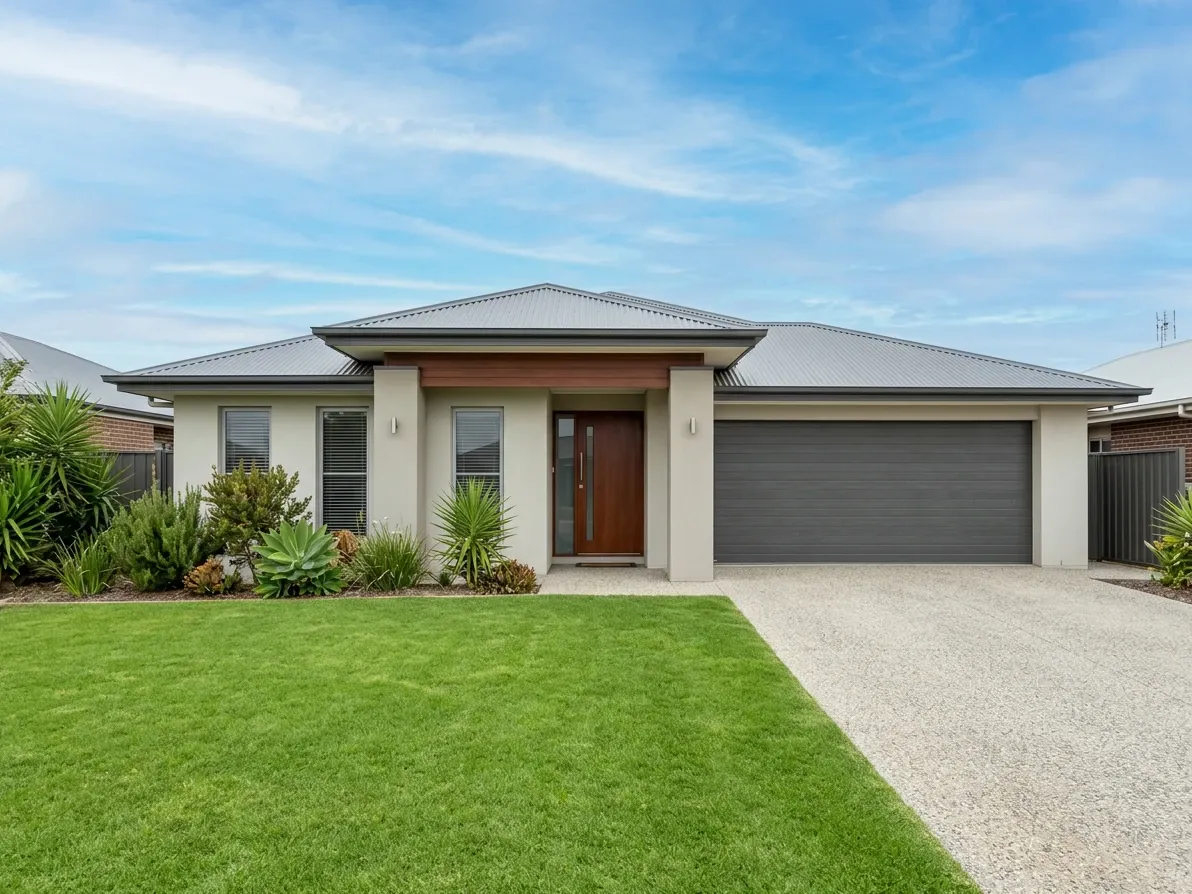
A clean exterior does most of the work on the portal thumbnail.
Per-image cost in the Australian market
The public-price end of the market is transparent enough to chart. BoxBrownie, headquartered in Maroochydore and the largest Australian-founded real estate editing brand, publishes its full price list, and Phixer, PhotoUp and the Australian retouching studios all publish or quote consistent ranges that let a photographer or agent price a campaign before commissioning it.
BoxBrownie’s Australian price list sits at the volume end: A$1.60 for image enhancement (the standard edit above), A$4 to A$5 per image for sky replacement, A$4 to A$5 for day-to-dusk conversion, A$4 to A$8 for item removal depending on complexity, and A$24 for virtual staging. All with a 24-hour standard turnaround and 48 hours for virtual staging.
Phixer, one of the largest US-founded specialists servicing Australian photographers, prices its basic edit at A$3 to A$8 per image and its premium hand-blend, sky replacement and complex object removal at A$15 to A$40 per image. Australian retouching studios and specialist photographers running an in-house edit team quote A$10 to A$15 per image for a manual-finish standard edit, and A$25 to A$80 per hero for the flambient plus twilight plus retouching combination that dominates high-end campaigns. According to Aspect Property Photography’s Melbourne price list, most Melbourne shoots now bundle the full standard edit into the shoot fee rather than pricing it separately, and the per-image maths sits behind the scenes.
The whole-listing arithmetic falls out of the per-image tier. A 12-photo campaign with a hero sky swap and a lawn green comes out at around A$25 from BoxBrownie, A$50 to A$120 from Phixer at the mid tier, and A$150 to A$300 from an Australian retouching studio finishing by hand. Adding a virtual staging pass on the empty living, master and second bedroom pushes the ceiling by another A$60 to A$135, or up to A$150 from an Australian home staging specialist. The cost-benefit calculus is a straight compare against portal advertising: a full VPA campaign runs A$3,000 to A$10,000 in most metros, and the editing line is 1% to 5% of it.
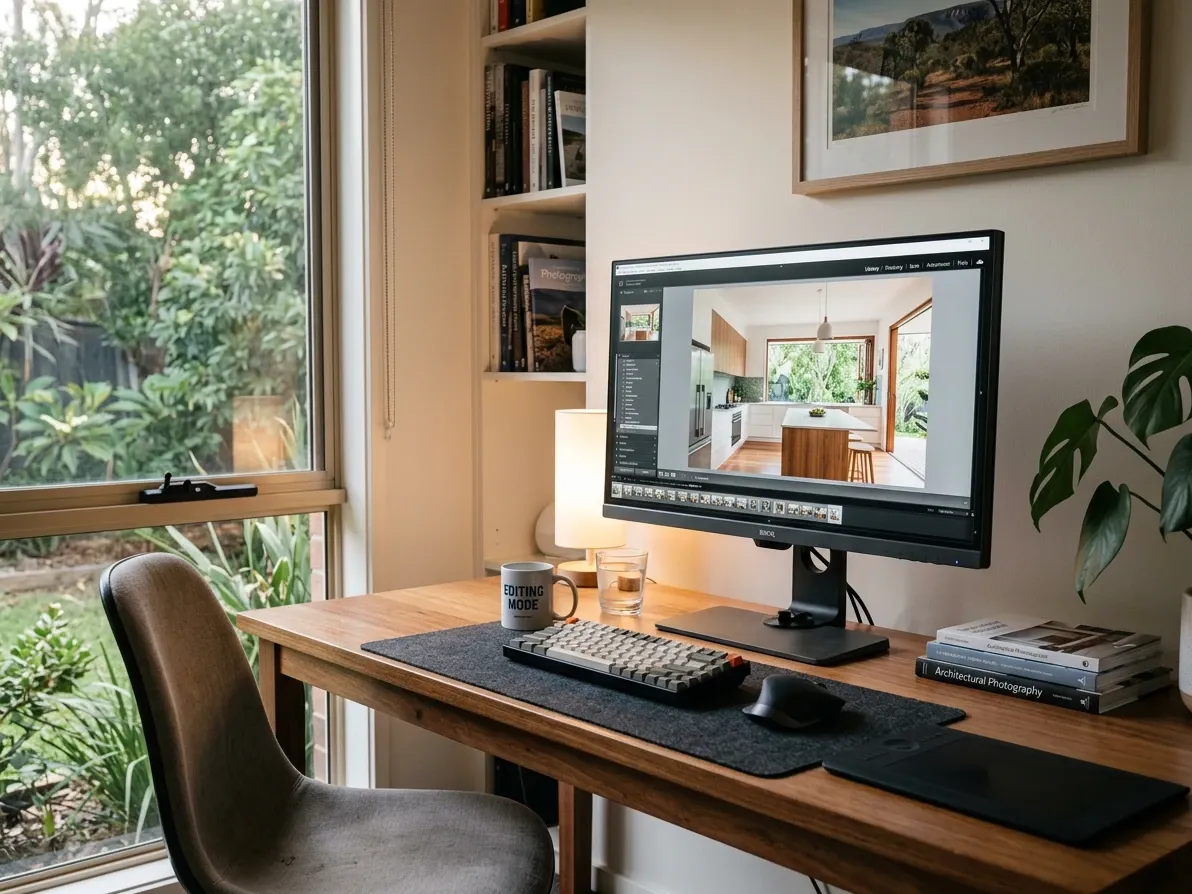
Under twenty shoots a week, in-house editing usually pays off.
In-house or outsource: the decision
The volume threshold decides the answer. Under 15 to 20 shoots per week, in-house editing pays off. The Adobe Photography Plan (Lightroom Classic plus Photoshop) at around A$16 per month spreads to almost nothing on a per-image basis, the photographer’s style holds tight across every shoot, and the turnaround is under their own control. According to PhotoAndVideoEdits’ in-house versus outsourcing analysis, the crossover point is where the retoucher’s hourly opportunity cost (shooting more work, running the business, or simply sleeping) starts to exceed the outsourcing bill.
Over that threshold, editing time compounds faster than shoot time. Post-processing on a full flambient set can take 45 minutes to 90 minutes per listing, and 20 shoots a week is 15 to 30 hours of post that has to happen inside the same 24-hour SLA the shoots are running to. According to the PhotoUp editing turnaround analysis, around 67% of agents expect edited photos back within 24 hours, and hitting that on volume without an outsourced overflow partner is a schedule that eventually breaks.
The hybrid model has settled as the practical answer for Australian mid-volume photographers. Basic culling, white balance and global adjustments stay in-house so the photographer’s style locks in. Volume flambient work, premium campaigns and after-hours overflow go to a specialist partner. According to Esoft’s fast editing analysis, the hybrid pipeline is what lets a single-photographer business scale past the point where their own edit time was the bottleneck without losing consistency.
Sending work overseas is cheaper on the invoice and slower on the feedback loop. A Manila retouching partner runs A$1.50 to A$5 per image and delivers in six to twelve hours on the timezone tailwind, but a rework request adds a full day on the return leg. A Sydney or Melbourne retouching studio runs A$8 to A$15 per image but the reworks are quick, the style briefing is easier and the invoicing sits in GST-compliant AUD. The choice is a workflow-shape decision as much as a price one.
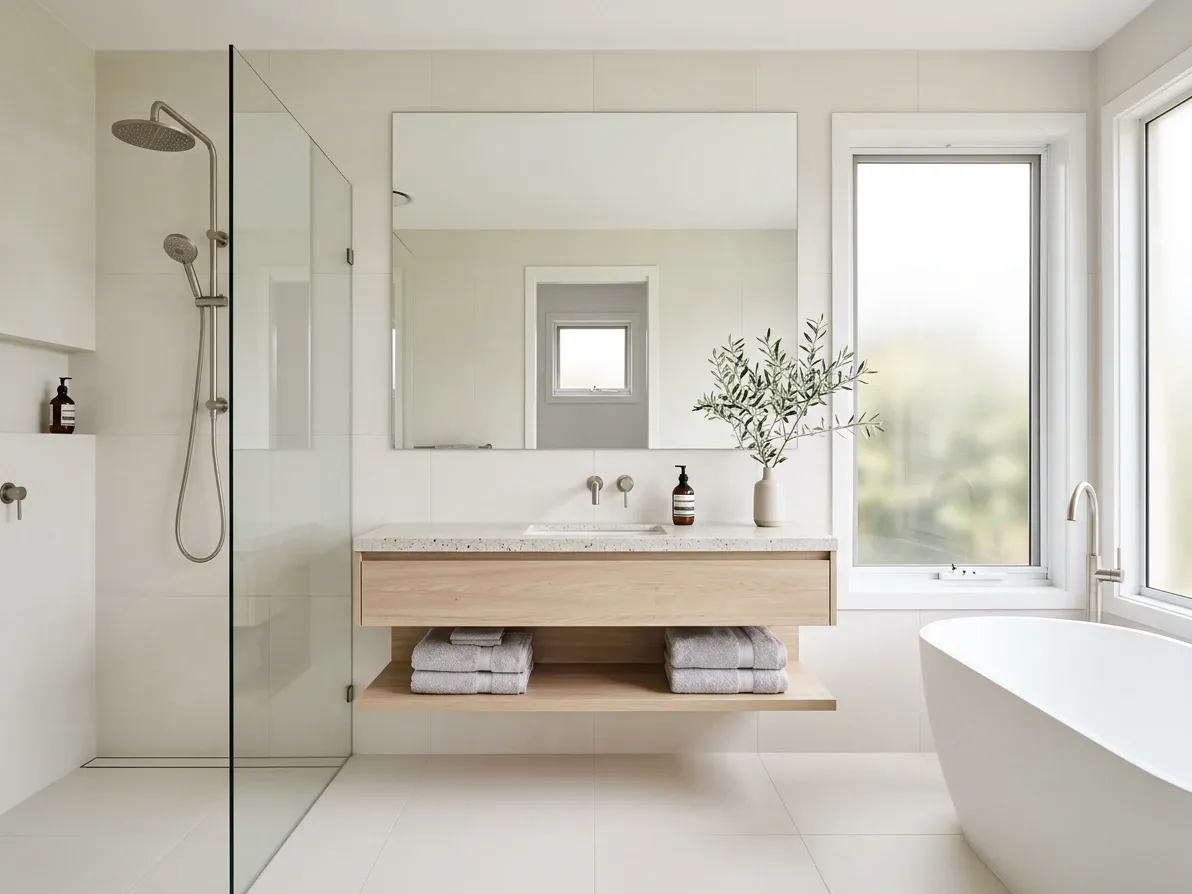
Photoshop and Lightroom still anchor the professional stack.
The tool landscape in 2026
The software stack a professional Australian editor runs is boringly consistent and, in 2026, quietly reshaped by AI at every layer.
Lightroom Classic stays the digital filing cabinet: import, culling, catalog management, batch white balance, vertical correction, lens profile correction, and the first pass of HDR merge. The AI Select Sky and Select Subject masks introduced across 2024 to 2026 have taken some of the manual masking work out of the standard edit. According to the Imagen comparison of Lightroom, Luminar Neo and Imagen, Lightroom remains the anchor tool most professional editors will not replace.
Photoshop is where the hand-blend, the hero sky swap, the difficult object removal and the compositing happen. Firefly-powered Generative Fill and the built-in Sky Replacement tool cover roughly 80% of edits a real estate editor needs, and the manual Select Sky workflow handles the remaining hero images where fine tree branches, reflective glass or complex chimneys make the auto pass fall short. Adobe’s Photography Plan (both apps, 20 GB cloud) sits at around A$16 per month in Australia and is the industry baseline.
Luminar Neo has taken the property-specialist niche for volume work where a fast, clean sky swap and a coherent Enhance pass matter more than manual control. Skylum’s Sky AI tool replaces the sky in two clicks and re-lights the foreground to match, and the Enhance AI slider handles global corrections faster than a preset. Lifetime licence runs around A$249, with new major AI features often gated behind an annual pass.
Aurora HDR and Photomatix sit in the HDR merge lane, still preferred by some volume shooters over Lightroom’s native HDR for the finer control on the tone map. Imagen applies AI-assisted culling and preset application across large batches, useful for editing engines pushing 4,000 images through in under 20 minutes.
Property-specialist AI services (BoxBrownie, PhotoUp, Phixer, AI HomeDesign, Pedra) sit above the software layer as done-for-you pipelines. The photographer or agent uploads raw brackets, the service returns finished portal-ready JPGs at the tier price. The competitive frontier in 2026 is which service can push turnaround from 24 hours to overnight without dropping the manual QC step that separates a proper edit from an AI-only pass.
For Australian photographers looking to add finished visualisation to their offering, reIMG sits in the same done-for-you lane but with a design-and-render focus: the standard edit is a commodity across a dozen providers, and the differentiated work is in visualising renovations, staging empty rooms and producing the sold-listing images that agents keep coming back for.
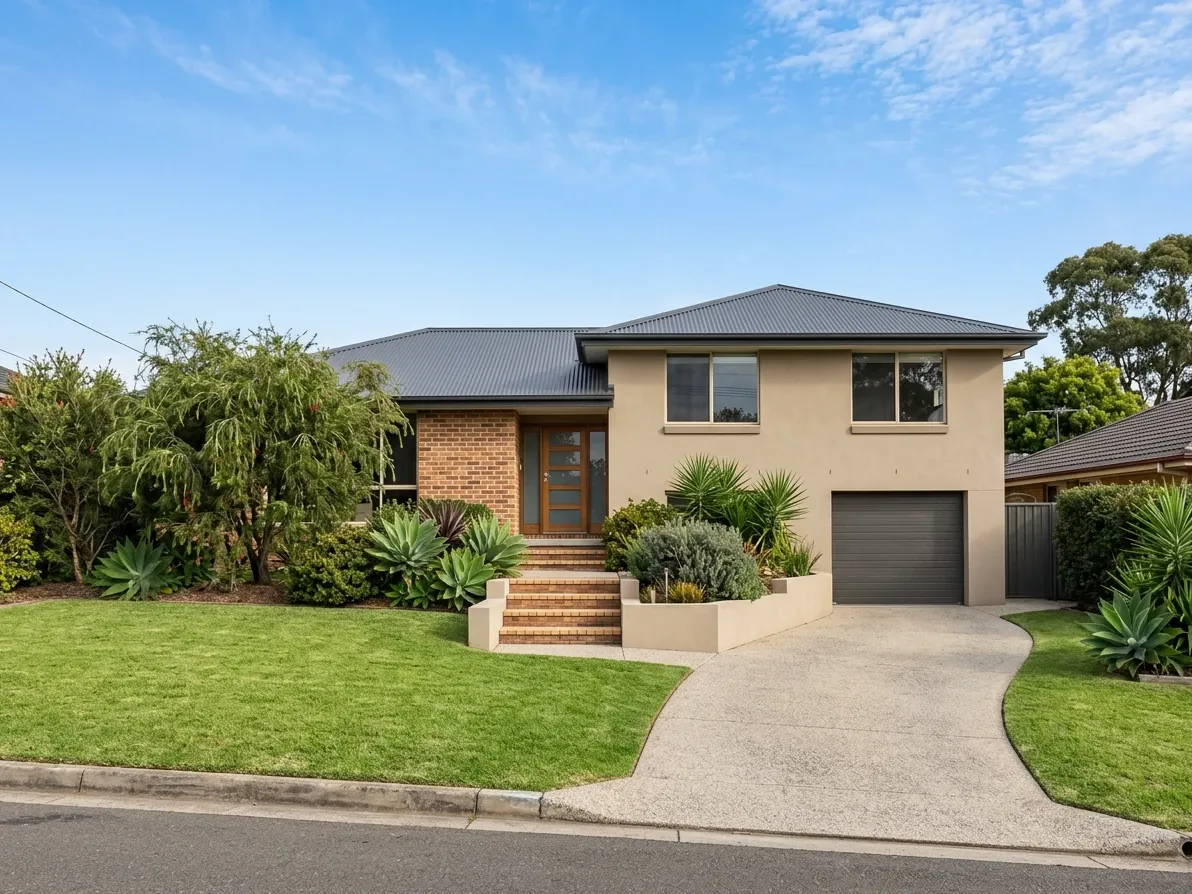
If the buyer would meet it on inspection, the photo shows it.
The legal line: what an edit can and cannot do in 2026
The line under Australian Consumer Law is settled and the penalties have hardened. Under section 18 of the ACL, misleading or deceptive conduct in trade or commerce carries a maximum penalty of A$1.1 million for a corporation and A$220,000 for an individual, per the ACCC’s real estate guidance. The Treasury Laws Amendment (Doubling Penalties for ACCC Enforcement) Act 2026 came into effect on 28 March 2026 and doubled the corporate ceiling for the largest breaches to A$50 million or 30% of adjusted turnover, whichever is higher. The bar is not “did the ad tell a lie”. It is whether a reasonable member of the target audience would form a false impression from the ad that would materially change their decision. Editing that clears that bar is safe. Editing that does not, is not.
The safe list is settled and consistent across Australian practice. Corrections that undo the camera (vertical correction, HDR blending, white balance neutralisation, exposure and contrast balance) are not misleading; they represent the property the way the buyer will meet it on inspection. Removals of movable, temporary items belonging to the seller or tenant (bins, cords, personal items on a vanity, cars on the verge, a hose on the lawn) sit inside the same logic. A grey-to-blue sky swap on a property in a temperate region is industry standard and does not misrepresent what the buyer will inherit.
The unsafe list is equally settled. Removing power lines, telegraph poles, electricity towers, air-conditioning units, water tanks, satellite dishes, fences, cracks, mould, water stains or structural damage crosses into misleading conduct because the buyer would meet the removed thing on the day of inspection and it materially changes what they are buying. According to Money magazine’s coverage of the AI-editing crackdown, the practical failure modes cluster tightly: painting over background infrastructure with a sky swap, replacing an overcast sky with a sunset the property does not experience, and using generative fill to add a feature (a pool, a landscaped garden, a piece of joinery) that is not there.
NSW added a rental-specific regime in July 2025. The Residential Tenancies Amendment (Protection of Personal Information) Bill 2025 creates penalties of A$5,500 for an individual and A$22,000 for a business when an altered rental image is reasonably likely to mislead a prospective tenant, and the government’s changes-to-rental-laws guidance names electricity towers, damage-obscuring edits and artificially generated furniture that misrepresents room size as three specific captured behaviours. Queensland’s Property Occupations Act section 212 sets a maximum of A$72,063 for misrepresentation by a licensee. Victorian conveyancer commentary on the 2025 misleading-image reform treats the state-level regimes as complementary to the ACL rather than a substitute for it.
Between the federal ACL sitting above the state regimes, the exposure for getting the editing line wrong is not theoretical. The practical rule Australian agents and photographers have settled on is straightforward: if the buyer or tenant would meet the same thing on inspection, the edit is safe. If the edit changes what they inherit at contract, it is not. Sibling articles on removing objects and sky replacement work the individual techniques against the same legal line in more detail.
Turnaround: what the market expects
Speed is now a competitive lever, not a hygiene factor. According to PhotoUp’s turnaround analysis, around 67% of agents expect edited photos back within 24 hours, and the successful specialist services have compressed that to 12 to 24 hours as their standard. Rush service on sets under 25 images runs 2 to 6 hours at a premium of 30% to 50% on the standard rate.
Virtual staging is the slowest work and runs at 48 hours across most Australian services, because the compositing on furniture, texture and lighting is manual regardless of how much AI carries the interior generation. Day-to-dusk hand-blends run 24 to 48 hours depending on how much manual work goes into the interior warm light. AI-only day-to-dusk (BoxBrownie, AI HomeDesign) delivers in 24 hours as part of the standard SLA.
The commercial argument for the shorter turnaround is direct. A shoot booked Monday, edited overnight and live Wednesday morning captures a full portal cycle before the weekend inspection wave. A shoot booked Monday, edited across Tuesday and Wednesday and live Thursday costs the vendor 48 hours of portal presence in a market where the median time-to-sale is 27 days. Agents feel the difference on the campaign, not on the invoice.
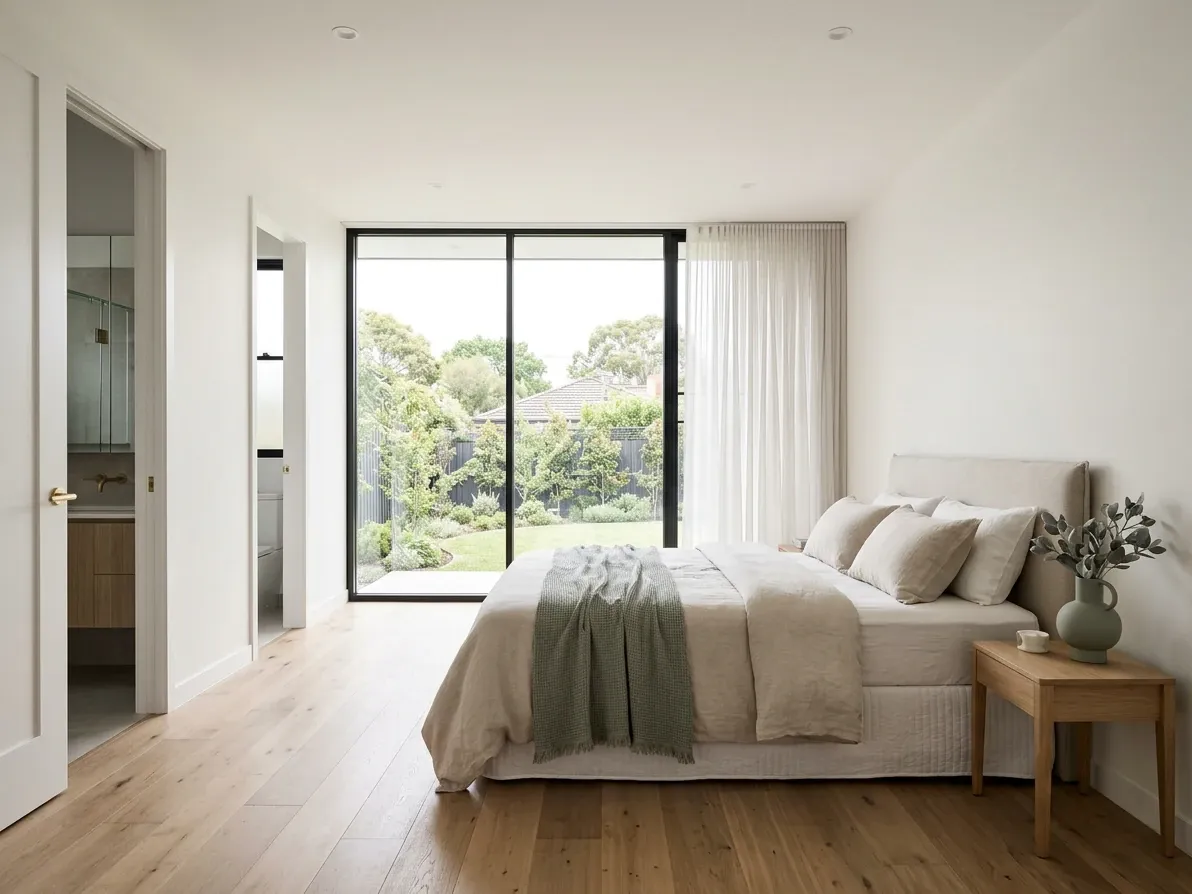
The gallery consistency is what buyers cycle through.
Where the editing step earns its keep
The full campaign lift shows up in three specific places on the portal.
The hero. The hero image sits alone on the thumbnail grid at portal search, and a clean sky swap and a properly balanced exposure carry disproportionate weight. According to BoxBrownie’s day-to-dusk analysis, listings using a virtual twilight hero average 76% more views than listings without, and a well-edited day-time hero holds most of the same advantage against an untreated flat sky.
The gallery consistency. Buyers cycle through the whole set on the properties that qualify them in, and the tell of a professional edit is that the whole set sits at the same colour temperature, exposure feel and vertical alignment. A gallery with two amber rooms among ten neutral ones reads as a rushed job even to a buyer who could not articulate why. According to the imgix behavioural analysis, gallery time correlates directly with inspection intent, and gallery time collapses on a set that feels inconsistent.
The empty room. Empty rooms in a vacant listing photograph badly and read as smaller than they are. Virtual staging, priced at A$22 to A$45 per image from Australian specialists and A$24 from BoxBrownie, converts an empty living into a furnished living that gives the buyer a scale reference and a lifestyle cue. According to a 2026 Fast Virtual Staging Australian analysis, virtual staging runs 75% to 90% cheaper than physical home staging (which sits at A$2,000 to A$8,000 for a full residential job) and captures a meaningful share of the same conversion lift.
The editing step is the highest-leverage marketing money on a residential campaign. The photography is where the ceiling is set. The editing is where the ceiling is hit.
Frequently asked questions
What does real estate photo editing usually cost per image in Australia in 2026?
Standard image enhancement (HDR blend, white balance, vertical correction, minor tidy-up) sits at around A$1.60 to A$3.50 per image from the high-volume specialist services, and A$5 to A$8 per image from Australian retouching studios that finish by hand. Add-ons layer on top: sky replacement A$4 to A$8, day-to-dusk A$4 to A$8 (BoxBrownie) or up to A$30 to A$80 from Photoshop hand-blend studios, item removal A$4 to A$15 depending on complexity, and virtual staging A$22 to A$45. A typical 12-photo listing with a hero sky swap and a lawn green runs A$25 to A$60 for the whole set from a specialist service.
What’s actually included in the standard real estate photo edit?
HDR or flambient blending across the exposure bracket, white balance neutralised so whites read white, vertical and lens correction so every doorframe stands straight, exposure and contrast balanced across rooms, blown-out windows recovered, colour cast pulled from lighting, minor sensor and lens spot removal, and a final crop and resize to portal specs (2000 x 1500 pixels at 4:3 for realestate.com.au and Domain). Sky replacement on the hero exterior and a modest lawn green are increasingly bundled into “standard” rather than sold as add-ons in the Australian market. Object removal, virtual staging and day-to-dusk conversion are still priced per image.
HDR or flambient, which does the editor use?
Both, and the pick depends on the tier. HDR bracketing is the default for the A$1.60 to A$4 per image volume tier: three to seven exposures merged in Lightroom or a specialist tool, fast on site and fast in post. Flambient (flash plus ambient, hand-blended in Photoshop) is the industry gold standard for premium and editorial-grade work and dominates the A$10 per image and up tier: it carries the colour accuracy of flash and the dynamic-range recovery of bracketing at the cost of a longer edit. A photographer running two shoots a day cannot afford flambient’s edit time; an agency shooting a A$3M listing cannot afford HDR’s over-processed look.
Should Australian photographers edit in-house or outsource?
Volume settles the answer. Under about 15 to 20 shoots a week, in-house editing pays off: the software subscription is spread thin, the photographer’s style stays consistent, and the turnaround is under their own control. Over that threshold, editing time compounds faster than shoot time and outsourcing becomes cheaper than the retoucher’s hourly opportunity cost. Around 67% of Australian agents expect edited photos back within 24 hours, and hitting that on volume without an outsourced overflow partner is difficult.
What software do professional real estate editors use?
Lightroom Classic for import, culling, white balance, vertical correction and basic HDR merging. Photoshop for flambient hand-blends, complex object removal and hero sky replacements. Luminar Neo’s Sky AI and Enhance tools have become common for volume work where a fast, clean sky swap matters more than manual control. Aurora HDR for HDR-heavy workflows. Imagen for AI-assisted culling and preset application across large batches. Adobe’s Photography Plan sits around A$16 per month in Australia and is the baseline the industry runs on.
What can’t be legally edited under Australian Consumer Law?
Anything that changes what the buyer or tenant inherits when they sign. Power lines, telegraph poles, electricity towers, air-conditioning units, water tanks, neighbouring buildings, cracks, mould, water damage, structural issues. Under the ACL, misleading or deceptive conduct in trade carries maximum penalties of A$1.1 million for a company and A$220,000 for an individual, doubled from March 2026 for the largest breaches. NSW’s Residential Tenancies Amendment adds A$22,000 for a business when an altered rental image would mislead a prospective renter. Queensland’s Property Occupations Act section 212 sets a maximum of A$72,063 for misrepresentation by a licensee. Tidying temporary clutter and swapping a grey sky for a realistic blue stay well inside the line.
How fast is real estate photo editing turned around in Australia?
Standard turnaround is 24 hours from complete upload to delivery, and around 67% of Australian agents expect that as a minimum. Volume-tier services target 12 to 24 hours, virtual staging sits at 48 hours, and rush service on small sets (under 25 images) runs 2 to 6 hours at a premium. Photographers using AI-assisted pipelines with a partner editor can compress the whole loop to same-day or overnight for the next-morning delivery Australian agents want before a Wednesday copy deadline.