Virtual staging: how it works and what it costs
What virtual staging actually costs in Australia in 2026, when it beats physical styling, how the process works, and how to choose a provider. Transparent AUD pricing, 24-hour turnaround, first image free.
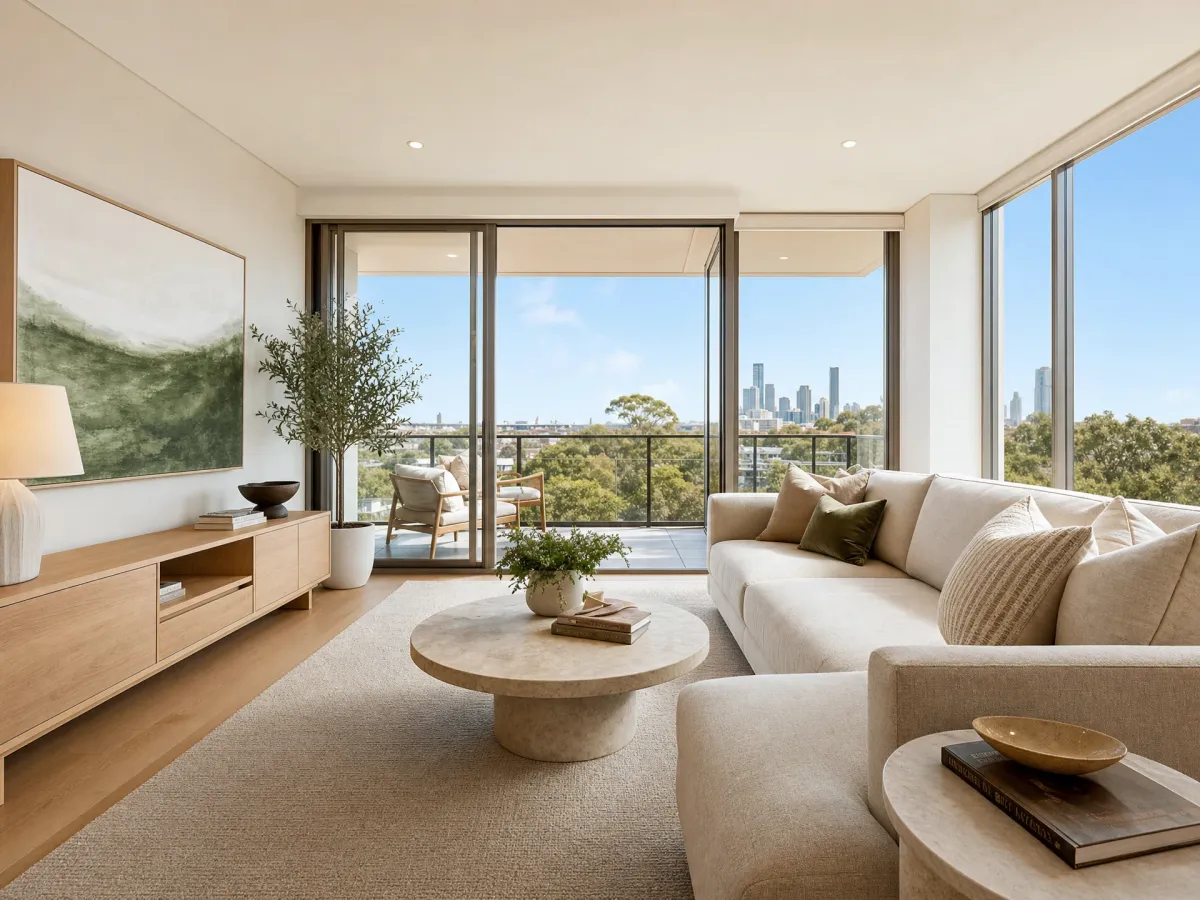
Around nine in ten Australian buyers start their property search online, which means the photos on realestate.com.au and Domain do more selling work than the open home, the marketing campaign, and the agent’s pitch combined. The hero image is the single biggest determinant of click-through, and click-through is the single biggest determinant of inspections.
Virtual staging is how you make those photos do that work, without paying $4,000 for physical furniture, waiting two weeks to coordinate the install, or shifting tenants around.
This guide is the long, plain-English answer to every question agents and vendors ask before commissioning their first virtual staging job. What it actually costs in Australia in 2026. How it stacks up against physical property styling. When it is the right call and when it isn’t. How AI tools fit into the picture. How to disclose it properly. And how to pick a provider that will not produce floating sofas and oversized beds.
If you’ve already read our complete guide to home staging in Australia, this is the deep-dive on the virtual side. If you haven’t, the home staging guide covers the broader cost-vs-ROI question across physical and virtual together.
What is virtual staging?
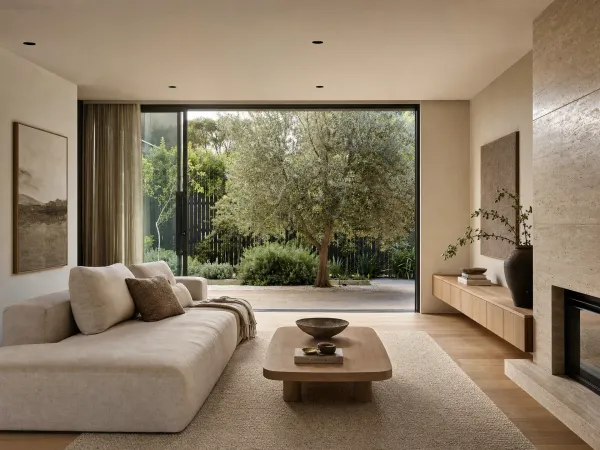
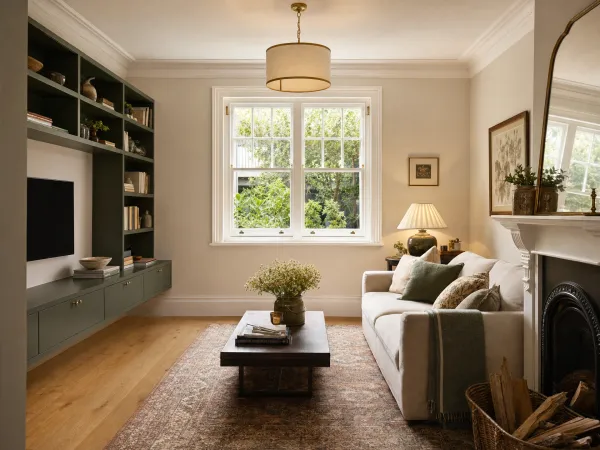
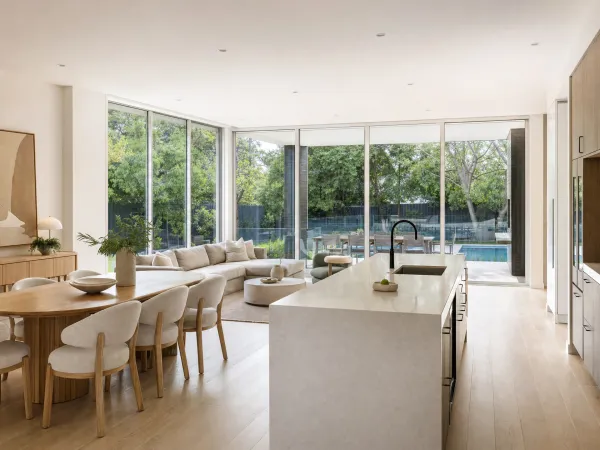
Virtual staging is the practice of digitally adding furniture, décor, soft furnishings, art and styling to photographs of empty rooms, so the listing photos show the property as it could be lived in, rather than as it currently sits.
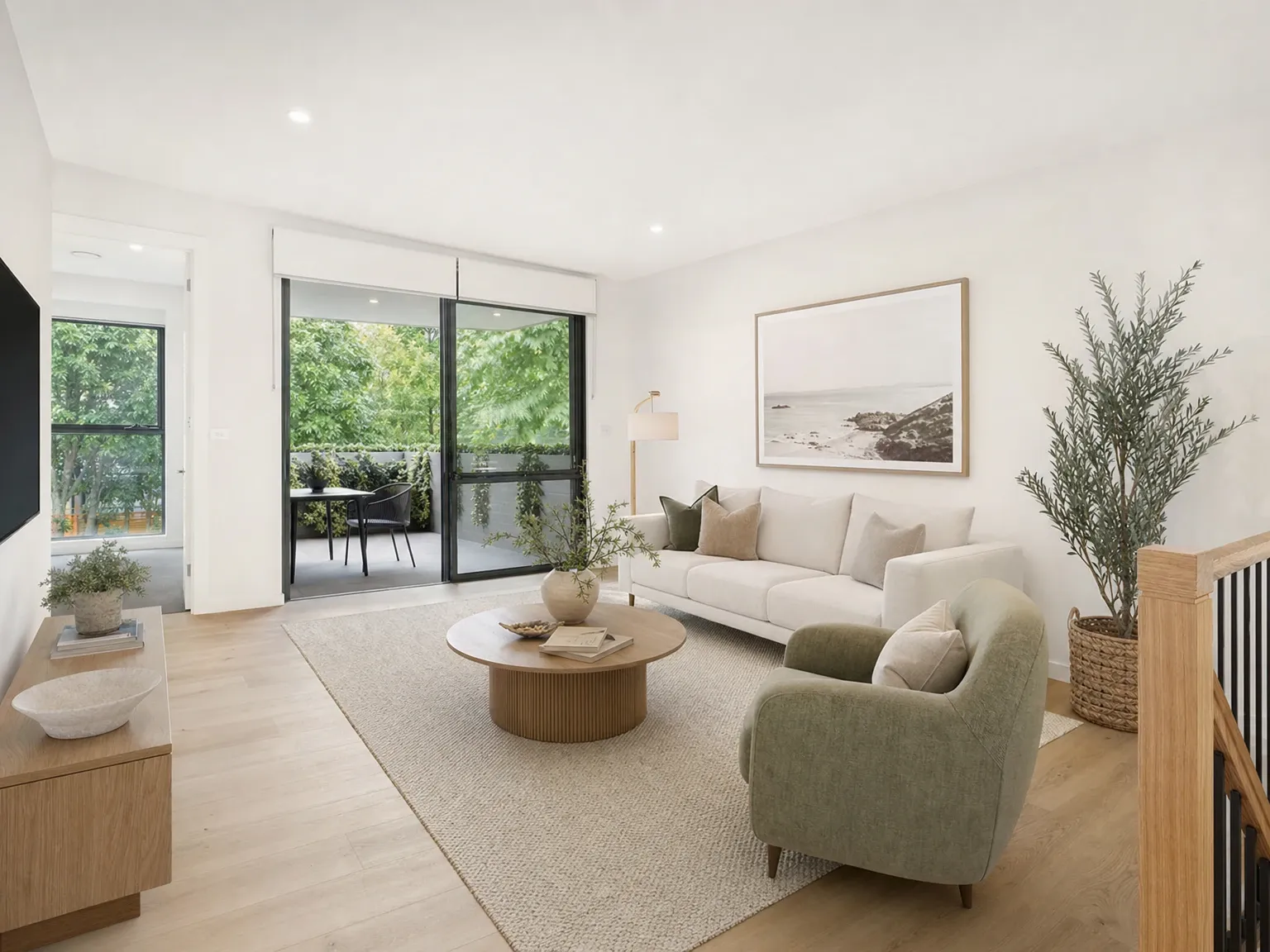
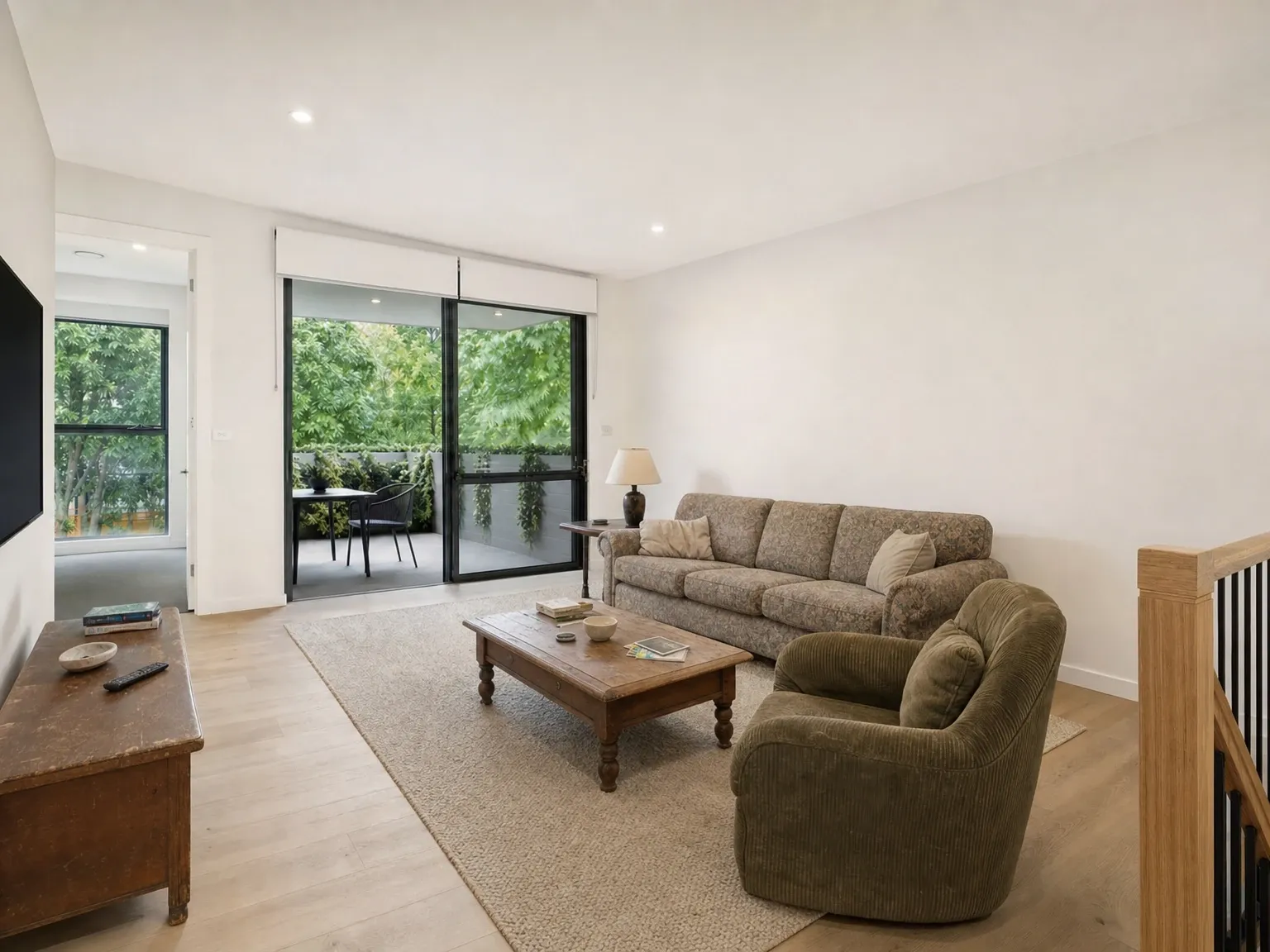
You take a photograph of an empty room. You send it to a virtual staging service with a short brief on the style you want and the buyer you’re trying to attract. The service returns the same photograph with photorealistic furniture and styling added: sofa, coffee table, rug, art, plants, lighting. The room looks inhabited. The buyer scrolling on their phone at 9pm on a Tuesday can now picture themselves living there. The price tag is around 5% of what physical property styling would have cost, and the turnaround is 24 hours instead of two weeks.
It is also called digital staging, virtual furniture staging, digital home staging, or virtual property styling. They are all the same thing.
Virtual staging is distinct from a few adjacent services:
Virtual renovation changes the property itself, not just the furniture. New kitchen cabinetry. Repainted walls. Different flooring. A renovated bathroom. It is more involved and more expensive, and it sits on a different side of the disclosure line. We cover where that line is in a moment.
3D rendering is the creation of an image from scratch, from architectural plans, where no photograph exists yet. Common for off-the-plan apartments and new builds where the property doesn’t physically exist.
Photo editing is decluttering, sky replacement, lawn greening, and similar corrections. Useful, but not staging.
The clean definition: virtual staging adds furniture to a real photograph of a real, empty room.
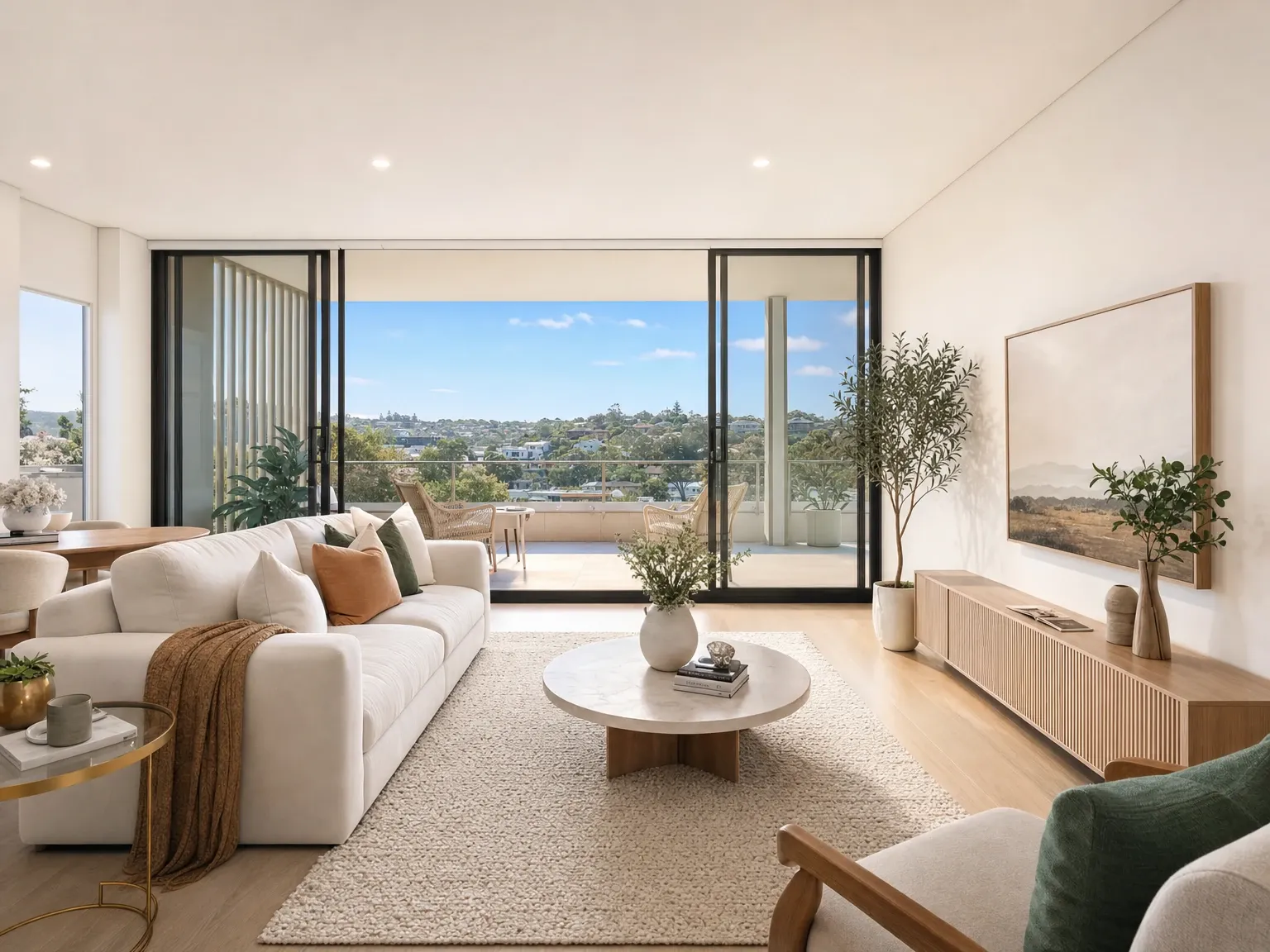
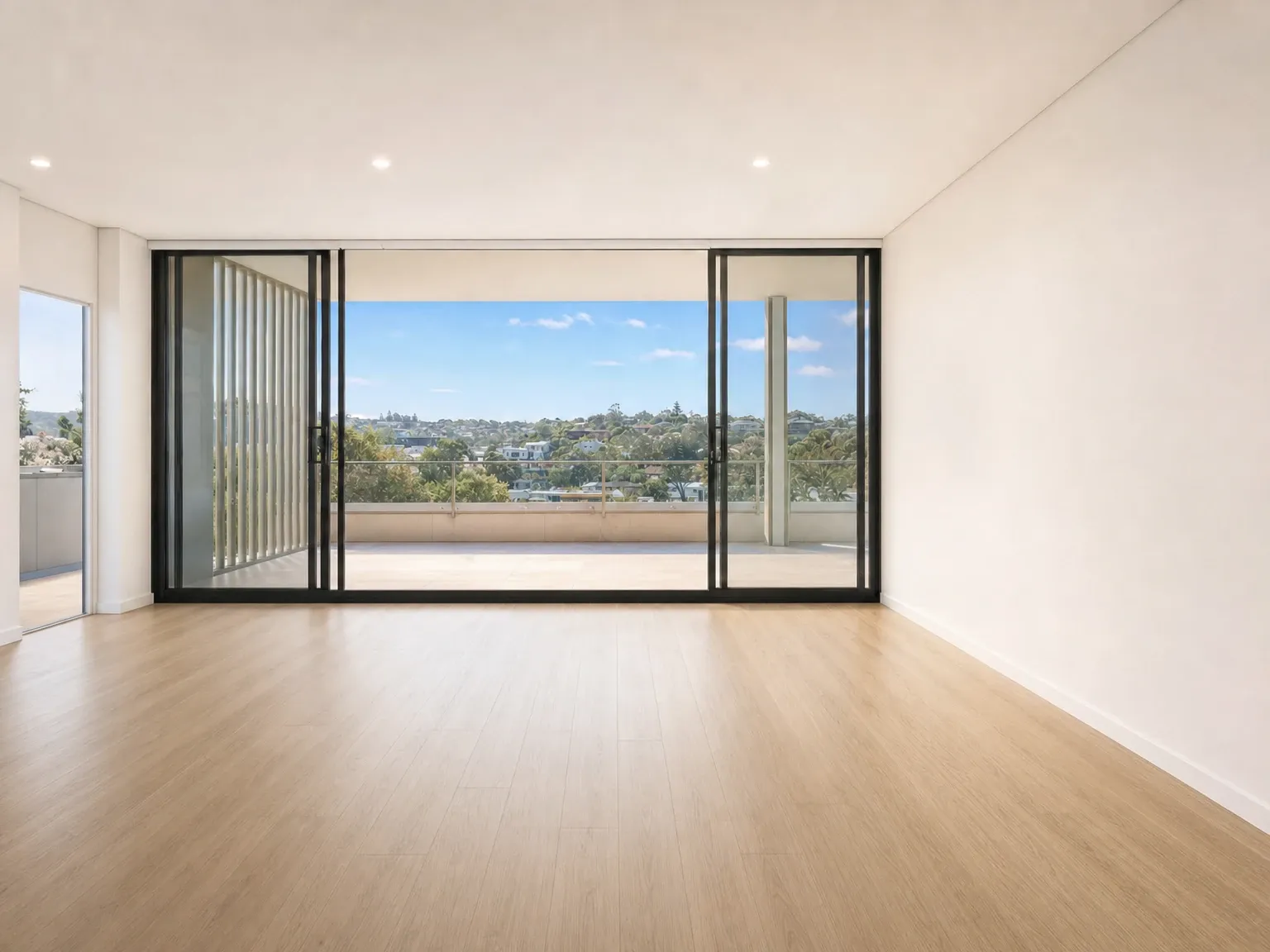 Before
After
Before
After
How much does virtual staging cost in Australia in 2026?
Done-for-you virtual staging in Australia ranges from about $30 to $200 per image, with most residential listings landing in the $30 to $80 per image band. The price scales with the quality of the service, the speed of turnaround, the number of revisions included, and how customised the staging is.
Here are the realistic 2026 ranges by tier, in AUD, including GST.
| Tier | Per image (AUD) | Turnaround | What you’re getting |
|---|---|---|---|
| DIY AI tools | $0.50–$5 | Seconds | Self-serve software. Inconsistent quality, no revisions, no human oversight. Useful for internal mockups. |
| Budget done-for-you | $30–$45 | 12–24 hours | Human editor, light QA, one or two revisions. Volume agents and investment listings. |
| Standard | $45–$99 | 24–72 hours | Editor plus design pass. Two to three revisions, full style range. Most residential listings. |
| Premium | $100–$200+ | 2–5 days | Designer-led, premium realism, unlimited revisions. Prestige and developer marketing. |
A full residential listing typically needs four to six staged images: the main living area, the kitchen or dining space, the master bedroom, the second bedroom or study, and the alfresco or outdoor area. At standard pricing, that’s roughly $150 to $480 for an entire listing. At budget pricing, $120 to $270. For comparison, the equivalent physical property styling job on a three-bedroom home runs $3,500 to $6,000 over a six-week hire.
reIMG starts at $30 per image. The first image is free. We deliver in 24 hours, include revisions in the base price, and provide watermark and disclosure templates with every delivery.
What drives the price up
Three things push virtual staging towards the premium tier:
Complex or unusual room shapes. Open-plan kitchens, vaulted ceilings, split levels, mezzanines, and curved walls are harder to stage realistically than a standard rectangular room. The editor has to handle perspective and scale more carefully.
Outdoor and alfresco staging. Decks, courtyards, balconies, and pool areas require more elements (BBQ, outdoor dining, lounger, plants) and have more lighting variation than an indoor room. Alfresco staging is one of the strongest images on an Australian listing, which is also why it costs slightly more.
Day-to-dusk conversions. Turning a daytime photo into a twilight or dusk image, often combined with virtual lighting (interior lights on, pool glow, garden lighting), adds a separate production step. Worth it for the hero image on a prestige listing, generally not necessary on every room.
What does not affect the price
Property value and suburb. The same staged image costs the same whether the property is a $500K investment unit in Logan or a $4M Mosman terrace. The premium pricing on prestige listings comes from the volume of images and the complexity of the property, not the property’s price tag.
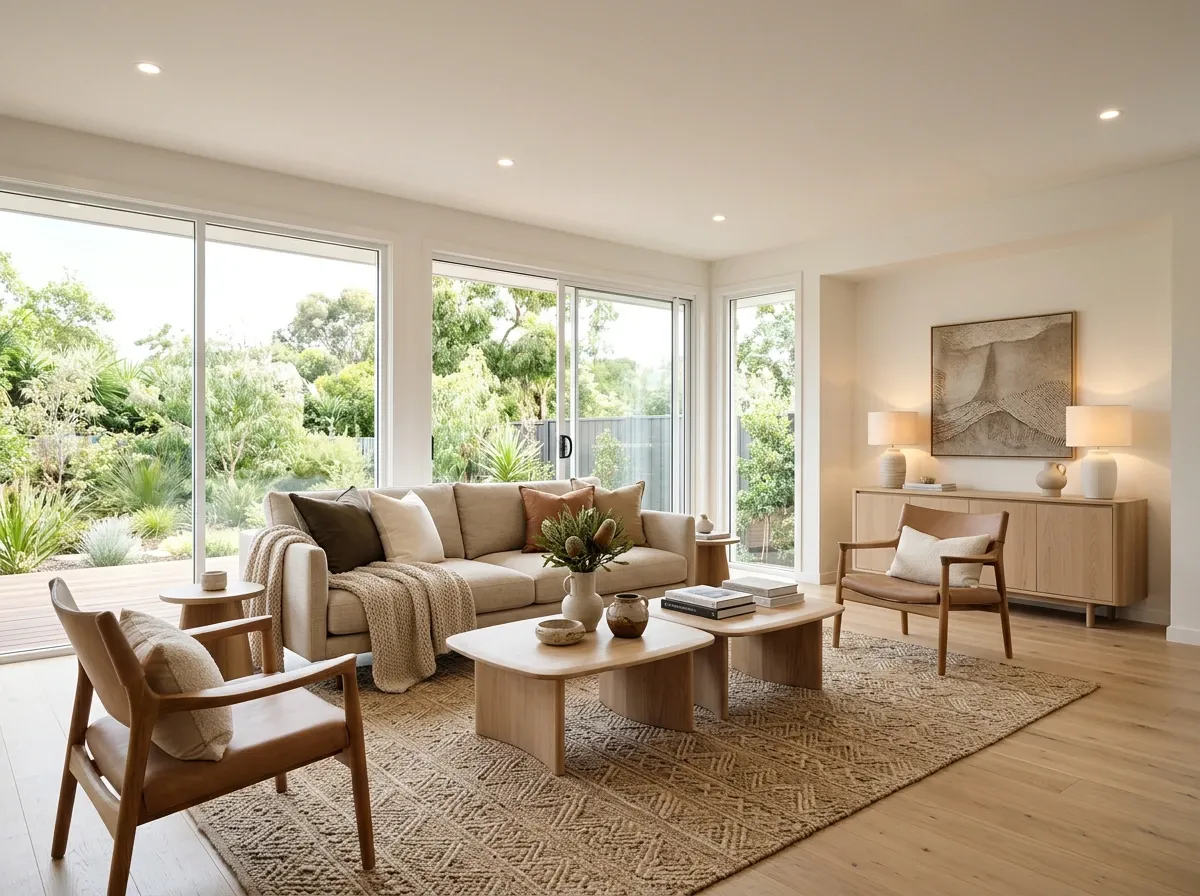
Done well, a virtually staged room is indistinguishable from physical styling.
Virtual staging vs physical property styling: which one actually wins?
If you’ve read our home staging guide, you know the case for physical property styling: it’s the gold standard for premium auction campaigns where buyers walk through the property repeatedly and the styling is part of the in-person experience. The data on its impact on sale price is robust. For a $2M Sydney listing where the styling spend is a rounding error against the sale price, physical staging is almost always worth it.
What virtual staging actually wins on is everything else. Speed, cost, geographic flexibility, and the ability to stage properties that physical staging cannot reach.
The honest comparison:
| Factor | Physical property styling | Virtual staging |
|---|---|---|
| Typical cost (3-bed home) | $3,500 – $6,000 | $150 – $480 |
| Turnaround | 1–3 weeks coordination, full install | 24 hours |
| Hire period | 4–8 weeks, extension fees beyond | Permanent, no clock |
| Style variations | One look, locked in once installed | Multiple styles per room, on request |
| Tenanted properties | Generally not possible | Standard use case |
| Regional and remote | Surcharges, logistical complexity | Geographically agnostic |
| In-person inspection effect | Yes, this is its strength | Listing photos only |
| Sensory cues | Smell, texture, feel of furniture | Visual only |
Where physical styling wins:
- Premium auction campaigns ($2M+) with multiple inspections
- Properties where the styling itself is part of the marketing narrative (heritage, architecturally significant)
- Vendors who benefit from the styled environment during a long campaign
- Open-home heavy campaigns in Sydney and Melbourne prestige suburbs
Where virtual staging wins:
- Listings under $1.5M where physical styling eats too much of the marketing budget
- Vacant investment properties
- Tenanted properties where physical staging is not possible at all
- Off-market and pre-listing campaigns testing buyer interest before commitment
- Regional and remote properties where physical delivery surcharges add hundreds of dollars
- Properties with tight launch timelines that cannot wait for a physical install
- New builds, off-the-plan, and vacant land marketing where there is no furniture to photograph
The smartest approach for many prestige campaigns is a hybrid: virtually stage every image for the online listing (the work that drives 90% of buyer attention), and lightly physically style the hero rooms for the open home (the work that converts the buyer in person). You get the online conversion of full staging at a fraction of the spend, and the sensory experience of physical styling exactly where it matters.

Send photos, get staged images back: the whole process in a day or two.
How the process works
Virtual staging is structurally simple, and the better the brief, the better the output. Here is how a typical job runs.
1. Take the photo
A clean photograph of the empty room. Wide-angle, straight-on or two-point perspective, full corner-to-corner coverage, no foreground obstructions, no existing furniture or clutter, even lighting with no blown-out windows. Phone photos work for budget tier use; a professional real estate photographer is worth it for vendor-facing campaigns.
Specs to aim for:
- Minimum resolution 2000 by 1500 pixels (REA recommendation)
- 4:3 aspect ratio (REA standard) or 3:2
- JPG, JPEG or PNG format
- Under 5MB for realestate.com.au compatibility, under 2MB for Domain
- Sharp focus throughout, no motion blur
2. Send the brief
A good brief tells the editor four things:
Style direction. Single style preference, with one or two reference images if you have them. Scandinavian, Hamptons, Modern Contemporary, Coastal, Industrial, Mid-Century, and Luxe are the most common options.
Target buyer. First home buyer, young family, downsizer, or investor. The buyer profile drives the furniture scale and the level of styling formality.
Room purpose. State the function explicitly: third bedroom or home office? Dining or second living? Master or guest? Editors will guess if you don’t, and they will sometimes guess wrong.
What not to include. Pets, children’s toys, family photos, religious iconography, anything that narrows the buyer pool.
For a hero image, flag it. Editors prioritise hero images and spend more time getting the styling perfect.
3. Wait 24 hours
A done-for-you service delivers within 12 to 72 hours, depending on tier. reIMG delivers in 24 hours. You receive a low-resolution proof for approval, then the high-resolution download on sign-off.
4. Revisions
A good service includes revisions in the base price. Standard practice is one or two free revisions within 60 days of original delivery. reIMG includes revisions until you are happy with the image. If you have to pay for revisions, you are buying from the wrong provider.
5. Use the image
The image is yours to use across REA, Domain, the agency website, social media, brochures, signboards, and any other marketing channel. There should be no usage restrictions, no royalty clauses, and no expiry date. Once you have the image, it is yours indefinitely, with no hire clock running.
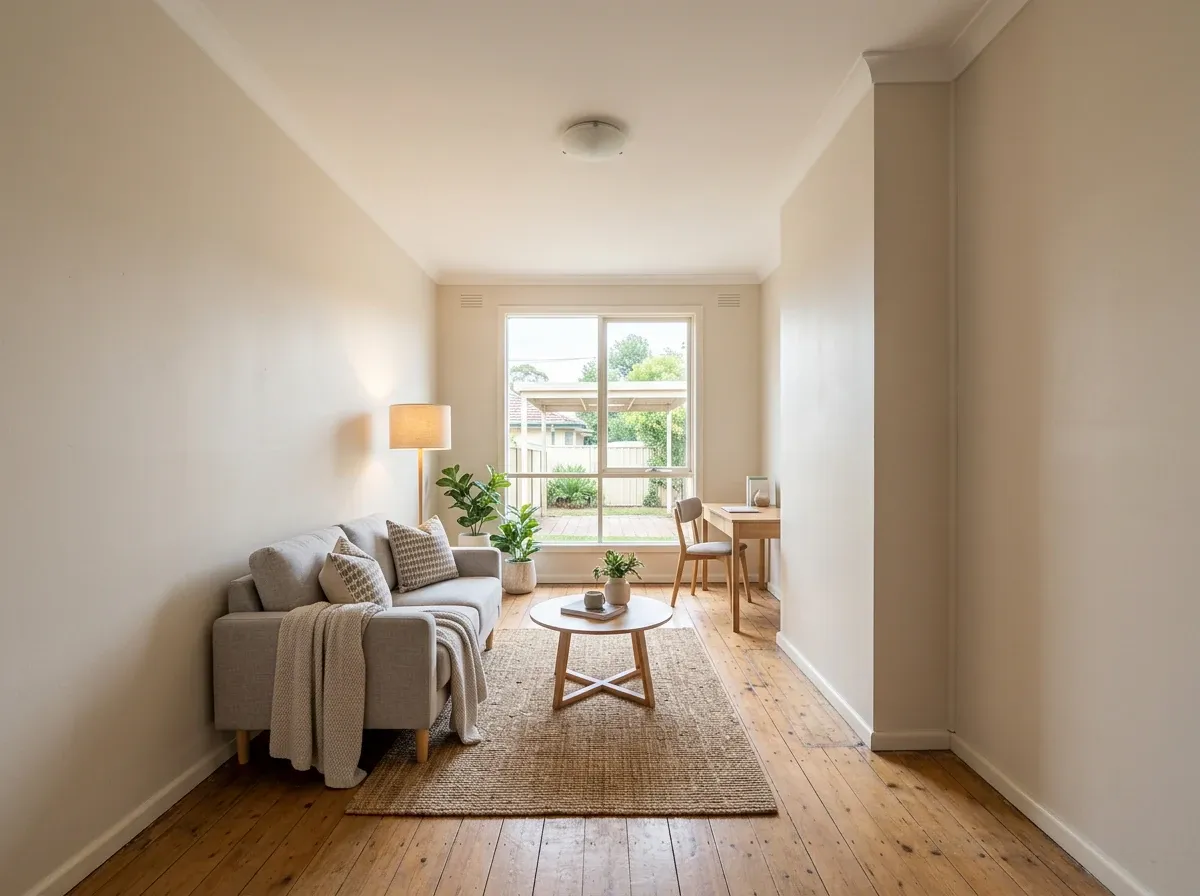
Staging dresses a room; it cannot fix bad proportions or a dark aspect.
What virtual staging can and cannot do
The cleanest way to think about scope is to ask one question of every change: would the buyer expect this thing to still be there when they get the keys? If the answer is no (the sofa, the artwork, the rug, the styled coffee table), virtual staging can handle it. If the answer is yes (the wall paint, the carpet, the blinds, the kitchen cabinetry), it stays exactly as it is in the original photograph.
That single test does almost all the work. Furniture and decorative items go; the property itself stays untouched.
What virtual staging can do
- Add furniture, art, soft furnishings, rugs, plants, lamps, and decorative styling
- Remove existing furniture and replace it with current pieces (virtual decluttering plus re-styling)
- Stage outdoor and alfresco areas with outdoor furniture, dining settings, BBQs, and loungers
- Convert daytime images to dusk or twilight (the property is the same, you’re just showing it at a different time of day)
- Produce multiple style variants of the same room
What virtual staging cannot (and should not) do
Anything that is part of the property itself stays as it is in the original photograph. That includes:
- Wall colours and paint finishes
- Floor finishes (carpet, floorboards, tile)
- Curtains, blinds, and window treatments
- Built-in joinery, kitchen cabinetry, and bathroom fixtures
- Light fittings attached to walls and ceilings
- Structural elements: walls, windows, doors, ceilings, rooflines
- The view through the window, the neighbouring properties, the street
It also cannot:
- Create features that do not exist (a window where there isn’t one, a fireplace, a balcony that was never built)
- Restructure room dimensions or distort furniture scale
- Reliably stage a room that already has furniture or clutter in the photograph (most providers need an empty room)
If a change makes the room look different by adding or removing furniture, it’s staging. If a change makes the property look different, it isn’t. That’s the only line that matters, and the rest of the legal conversation flows from it.
AI virtual staging tools vs done-for-you services
AI virtual staging tools have multiplied dramatically in the past two years. REimagineHome, Virtual Staging AI, Collov, AI HomeDesign, Apply Design, Pedra and a dozen others. Most charge between $0.50 and $5 per image effective, or a monthly subscription from around $20 to $50. Output is delivered in seconds.
This has been a real shift in the market, and it is worth being honest about where AI tools fit.
Where AI tools win
Speed and cost. Seconds per image, sub-$5 effective pricing. Nothing else competes on either axis.
Internal and exploratory work. Listing pitches, CMA decks, “what could this look like” conversations with vendors before committing to a brief. Showing a vendor three style options in five minutes is genuinely useful, and you would not pay a done-for-you service to produce three throwaway mockups.
High-volume low-stakes use. Investment property rental marketing, secondary images on a multi-image listing, scoping work where speed beats precision.
Where AI tools lose
Realism on edge cases. Awkward room shapes, dark spaces, unusual angles, and prestige finishes are where AI tools produce noticeable artefacts: floating furniture, inconsistent shadows, oversized beds, mismatched scale.
Multi-angle consistency. The same room photographed from two angles, run through an AI tool, often produces inconsistent styling. The done-for-you human editor maintains continuity that AI doesn’t.
Handling of fixed elements. AI tools occasionally hallucinate changes to windows, doors, or built-in features. That crosses the line from staging into misrepresentation, and it is one of the reasons AI tools are not yet trusted on high-value vendor-facing campaigns.
No editor, no brief, no revisions. When something is wrong, there is nobody to call. Standard AI output is “what you got is what you get.” For an agent running a $5M auction campaign, that is the wrong risk profile.
The clean rule of thumb: AI for internal and exploratory work, done-for-you services for live vendor-facing campaigns. The marginal cost difference (perhaps $30 to $80 per image) is trivial compared to the cost of a botched listing on a $1M+ property.
 Before
After
Before
After
When virtual staging is the right call: eight scenarios
The cases where virtual staging genuinely is the best tool, not just the cheapest one.
1. Vacant investment properties under $1.5M
The default use case. The vendor doesn’t live in the property, doesn’t want to coordinate physical styling, and the property sits in a price bracket where $5,000 on physical staging cannot be justified ROI-wise. Virtual staging delivers competitive listing photos at 5% of the cost. Most agents now treat virtual staging as the default for this segment.
2. Off-market and pre-listing campaigns
A short, low-cost campaign to test buyer interest before formal listing. Particularly common in Sydney and Melbourne. Virtual staging at $150 to $300 total replaces a $5,000+ physical styling spend before the property is even publicly listed. If interest is soft, the vendor can withdraw without sunk costs.
3. Tenanted properties
Tenancy law in most Australian states prevents physical staging while tenants are in residence, and even partial styling is impractical. Virtual staging on photos taken with tenant cooperation lets the campaign run without disrupting the tenancy. For tenant-furnished properties, virtual decluttering (removing the tenant’s belongings from the image) followed by neutral re-staging is the standard solution. Physical staging cannot solve this. Virtual is the only category that can.
4. Regional and remote properties
Physical styling delivery to regional WA, north Queensland, NT, and rural NSW or Victoria adds $300 to $800 in surcharges plus the logistical complexity of getting a styling crew to site. Virtual staging is geographically agnostic. The same staged image costs the same in Mt Isa as it does in Manly.
5. New builds and off-the-plan
The property is finished but unfurnished, or doesn’t exist yet beyond architectural renders. Builders and developers need marketing photography that shows the home as a lifestyle, not a shell. Virtual staging on finished new builds fills the rooms in 24 hours without coordinating a physical install. Virtual staging on top of CGI renders adds lived-in warmth to off-the-plan marketing. This is core territory for trades and developers.
6. Vacant land sold with approved plans
Distinct from new builds. The vendor is selling raw land with approved plans for a future home. Virtual staging can render the planned home from the elevations and floor plans, giving buyers a lifestyle hook on what is otherwise a paddock with stakes in it. Particularly common in coastal Queensland, outer Perth corridors, and regional NSW and Victorian land releases.
7. Renovations not yet complete
The vendor wants to list while the renovation is finishing. Kitchen still being installed, painters wrapping up, tiling underway. Existing photography won’t sell the lifestyle. Virtual staging fills the gap, showing the property as it will look when complete. If you’re researching what a finished kitchen renovation costs, our kitchen renovations guide breaks it down.
8. Twilight and dusk hero shots
A dusk hero shot dramatically improves click-through on REA. Most agents won’t pay a photographer to come back at dusk for a second call-out. Virtual day-to-dusk conversion at around $40 to $80 per image delivers the same hero effect from a single daytime shoot. Pair with virtual outdoor staging (BBQ, dining setting, lounger, pool glow) for maximum impact.
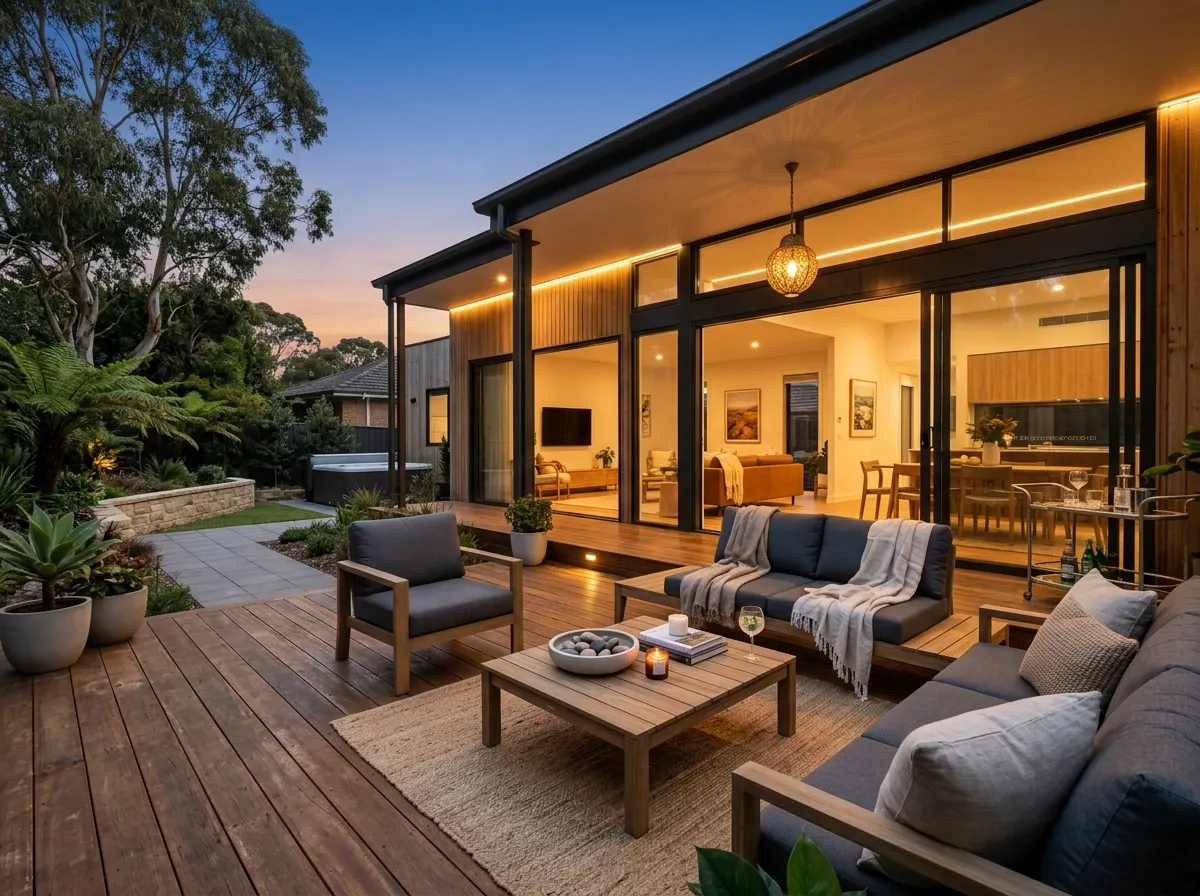
Day-to-dusk: same property, different time of day, higher click-through.
Is virtual staging legal in Australia?
Yes. Virtual staging is a standard, accepted marketing practice across every Australian state. As long as the images are disclosed as virtually staged and the property itself is not misrepresented, there is no legal issue.
The principle is straightforward. Adding furniture to a photograph is no different to adding furniture to the actual house. Physical property styling also puts furniture in a property that won’t be there at settlement. Nobody expects the sofa, the rug, the artwork, or the styled coffee table to come with the property. The buyer knows the staging is staging. They know it on a physically styled listing, and they know it on a virtually staged listing.
What you cannot do is misrepresent the property itself. That is a different conversation and it predates virtual staging. The Penshurst water tower case in NSW is the textbook example: a listing edited to remove a water tower from the view next to the property. That is a misrepresentation of the property, not of the furniture inside it, and NSW Fair Trading flagged it accordingly under the (then) Property, Stock and Business Agents Act 2002.
The line that matters:
Fine to do with virtual staging:
- Add furniture, art, soft furnishings, plants, rugs, lamps, and styling
- Convert daytime to dusk (same property, different time of day)
- Stage alfresco areas with outdoor furniture, BBQs, and dining settings
- Remove existing furniture and replace it with neutral, buyer-friendly styling
Not fine to do, virtual or otherwise:
- Repaint walls or change wall colours (paint is part of the property)
- Change floor finishes such as carpet, floorboards, or tile (the buyer is buying those)
- Add, change, or remove curtains, blinds, or window treatments
- Alter built-in joinery, kitchen cabinetry, or bathroom fixtures
- Remove or hide structural features (a power line, a neighbouring building, a water tower)
- Conceal defects or damage (cracks, water stains, missing fixtures)
- Add features that do not exist (a window, a fireplace, a balcony, a view)
- Change a roofline, alter the building’s footprint, or fabricate any structural element
- Make the property appear to have rooms or spaces it does not have
The first list is staging: things that obviously do not come with the property. The second list is the property itself: anything the buyer would expect to be there at settlement. The two are completely different, and the disclosure piece only protects you on the first list. The second list is misrepresentation regardless of how it’s done, who did it, or whether it was disclosed.
How to disclose virtual staging
Best practice in Australia is two things:
A small watermark on the staged image itself, reading “Virtually Staged” in a position that is visible but not intrusive (bottom-right or bottom-left corner is standard).
A disclosure line in the listing description on REA and Domain. A working template:
Some images have been virtually staged for illustrative purposes. Furniture and décor shown are not included in the sale.
That is it. Disclose the staging, do not misrepresent the property, and you are operating well within the Australian Consumer Law and every state Estate Agents Act. reIMG provides watermark and disclosure templates with every delivery, so the compliance piece is handled by default rather than left to the agent to remember.
We have never seen a real-world prosecution against a virtually staged listing that was disclosed to industry standard. We have seen complaints upheld against listings that misrepresented the property itself, regardless of whether virtual staging or physical staging was involved.
Is virtual staging tax deductible?
For an investment property, virtual staging is generally treated as a marketing or advertising expense and is deductible in the income year the cost is incurred. The Australian Taxation Office treats marketing costs for an investment property the same whether they are physical staging, virtual staging, photography, or portal listing fees.
For your principal place of residence, virtual staging is generally not deductible, for the same reason that physical staging isn’t: the sale of a CGT-exempt primary residence is itself exempt, and the costs of selling a CGT-exempt asset are not deductible.
Mixed-use properties, properties partially rented at any point, and properties held in trusts or companies have edge cases. Always consult a registered tax agent for your specific situation. We cover the broader tax-deductibility question in our home staging guide under the staging tax section.
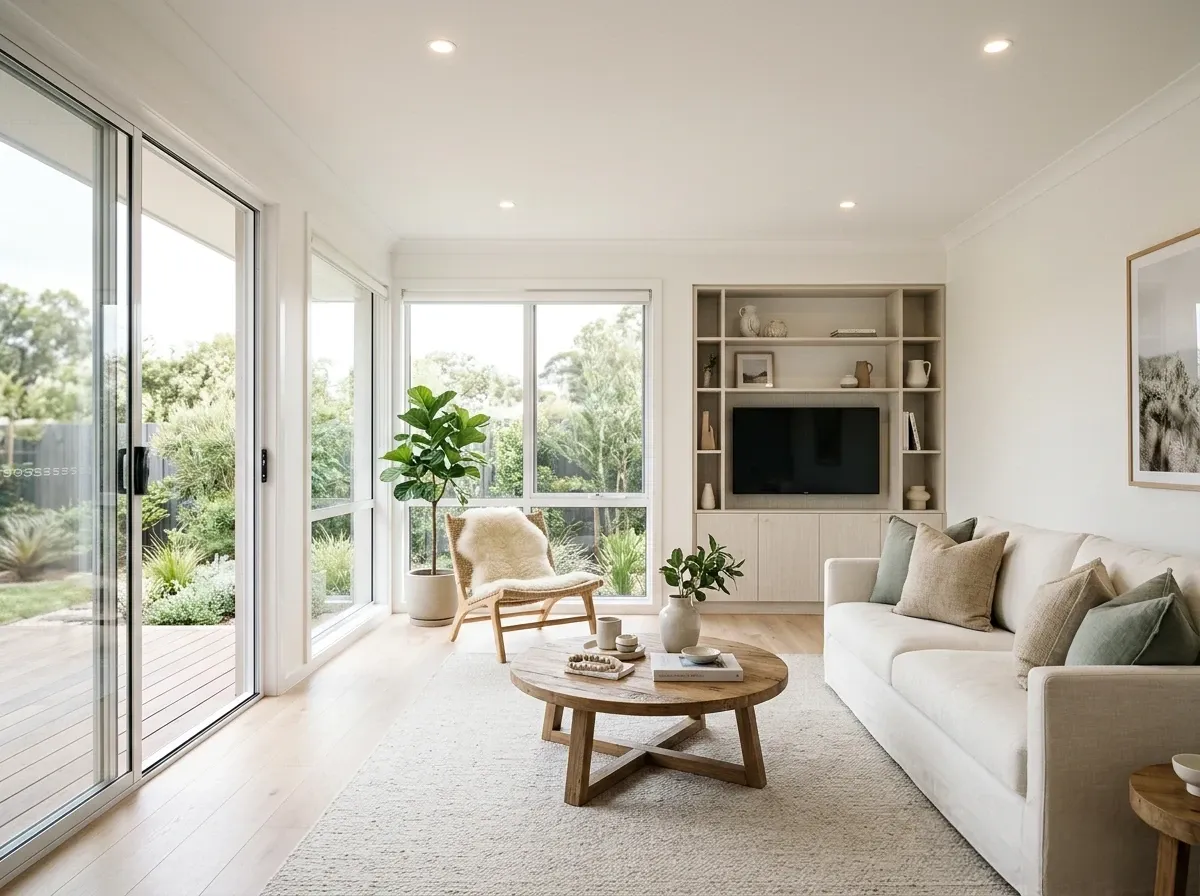
A visible disclosure badge is the Australian virtual staging standard.
How to choose a virtual staging service
The virtual staging category is unregulated and quality varies enormously. The price difference between $30 per image and $200 per image is real, but so is the quality difference. Five things to check before commissioning a job:
Portfolio and recent work. Ask to see five recent staged images from the past three months, ideally from Australian listings. Look for: realistic shadow direction, accurate furniture scale, consistent lighting, no floating furniture, no oversized beds, no impossible perspectives. A good portfolio is unambiguous. A vague portfolio means vague work.
Turnaround time guarantee. “We aim for 48 hours” is not a guarantee. “Delivered within 24 hours, or the image is free” is a guarantee. Ask for the commitment in writing.
Revisions policy. A budget service typically includes one or two revisions; a premium service includes unlimited. If a service charges extra for revisions on the first delivery, the base price is misleading. reIMG includes revisions in the base price.
File deliverables and licensing. What format do you get back? At what resolution? With or without watermark options? Can you use the image across all marketing channels indefinitely? Get the answers up front, in writing.
AU customer base. A provider that does most of its work in the US market will style in US aesthetics by default and may not know what an Australian alfresco area, Queenslander, or Hamptons coastal look should feel like. Local familiarity matters, particularly for outdoor and lifestyle staging.
Ten questions worth asking before commissioning
- What is your guaranteed turnaround in business hours?
- How many revisions are included, and within what timeframe?
- Can I supply reference images for furniture style?
- Can you stage outdoor and alfresco spaces?
- Do you offer day-to-dusk and twilight conversions?
- Do you offer virtual decluttering on tenant-occupied properties?
- What file format, resolution, and aspect ratio will I receive?
- Will images include a “virtually staged” watermark on request?
- Do you retain originals so I can redownload at any time?
- What are the licensing terms? Can I use the images across all marketing channels indefinitely?
If you cannot get clear written answers to those ten questions, you are buying from the wrong provider.
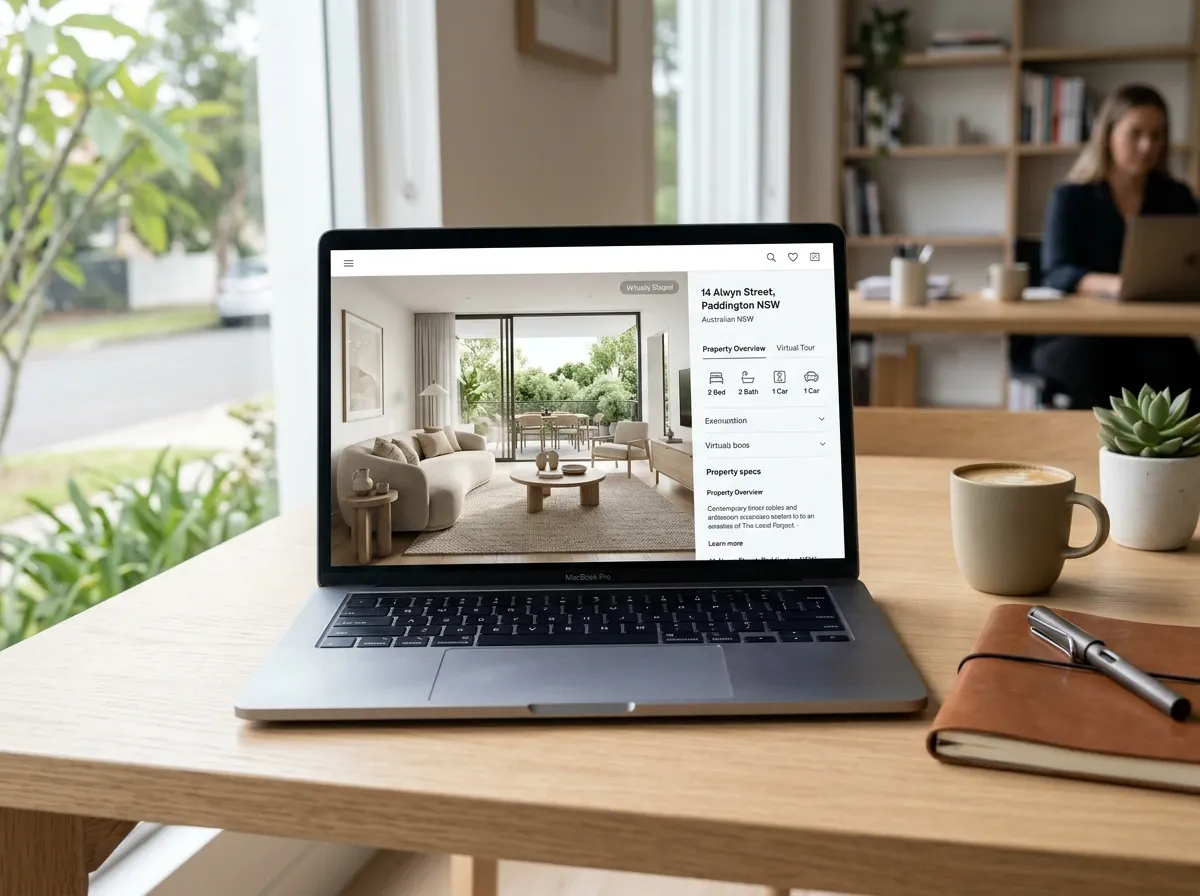
Staged listing photos lift enquiry and shorten days on market.
Virtual staging for real estate agents
For agents, virtual staging is one of those things that quietly upgrades every listing on the website without requiring a vendor education conversation. The four most common agent use cases:
Vacant listings under $1.5M. Virtual staging at $150 to $300 total per listing competes with physical staging photography quality at less than 5% of the cost. The vendor is happy with the listing, the agent doesn’t have to push physical styling into a tight VPA budget, and the photos hold their own against fully-styled comparables.
Tenanted investment-property sales. Photos taken with tenant cooperation, virtual decluttering and re-styling, listing goes live. No physical staging coordination, no tenancy disruption, no vendor stress about access.
Off-market and pre-listing campaigns. Show vendors what their property could look like, at $30 to $60 per mockup, before they commit to a marketing budget. Useful both as a vendor education tool and as an actual pre-launch campaign.
Multi-style options for indecisive vendors. Some vendors cannot pick between Coastal and Modern Contemporary. Two virtually staged versions of the same hero image cost less than one consultation with a physical stylist and resolve the question in 48 hours.
Agencies running 10+ listings a month often move to volume pricing or white-label delivery. We work directly with agents on both.
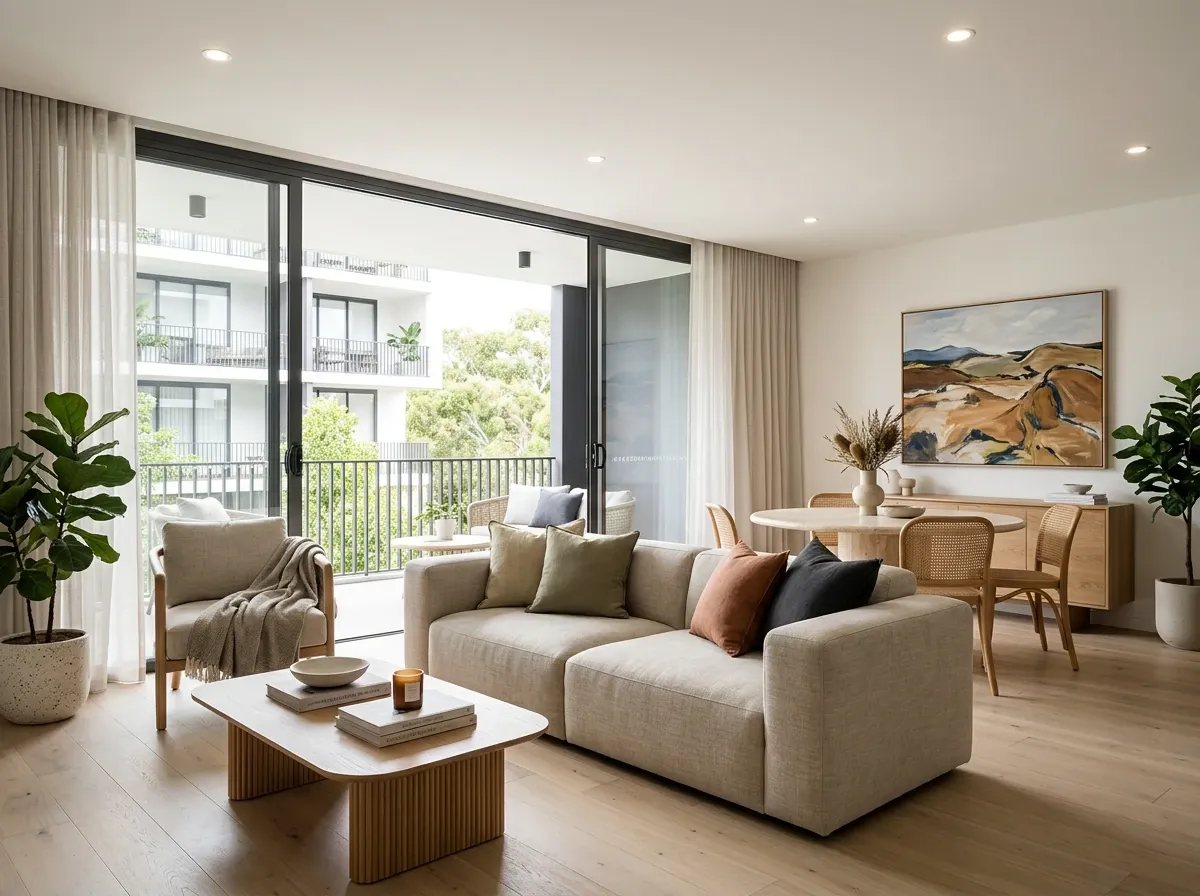
New builds sell faster shown furnished, not empty.
Virtual staging for trades, builders, and developers
For trades and developers, virtual staging is a marketing tool that runs ahead of the property existing in finished form. Three primary use cases:
New builds and display homes. The home is finished but unfurnished, and the builder needs marketing photography that shows the home as a lifestyle, not a shell. Virtual staging fills the rooms in 24 hours without coordinating a physical install. Particularly valuable for project home builders running multiple display campaigns simultaneously across estates.
Off-the-plan apartment and townhouse projects. Renders of unbuilt apartments need to feel like homes, not architectural diagrams. Virtual staging on top of CGI renders, or full 3D rendering where no photography is possible yet, lets developers market lifestyle aspirations alongside floor plans and finishes.
Renovation sales tool. Builders selling a renovation pitch (“this is what your bathroom could look like after we finish”) use virtual staging and rendering inside the quote itself. A render attached to a quote turns a line-item document into a vision the customer can picture, which closes more jobs at higher prices.
The common thread: trades and developers often cannot use physical staging because there is no finished property to stage. Virtual is the only category that solves their problem.
Virtual staging for interior designers
For interior designers, virtual staging works as both a client communication tool and a marketing channel.
Concept presentation. Show clients a photoreal render of their proposed scheme inside their actual space before any furniture is ordered or any builder is engaged. Cheaper and faster than mood boards, more convincing than 2D plans.
Product placement and lookbook work. Place furniture and finishes you are specifying inside a client’s room (or a generic room) for portfolio and marketing use.
Pitch and proposal work. Win larger jobs by attaching a render to the proposal that shows the client exactly what their space will look like once your scheme is delivered.
Designers tend to brief in more detail than agents and have higher expectations on realism. Premium tier service is usually the right fit.
Frequently asked questions
How much does virtual staging cost in Australia in 2026?
Done-for-you virtual staging in Australia ranges from $30 to $200 per image, with most residential listings landing in the $30 to $80 range. A full three-bedroom property at five staged images typically costs under $300, compared to $4,000 to $6,000 for physical property styling. reIMG starts at $30 per image with the first image free.
How long does virtual staging take?
A done-for-you service in Australia usually delivers within 12 to 72 hours. reIMG delivers in 24 hours, with revisions included.
What’s the difference between virtual staging and physical property styling?
Physical staging means hiring real furniture and installing it in the property for the campaign. Virtual staging means digitally adding the same furniture to photographs of the empty rooms. Virtual is roughly 5% of the cost and delivered within 24 hours. Physical is the gold standard for in-person inspections on prestige listings.
Is virtual staging legal in Australia?
Yes. As long as the images are disclosed as virtually staged and the property itself is not misrepresented, there is no legal issue. Adding furniture to a photograph is no different to adding furniture to the house. The line is altering the property itself, which is misrepresentation regardless of how it’s done.
Can virtual staging work on tenanted properties?
Yes, and it is one of the strongest use cases. Photos can be taken with tenant cooperation, the tenant’s existing furniture can be digitally removed, and the room can be re-staged with neutral buyer-friendly styling. Physical staging is generally not possible on tenanted properties at all.
Can I use AI tools to do virtual staging myself?
Yes, but AI tools are best for internal use (listing pitches, CMA decks) and high-volume low-stakes work. For live vendor-facing campaigns, a done-for-you service with a human editor produces materially better results.
What rooms should I virtually stage?
The main living area, the kitchen or dining space, the master bedroom, and the alfresco area if there is one. Four to five images is usually enough to lift the entire listing.
Does virtual staging work for new builds and off-the-plan?
Yes. Virtual staging is the standard way developers and builders bring lived-in warmth to finished but unfurnished properties and to architectural renders.
How do I disclose virtual staging?
A small “Virtually Staged” watermark on the image, plus a line in the listing description noting the staging is illustrative and the furniture is not included in the sale.
Can virtual staging be combined with physical staging?
Yes, and for prestige campaigns it often is. Virtually stage every image for the online listing, then lightly physically style the hero rooms for the open home. You get the online conversion of full staging at a fraction of the cost.