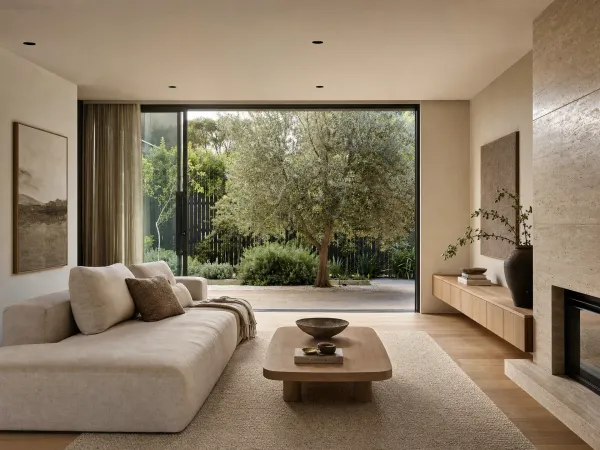
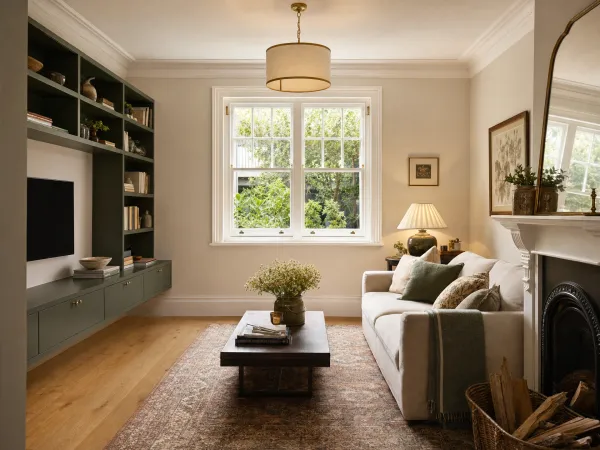
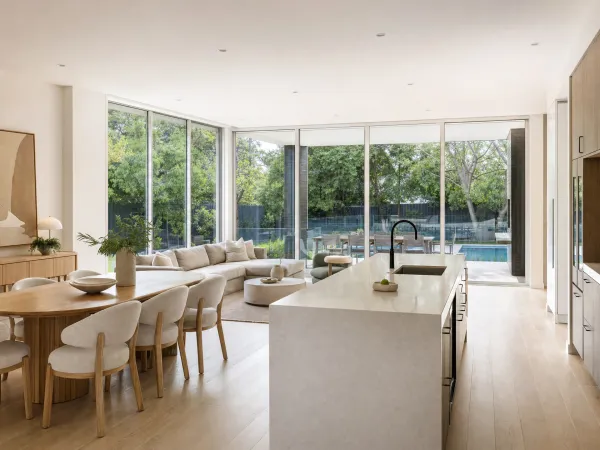
Home staging in Australia: what it's worth
How home staging works in Australia, what it costs in 2026, and why virtual staging delivers 95% of the impact for 5% of the price. Transparent AUD pricing, 24-hour turnaround, first job free.
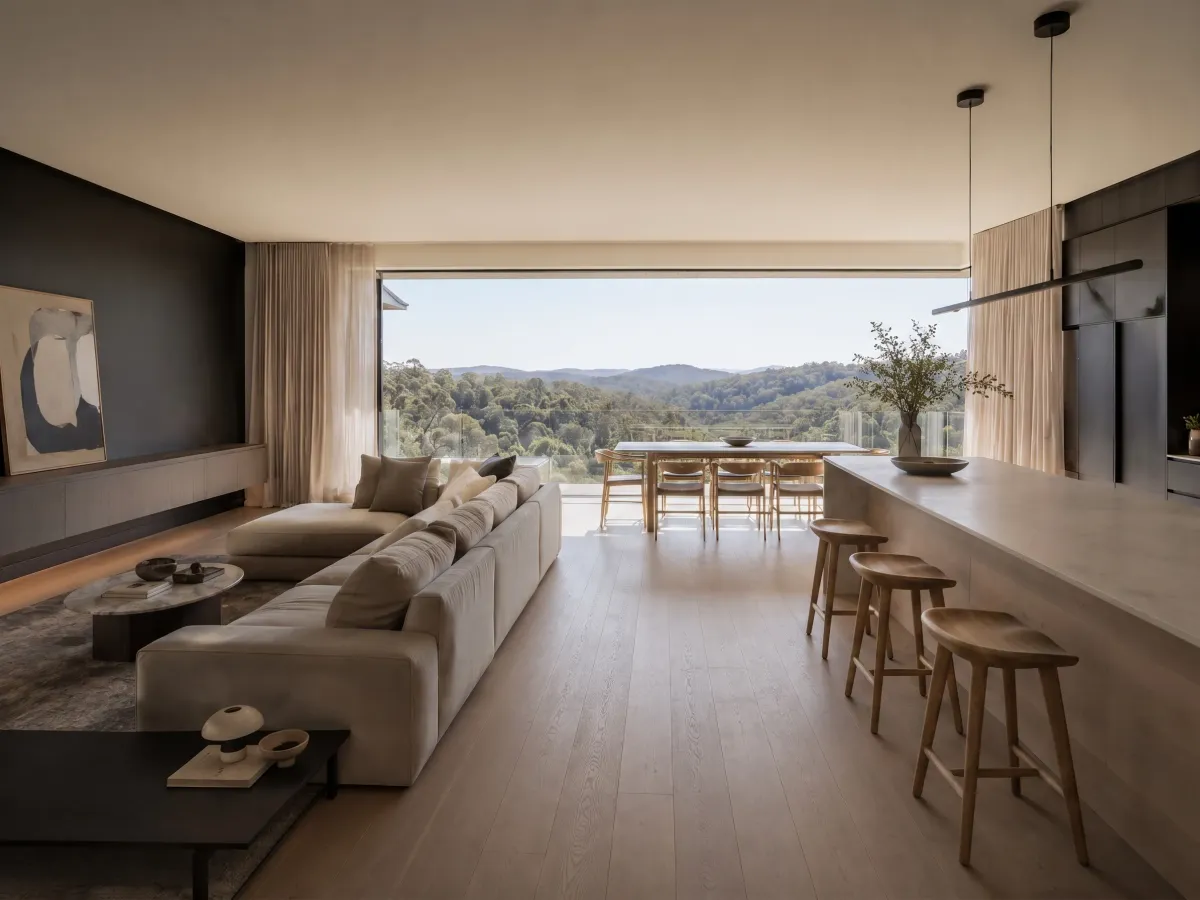
Most Australian sellers lose money in the same place: the listing photos. Empty rooms photograph cold. Cluttered rooms photograph small. Either way, the buyer scrolling Domain or realestate.com.au at 9pm on a Tuesday can’t picture themselves living there — so they keep scrolling.
Home staging fixes that. A staged home is one where the photos feel inhabited, the rooms read at their proper scale, and the buyer’s brain finishes the sentence the listing started. The data is unambiguous: staged homes sell faster and for more. The question for any vendor in 2026 isn’t whether to stage — it’s how.
That’s the question this guide answers. We’ll cover what staging is, what it costs (in $AUD, transparently — no “request a quote”), whether it actually works in the Australian market, and where the modern alternative — AI-assisted virtual staging — fits. By the end you’ll know exactly what to do for your property, your listing, or your client.
What is home staging?
Home staging is the practice of preparing a residential property for sale by curating its furniture, décor, and presentation so it photographs and shows at its best. A professional home stager — sometimes called a property stylist in Australia — assesses the property, removes or adds furniture, and styles each room with the buyer in mind. The goal is to help buyers emotionally connect with the space and visualise themselves living in it.
In Australia, “property styling” and “home staging” mean the same thing. Property styling is the older, more common Australian term. Home staging is the international term that’s gained traction over the past decade as American renovation shows and the rise of online listings made the practice mainstream. We use both terms interchangeably throughout this guide, and so does most of the Australian industry.
Home staging is distinct from interior design. An interior designer creates a long-term living environment for the people who will live there. A home stager creates a short-term selling environment for the people who might buy there. The brief is fundamentally different. A stager isn’t decorating to your taste — they’re styling for the broadest possible buyer pool in your suburb, your price band, and your property type.
Who hires home stagers in Australia
Four groups dominate the demand side of the market:
Vendors selling their own home. The biggest single category. Almost always paid through the agent’s vendor-paid advertising (VPA) campaign, often financed by deferred-payment products that settle from sale proceeds.
Real estate agents preparing listings on behalf of vendors. Many agents have preferred stagers and will recommend (or insist on) staging as part of the marketing package, particularly for vacant properties.
Property developers and builders styling new builds, display homes, or finished renovations. For trades and developers, staging often happens before the property is even on the market — to support brochures, off-the-plan sales, or display campaigns.
Landlords and property managers styling investment properties before sale or — increasingly — before listing for rent. Virtual staging in particular has become standard for tenanted properties where physical staging isn’t feasible.
If you’re in any of these groups, the question isn’t whether staging is for you. It’s which method gives you the best return on the property and the timeframe you’re working with.
How much does home staging cost in Australia?
Physical home staging in Australia costs between $1,500 and $15,000+ in 2026, depending on the size of the property, the city, and the duration of the hire. A typical three-bedroom home in a major capital costs $3,500–$6,000 for a standard six-week hire that includes consultation, furniture, delivery, installation, and pack-down. Virtual staging from reIMG starts at $30 per image, and a complete five-image package for a three-bedroom listing typically lands under $300.
The price gap between physical and virtual staging is enormous — roughly 95% — and that gap is the single most important fact a vendor or agent in 2026 needs to understand.
Physical staging cost by property size
The figures below are typical 2026 ranges across Sydney, Melbourne, and Brisbane for the standard hire period (six to eight weeks), including consultation, furniture, soft furnishings, art, accessories, delivery, professional installation, and pack-down at the end.
| Property type | Typical national range | Sydney premium suburbs |
|---|---|---|
| 1-bedroom apartment / unit | $1,500 – $3,500 | $2,500 – $4,000 |
| 2-bedroom home or apartment | $2,500 – $5,500 | $3,500 – $6,500 |
| 3-bedroom home | $3,500 – $6,000 | $5,000 – $7,500 |
| 4-bedroom home | $5,000 – $8,000 | $7,500 – $10,000 |
| Luxury / 5+ bedroom | $8,000 – $15,000+ | $12,000 – $25,000+ |
A few notes on what’s not always included in the headline figure:
Extension fees. If your property doesn’t sell in the included hire period, expect to pay $200–$600 per week to keep the furniture in place. This adds up quickly on a campaign that drags into a second or third month.
Access surcharges. Properties with stairs, restricted parking, lift bookings, or remote locations can attract delivery surcharges of $200–$800.
Premium upgrades. Designer or luxury-brand furniture packages (think the upper end of the Sydney prestige market) can double or triple the base figure. The “from $X” pricing you see advertised is almost always the entry-level package.
Insurance. Most stagers include damage and liability insurance; some don’t. Always check.
Virtual staging cost in Australia
Virtual staging — the process of digitally adding furniture and décor to photographs of empty rooms — is the modern alternative to physical staging. As of 2026, virtual staging in Australia ranges from $30 to $80 per image, with delivery times between 12 and 48 hours.
reIMG’s virtual staging is delivered in 24 hours, priced transparently in AUD, and the first job is free. A full three-bedroom listing — five key images covering the living room, kitchen, master bedroom, second bedroom, and dining area — typically costs under $300.
Compare that to the same property staged physically: $4,000–$6,000, two to three weeks of coordination, and a hire clock running until settlement. The trade-off is what virtual staging can’t do — change the in-person inspection experience. We cover that decision in detail further down.
How staging fits inside vendor-paid advertising
In Australia, marketing costs for a property sale are typically paid by the vendor through what’s called a vendor-paid advertising campaign (VPA). The agent compiles a marketing budget — photos, copywriting, online listings, signage, brochures, and staging — into a single invoice the vendor pays separately from the agent’s commission.
For most vendors, staging is the single largest line item on the VPA after premium portal listings. Many sellers defer that cost using settlement-funded products like RealtyAssist, Property Credit, or Elepay, paying the marketing invoice from sale proceeds rather than out of pocket.
Virtual staging fits the same VPA structure but typically sits inside the photography or marketing budget rather than as a separate line item. For agents, this is operationally simpler — and for vendors selling at the lower end of the market where physical staging eats too much of the marketing budget, it’s often the only viable option.
Does home staging actually work? The Australian ROI data
Yes. The most credible Australian data comes from a six-year, 144-property study conducted in Brisbane by Cape Cod Residential in partnership with the Interior Design Association: 49% of staged homes sold within the first week of being listed, 66% within two weeks, and 87% within four weeks. That’s a remarkable speed-of-sale advantage in any market, but particularly in a market where the average days-on-market for unstaged comparable properties typically runs 30–60 days. On sale price, LJ Hooker’s published agent data shows that staged homes sell for 7.5%–12.5% more than unstaged comparable properties. On a $750,000 home, that’s $56,000–$94,000 in additional sale proceeds. On a $1.5M home, it’s $112,000–$187,000. Even at the bottom of that range, the implied return on a $5,000 staging investment is roughly 11x.
The Real Estate Staging Association’s Q1 2025 market data, drawing from thousands of US listings, found a return of approximately $23 in sale-price uplift for every $1 spent on staging. Australian data is less consolidated, but the directionality matches every Australian agency dataset that’s been published.
Why staged homes outperform
The mechanism isn’t mysterious. Three things happen when a home is properly staged:
Buyers stay longer in the listing. Online listings with staged photographs receive significantly more clicks, longer dwell time, and more saved-listing actions than empty or cluttered alternatives. Domain and realestate.com.au algorithms reward engagement, so staged listings also surface higher in search results. The compounding effect on visibility alone often justifies the staging spend.
Buyers can picture the scale. Empty rooms read as smaller than they are. Furniture provides reference points — a queen bed, a three-seat sofa, a six-seater dining table — that buyers’ brains use to gauge whether their own life fits in the space. Without those reference points, the brain defaults to “too small” or “I don’t know.”
Buyers form emotional attachment. A staged room shows the buyer who they could be in that home. A buyer who can imagine cooking Sunday breakfast in the kitchen, or hosting friends in the living room, or putting their kids to bed in the spare room, is a buyer who pays a premium to make that life real. The staged home is selling a future, not square metres.
When staging doesn’t pay off
Staging isn’t a universal answer. Three scenarios where it usually doesn’t make sense:
A knockdown sale where the buyer is purchasing the land. Staging the existing dwelling adds nothing.
A distressed or off-market sale where the seller is prioritising speed over price and isn’t running a competitive marketing campaign.
A luxury market with bespoke buyers who are bringing their own designers and intend to gut the property anyway. Even then, staging often helps the photos that drive the first inspection — it just doesn’t influence the final price the way it does in the broader market.
In every other scenario — the vast majority of Australian sales — staging in some form is a positive ROI decision. The question is which form.
Physical staging vs virtual staging: which one actually wins the listing?
Both methods do the same job in different ways. Physical staging puts real furniture in the property for the duration of the campaign. Virtual staging adds digitally rendered furniture to the listing photographs. The right choice depends on your property, your timeline, your budget, and how heavily your buyers rely on inspections versus online listings. Here’s how the two methods compare across the criteria that actually matter to a 2026 vendor or agent:
| Factor | Physical staging | Virtual staging (reIMG) |
|---|---|---|
| Cost (3-BR home) | $3,500 – $6,000 | $150 – $300 |
| Turnaround | 1 – 3 weeks | 24 hours |
| Online listing impact | High | High |
| In-person inspection impact | High | None |
| Suitability for vacant homes | Excellent | Excellent |
| Suitability for tenanted homes | Difficult | Excellent |
| Suitability for sub-$1M listings | Marginal (cost too high) | Excellent |
| Suitability for luxury > $3M | Excellent | Limited (hybrid recommended) |
| Carbon footprint | High (truck, warehouse, removalist) | Negligible |
| Reusable for marketing afterwards | No (returned at end of hire) | Yes (yours forever) |
| Risk if property doesn’t sell quickly | Mounting weekly extension fees | None |
When to choose physical staging
Physical staging earns its premium in three specific scenarios.
Luxury campaigns above $3M where buyers expect to walk through a fully realised lifestyle, where the property is hosted at high-touch private inspections, and where the marketing budget can absorb the cost without distorting the rest of the campaign.
Auction campaigns with heavy in-person inspection traffic where the in-room emotional response is doing genuine work converting attendees into bidders. A well-styled physical stage on auction day is a different beast to a photographed one.
Vacant homes in markets where buyers expect tactile experiences — typically high-end or aspirational segments where the warmth, smell, and tactile feedback of a furnished home meaningfully shifts price behaviour.
In each of these, the cost of physical staging is real but defensible.
When to choose virtual staging
Virtual staging is the right answer in everything else, which is most of the Australian market.
Listings under $1.5M where physical staging eats too much of the marketing budget. Most vendors at this price point are weighing staging against premium portal listings, professional photography, copywriting, and signage. Virtual lets them have all of it.
Tenanted or occupied investment properties where physical staging would require relocating the tenant or coordinating around their belongings. Virtual staging lets you photograph the property as-is and replace the tenant’s furniture with the styled version digitally.
Tight launch timelines. Photography on Monday, listing live on Wednesday. Physical staging can’t compete with that schedule. Virtual staging delivered in 24 hours can.
Regional and outer-suburban properties where physical staging coverage is thin or non-existent. Virtual staging works everywhere with an internet connection.
Pre-construction and off-the-plan properties where there’s no physical room to stage at all. We cover this in the trades and developers section below.
When to combine both — the hybrid approach
For mid-market properties between $1.5M and $3M, the smartest play is often a hybrid: virtual staging for the listing photographs (so the online presentation is polished without delaying launch) and a lighter physical refresh — fresh linen, flowers, scent, decluttering, hero piece of furniture — for the in-person inspections.
You get the online conversion of fully-staged photos at virtual prices, and the inspection experience that justifies the buyer’s price ceiling, all without paying for a full physical install. Most vendors find this configuration delivers 90%+ of the result for 30% of the cost.
If you want to talk through which approach fits your property, the reIMG team is happy to walk through it. The first virtually staged image is free — no credit card, no commitment.
Home staging by city — the local market guide
Staging costs and norms vary meaningfully across Australia. Here’s the lay of the land in each major capital in 2026.
Home staging Sydney
Sydney is the highest-cost staging market in Australia. Eastern Suburbs, Northern Beaches, and the North Shore drive the premium — Mosman, Vaucluse, and Northbridge campaigns routinely exceed $12,000. Inner West and Western Sydney sit closer to the national mid-range. The Sydney market has more than 250 styling businesses, with the top-tier players concentrated in the prestige suburbs. For listings under $1.5M, virtual staging now dominates Sydney’s lower-end market because the physical numbers simply don’t add up.
Home staging Melbourne
Melbourne is the second-highest-cost market. Inner Melbourne is apartment-heavy, so 1-BR and 2-BR staging dominate volume, while bayside and outer-east homes drive the higher-priced full-house jobs. Melbourne is also the home of the “Style Now, Pay Later” model — most major Melbourne stagers offer 20% deposit terms with the balance paid at settlement, frequently with a 5% discount for upfront payment. For interstate or remote vendors, Melbourne’s virtual staging market has grown rapidly.
Home staging Brisbane and the Gold Coast
Brisbane and the Gold Coast offer the most affordable staging on the east coast, though premium inner suburbs — New Farm, Paddington, Ascot, Broadbeach — have caught up to Sydney prestige pricing. Brisbane is also the home of the most rigorous Australian staging study to date (the Cape Cod Residential / IDA dataset), and the local industry leans heavily on that data in its sales conversations. Virtual staging adoption is high in regional Queensland where physical coverage drops off.
Home staging Perth, Adelaide, Hobart, and Canberra
Outside the eastern seaboard, the staging industry is smaller and more concentrated. Perth has the largest of these four markets, with prices roughly 10–20% below Sydney equivalents. Adelaide and Hobart have only a handful of full-service stagers each, and Canberra’s market is heavily skewed by federal and diplomatic property cycles. For all four of these cities, virtual staging is the most practical solution for vendors selling outside the inner metro core.
How to prepare your home for staging — a room-by-room checklist
If you’re staging — or virtually staging — your property, the goal is the same in every room: remove the visual evidence of someone else’s life, and replace it with a hint of the buyer’s future life. Specific by room, in priority order.
The living room — the buyer’s first emotional anchor
The living room is the single most important room in your campaign. It’s the first room buyers look at in listings, the first room agents walk visitors into, and the room that sets the tone for everything that follows. Strip the room back to a single seating arrangement (a sofa, two armchairs, a coffee table, one rug, one lamp). Add one piece of substantial art on the dominant wall. Add plants. Remove every personal photograph, book, magazine, and remote control.
The kitchen — the highest-ROI room
Kitchens drive sale-price perception more than any other room. Buyers form an immediate price ceiling within five seconds of seeing the kitchen. Clear every surface. Remove every appliance except a kettle and a single styled bowl. Add a wooden chopping board, a sprig of fresh herbs in a glass jar, and a single styled cookbook. If your kitchen is older or smaller than the buyer expects for the price, this is where virtual staging earns its premium — a digital refresh can show the kitchen’s potential without a $30,000 renovation.
The master bedroom — the second emotional anchor
The master bedroom needs to feel like a five-star hotel suite. White or ivory linen on the bed. Two pillows per side, plus a euro pillow. A single throw at the foot. Two bedside tables, each with a lamp and one styled object (book, vase, candle — not three of all of them). Strip the wardrobes back so they read as spacious. Remove laundry baskets, exercise gear, charging cables, and personal photographs.
The dining area
Set the table. Six placemats or chargers, six plates, six glasses, a styled centrepiece. Don’t over-decorate — buyers should see themselves hosting, not a wedding reception. If the dining area is part of an open-plan space, the dining setting also frames the kitchen and living room beyond it.
The bathrooms
Every personal item out. Replace with white towels (rolled or stacked), a single neutral hand soap, one styled candle, one piece of art or a framed print. If the bathroom is dated, virtual staging can again refresh it for the listing photos without a renovation.
The outdoor and alfresco areas — the Australian differentiator
Australian buyers price outdoor areas heavily. A styled deck, courtyard, or balcony can add significant value to a listing. A single outdoor dining setting, two pots with healthy plants, soft outdoor lighting, and a clear walkway. If the property has a pool, ensure it’s been professionally cleaned and the water is clear in photographs — a green pool will sink a campaign.
The street view — the first photo buyers see
Tidy lawns and edges. Pressure-clean paths and the driveway. Remove bins from view. Add two styled plants either side of the front door. If the front door looks tired, paint it. The street view is the first photograph buyers see in the listing — get this wrong and they may never click through to the rest.
If you want a one-line takeaway from this section: declutter ruthlessly, neutralise aggressively, and style sparingly. Most amateur staging fails because the seller adds more — more cushions, more candles, more knick-knacks — when the brief is to subtract.
Home staging for real estate agents
For agents, staging is one of three things: a competitive advantage, a vendor education problem, or both. Vendors who understand the ROI on staging are easy clients. Vendors who don’t are expensive ones — they push back on the marketing budget, blame the agent when offers are weak, and end up extending the campaign at higher cost than if they’d just staged at the start.
The case for staging is best made with the data, not the aesthetics. Lead with the LJ Hooker 7.5%–12.5% sale-price figure, the Cape Cod Brisbane speed-of-sale data, and the agent’s own recent staged-versus-unstaged comparable sales. Vendors respond to numbers, not to “trust me, it’ll look better.”
For listings where physical staging doesn’t fit the budget — typically anything under $1.2M outside Sydney prestige — virtual staging from reIMG gives agents a way to deliver staged-quality listing photos without exhausting the VPA. We work directly with agents on volume pricing and white-label delivery for agencies running 10+ listings a month.
Common agent use-cases:
Vacant listings under $1.5M. Virtual staging delivers photo quality that competes with high-end physical staging at less than 5% of the cost.
Tenanted investment-property sales. Virtual replaces the tenant’s furniture and clutter in the listing photos, without a single visit to the property.
Off-market and pre-listing campaigns. Show vendors what their property could look like before they commit to a full marketing campaign.
Display home and developer marketing. New builds and off-the-plan properties often have no furniture; virtual staging fills the rooms for brochures, websites, and portal listings.
If you’re an agent looking to bring virtual staging into your standard marketing offering, the simplest place to start is by sending us one room from your next vacant listing. The first image is free.
Home staging for trades, builders, and developers
For trades and developers, staging is a marketing tool that runs ahead of the property even existing in finished form. Three primary use-cases dominate the segment.
New builds and display homes. The home is finished but unfurnished, and the builder needs marketing photography that shows the home as a lifestyle, not a shell. Virtual staging fills the rooms in 24 hours without the cost or coordination of a physical install — particularly valuable for project home builders running multiple display campaigns simultaneously across estates.
Off-the-plan apartment and townhouse projects. Renders of unbuilt apartments need to feel like homes, not architectural diagrams. Virtual staging on top of CGI renders — or full 3D rendering where no photography is possible yet — lets developers market lifestyle aspirations alongside floor plans and finishes.
Renovation marketing. Builders selling a renovation pitch — “this is what your bathroom could look like after we finish” — use virtual staging and rendering as a sales tool inside the quote itself. A render attached to a quote turns a line-item document into a vision the customer can picture, which closes more jobs at higher prices than a quote without one.
The common thread: trades and developers don’t have the option of staging a property that doesn’t physically exist yet. Virtual is the only category that solves their problem. And because the volume per builder or developer is high, the unit economics on virtual staging are dramatically better than physical alternatives even where physical would be possible.
Is virtual staging legal in Australia?
Yes — when properly disclosed.
Virtual staging is governed in Australia by the Australian Consumer Law, found in Schedule 2 of the Competition and Consumer Act 2010. The relevant provisions prohibit misleading or deceptive conduct in trade or commerce. State-level Estate Agents Acts and Property Stock Agents Acts add specific obligations on agents marketing residential property: NSW’s Property and Stock Agents Act 2002, Victoria’s Estate Agents Act 1980 (alongside the mandatory Section 32 Statement of Information under the Sale of Land Act), Queensland’s Property Law Act 2023 (effective 1 August 2025), and the ACT’s Agents Act 2003 all require honest representation of marketed property.
In practice, this means virtually staged images must be clearly identified as such in the listing. The widely accepted standard is a visible “Virtually Staged” watermark on the image itself, plus a disclosure line in the listing description. A working disclosure template you can use in your listings:
“Image has been virtually staged. Furniture and décor shown are illustrative only and are not included in the sale.”
The penalties for non-disclosure under the ACL can reach $50 million for corporations and $2.5 million for individuals in serious cases. We have never seen a real-world prosecution against a virtually staged listing that was disclosed to industry standard. We have seen complaints upheld against listings that used heavily edited photographs without disclosure — particularly when the editing materially altered the buyer’s perception of the property’s condition or features.
reIMG’s virtual staging is delivered with watermark and disclosure templates included, and we work with agencies to ensure their marketing complies with the Real Estate Institute of Australia’s ethical conduct guidance and each state institute’s standards.
Is home staging tax deductible in Australia?
Sometimes — depending on whether the property is an investment or your principal place of residence.
For an investment property, home staging costs are generally treated as a marketing or advertising expense and are deductible in the income year the cost is incurred. This applies whether you’re selling the property or preparing it for rent. The Australian Taxation Office’s general guidance on rental property and investment expenses treats marketing-related staging costs the same as other advertising expenditure.
For your principal place of residence — the home you live in — home staging costs are generally not deductible, because the sale of a primary residence is exempt from capital gains tax in most circumstances and the costs of selling a CGT-exempt asset are themselves not deductible.
There are edge cases. Mixed-use properties, properties that have been partially rented at any point, properties owned by trusts or companies, and properties subject to specific CGT events all warrant individual advice. Always consult a registered tax agent or accountant before relying on the deductibility of staging costs in your specific circumstances. The ATO publishes guidance, but only your tax agent can apply it to your situation.
How to choose a home stager (or virtual staging service)
The category is unregulated, so quality varies. Five questions worth asking before you hire:
Can I see real before/after work, with attribution? Reputable stagers will show you photographs of recent jobs — not stock images, not generic portfolio shots from a stylist they’ve never worked with. If the portfolio is vague, the work probably is too.
What’s included in the headline price? Get the breakdown in writing. Hire period, included furniture count, accessories, art, soft furnishings, delivery, installation, pack-down, and insurance — all of it should be itemised. “From $X” pricing is meaningless without context.
What happens if my property doesn’t sell in the included period? The honest answer is “you’ll pay an extension fee” — make sure you know what that fee is, weekly, before you commit.
Are you insured? Public liability and damage cover. Most reputable stagers carry both; ask for evidence.
For virtual staging specifically: what does revision look like? A bad virtual staging service delivers a single render and charges for changes. A good one includes revisions in the base price. reIMG includes revisions until you’re happy with the final image, and the first job is free, so you can evaluate the quality before committing to anything.
Frequently asked questions
How much does home staging cost in Australia?
Physical home staging in Australia costs between $1,500 and $15,000+ in 2026, depending on property size and city. A typical three-bedroom home costs $3,500–$6,000 for a standard six-week hire. Virtual staging from reIMG starts at $30 per image, with most three-bedroom listings staged in full for under $300.
Does home staging actually increase the sale price?
Yes. LJ Hooker’s published agent data shows staged homes sell for 7.5%–12.5% more than unstaged equivalents. The Cape Cod Residential / Interior Design Association Brisbane study found 49% of staged homes sold within the first week of being listed.
What’s the difference between home staging and property styling?
They mean the same thing. “Property styling” is the more common Australian term; “home staging” is the international term. Both describe the practice of preparing a property visually for sale.
How long does home staging last?
Standard physical staging hire periods in Australia are four to eight weeks, with six weeks being the most common. Virtual staging is permanent — once delivered, the images are yours indefinitely with no rental clock.
Is virtual staging legal in Australia?
Yes, when properly disclosed. Australian Consumer Law prohibits misleading or deceptive conduct, and virtually staged images must be clearly labelled with a “Virtually Staged” watermark and a disclosure line in the listing description.
Is home staging tax deductible?
For investment properties, yes — staging is treated as a deductible marketing expense. For owner-occupied principal residences, no. Always consult a registered tax agent for your specific circumstances.
How fast is virtual staging compared to physical staging?
Virtual staging from reIMG is delivered in 24 hours. Physical staging typically takes 1–3 weeks to coordinate. For tight launch deadlines, virtual is the only option that meets a same-week listing.
Can I stage an investment or tenanted property?
Yes — virtual staging is the standard solution. It doesn’t require removing the tenant’s belongings or coordinating access; the listing photographs are staged digitally while the tenant remains in place.
What rooms should I stage?
If staging every room isn’t practical, focus on the four rooms that drive the majority of buyer attention: living room, kitchen, master bedroom, and dining area.
Should I stage a vacant home or my occupied one?
Vacant homes nearly always benefit from full staging — empty rooms photograph cold and read as smaller than they are. Occupied homes benefit from a styling consultation, light decluttering, and selective re-staging rather than full furniture replacement.
What if my home doesn’t sell during the staging period?
Most physical stagers charge a weekly extension fee — typically $200–$600 per week. Virtual staging avoids this entirely; once you have the images, they don’t expire.
Can virtual staging be combined with physical staging?
Yes, and for many vendors it’s the smartest approach: virtual for the listing photographs, light physical refresh for in-person inspections. You get the online conversion of full staging at a fraction of the cost.
Get started with reIMG
If you’re staging a property in 2026, the question isn’t whether to stage. It’s how to stage cost-effectively, fast, and at a quality that converts both online and in person.
reIMG is Australia’s done-for-you virtual staging service. Send us a photo of the room and a short brief describing the style you want. We deliver the staged image in 24 hours, with revisions included, transparent fixed pricing in AUD, and full disclosure templates for compliance.
Your first image is free. No credit card. No commitment.
Last updated: 7 May 2026. Pricing and regulatory information current at time of publication. We update this guide quarterly — check back for the latest market data.