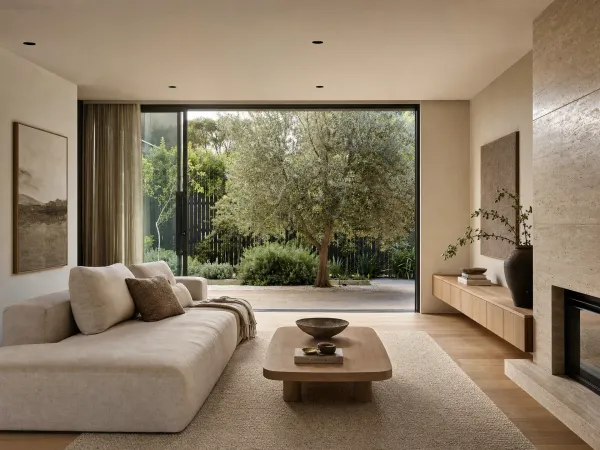
Bathroom tile ideas: materials, patterns and costs
The bathroom tile decisions that actually matter in Australia in 2026: materials, formats, patterns, grout, AU slip and waterproofing rules, real costs.
What this guide covers
Tile is the single largest visual surface in any bathroom, and the decisions you make about it lock in faster than almost anything else in the room. Once the tiles are laid and grouted, swapping them is a strip-out, not a refresh.
This is the long version of what we wish someone had told a first-time renovator before they walked into a tile showroom in 2026. It covers the materials sold in Australia and what each is good at, the formats and patterns that actually suit AU bathrooms (most are smaller than US bathrooms and built to different rules), the AU standards that govern slip rating and waterproofing, real 2026 cost ranges, the regrets we see over and over, and the cheapest way to picture the finished bathroom before you commit.
It is written for the person about to spend $20,000 to $60,000 on a bathroom, who has a Pinterest board full of ideas and no firm way to choose between them.
What “bathroom tile ideas” means in 2026
A lot of the tile inspiration that ranks on this search is still pictures of a 2018 bathroom: stark white subway in running bond, dark contrasting grout, polished chrome tapware, glossy black hex feature in the shower. That look defined a generation of Australian bathrooms and now reads as the cool, sterile end of modern, the version designers and showrooms have moved away from.
The 2026 shift across Australian bathroom showrooms and the published trend pieces (ABI Interiors, Houzz Australia, Beaumont Tiles, TileCloud, Bed Threads, Three Birds Renovations) is consistent in three directions.
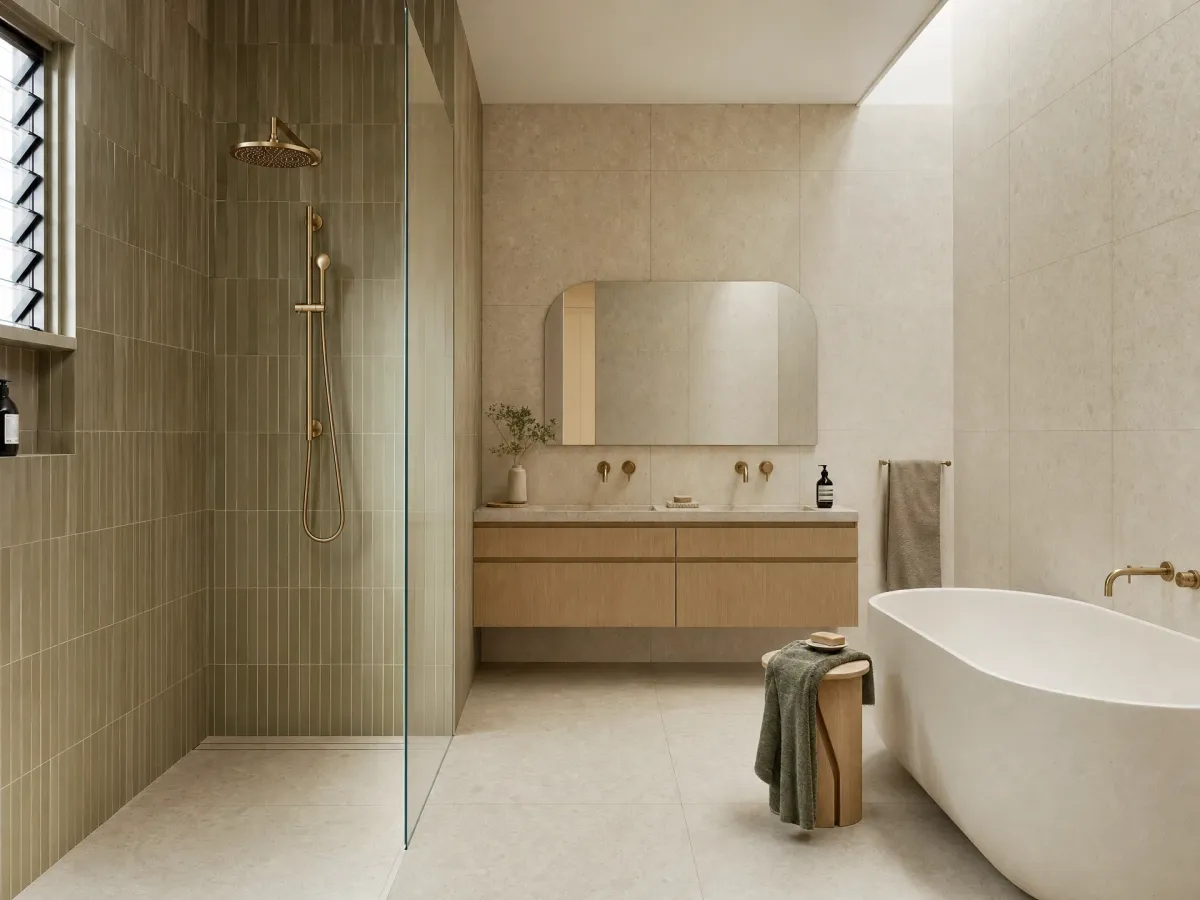
Warmth replaces white. Soft off-whites, sand, oat, travertine, putty, ochre, sage and deep green have replaced cool white and grey as the default palette. Pantone calling Cloud Dancer the 2026 colour of the year (a soft off-white rather than pure white) is one signal of the same shift across the broader design world.
Scale and texture replace pattern busyness. Large-format porcelain (600 x 600, 600 x 1200 and 800 x 800 mm and up) runs the main surfaces, with one contained moment of texture (handmade zellige, terracotta, fluted stone-look, ribbed ceramic) used as a feature rather than spread across the room.
Honest materials replace shiny imitations. Stone-look porcelain that genuinely resembles travertine, limestone or honed marble has improved enough that it now sits comfortably next to real stone in mid-range bathrooms. High-gloss tile, mirror-finish chrome and glossy white melamine vanities all read as the previous decade.
The decisions in the rest of this guide work inside that direction. The good news is that those decisions are also the cheapest, lowest-risk version of getting a bathroom that still looks current in 2031. The 2010s bathroom is harder to age out gracefully than the 2026 one will be.
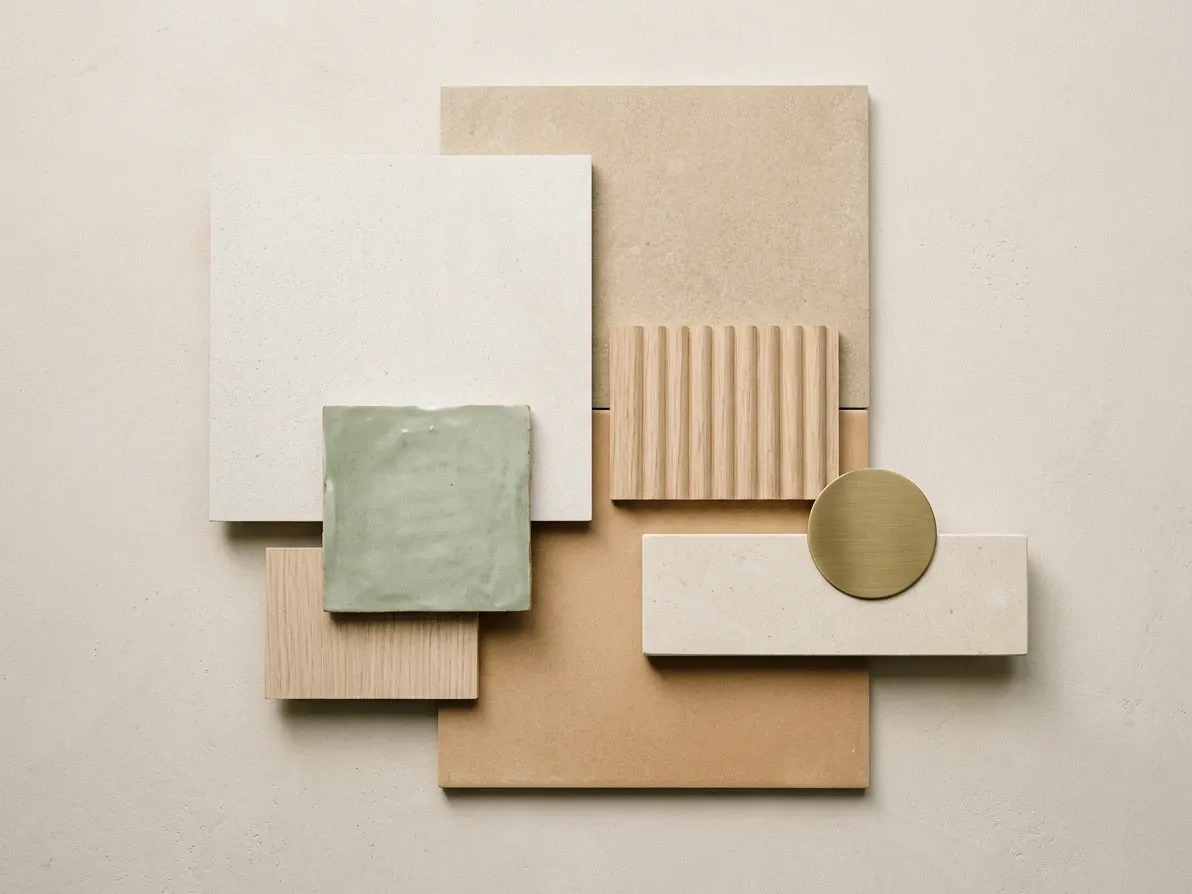
A simple palette board catches mistakes a showroom hides.
The five decisions every bathroom tile choice flows from
Walk into a tile showroom with no plan and you will leave with a phone full of photos that do not talk to each other. The five decisions below, made in this order, produce a bathroom that hangs together.
1. Palette
The single decision with the biggest visual impact. Three or four warm-neutral tones, layered across floor, walls, vanity and tapware, with one optional accent (often a deeper green, terracotta or charcoal) used in a confined zone.
The trap is treating tile as the only palette decision. The tile palette has to talk to the vanity finish, the benchtop, the tapware metal and the floor (if it carries through from the rest of the house). Pull together a small physical palette board (a tile sample, a vanity colour chip, a tapware finish and a 200 mm benchtop offcut) and look at it in your bathroom under the lighting you actually use. A warm beige porcelain that looks oat in a showroom can read pink under a builder-grade LED downlight.
What to avoid: a stark cool-white-and-grey palette (reads as 2015), a high-contrast black-and-white scheme without a warm bridging tone (reads austere), more than one feature colour across the room (the room loses its centre).
2. Zone strategy: where does tile go, and where does it stop?
Australian bathrooms tile differently to American ones, which is one reason US-led Pinterest inspiration often does not translate cleanly. Most Australian bathrooms tile the floor in full and the walls to at least 1800 mm in the shower (the minimum required under AS 3740:2021), with three common variations beyond that:
Walls tiled to 1800 mm everywhere, painted above. Cheapest approach, works in any height room, leaves you flexibility to repaint later. The horizontal break at 1800 mm can look stranded if there is no architectural element (a niche, a mirror top, a cabinet line) to anchor it.
Walls tiled to ceiling in the wet zones (shower, behind the bath), painted elsewhere. The hybrid, and the most common spec in mid-range AU renovations. The wet zones get the protection and the feature potential; the dry walls stay paintable.
Walls tiled to ceiling everywhere. The architectural choice. It costs more, but visually reads as one continuous surface and tends to make a small bathroom feel larger rather than smaller, because there is no horizontal break for the eye to stop on. In a powder room or compact ensuite this is usually the right move.
The corollary is where tile stops. The floor tile should run under a hobless shower or walk-in shower threshold in one continuous plane (the most modern look and the one all 2026 AU trend pieces are pushing), not switch to a different shower-floor tile at the threshold. Switching tile under the screen is a habit from 2010 that breaks the visual flow of the floor.
3. Material
Ceramic, porcelain, natural stone, mosaic, zellige and terrazzo each have a place. The right choice is a function of where the tile lives (floor or wall, wet or dry), what look you want and what you are prepared to maintain. The full breakdown is in the next section.
4. Size and format
Large-format tile on the main surfaces, smaller tile only where it has a job to do (shower floor grip, niche detail, pattern feature). The decision is covered in detail in the size section below; the headline is that the 600 x 600 mm tile most Australian bathrooms use today is the floor of “large”, not the ceiling. Mid-range bathrooms in 2026 are routinely specifying 600 x 1200 mm, 800 x 800 mm and 1200 x 1200 mm.
5. Pattern
Running bond, stack bond, herringbone, vertical stack, checkerboard. Pattern choice has to suit the tile shape, the room size and the install skill. A bold pattern adds 20 to 40% to the labour rate for the wall it sits on (more cuts, more alignment time) and competes for attention with everything else in the room. One pattern moment per bathroom is the safe rule, with calmer fields supporting it.
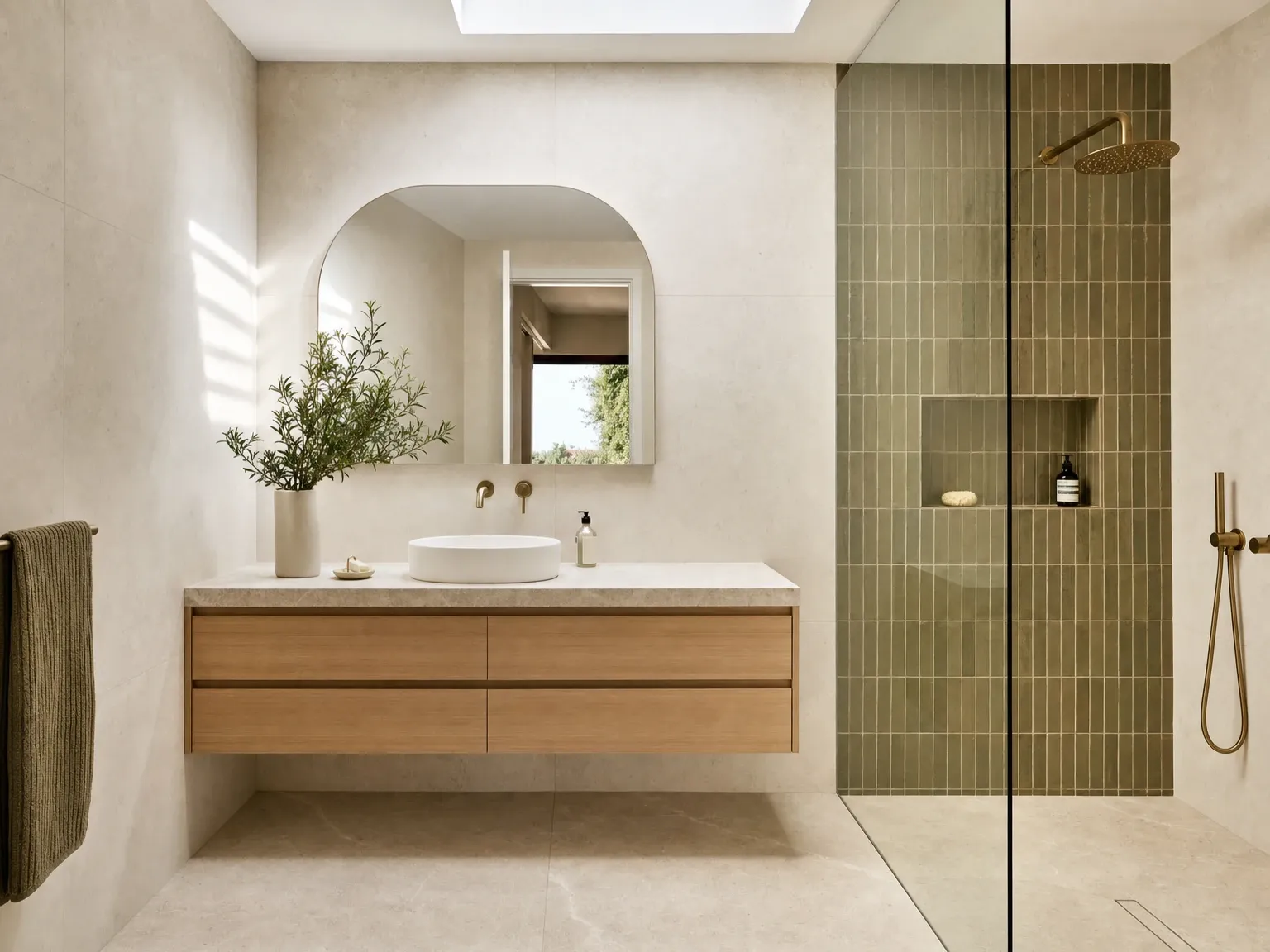
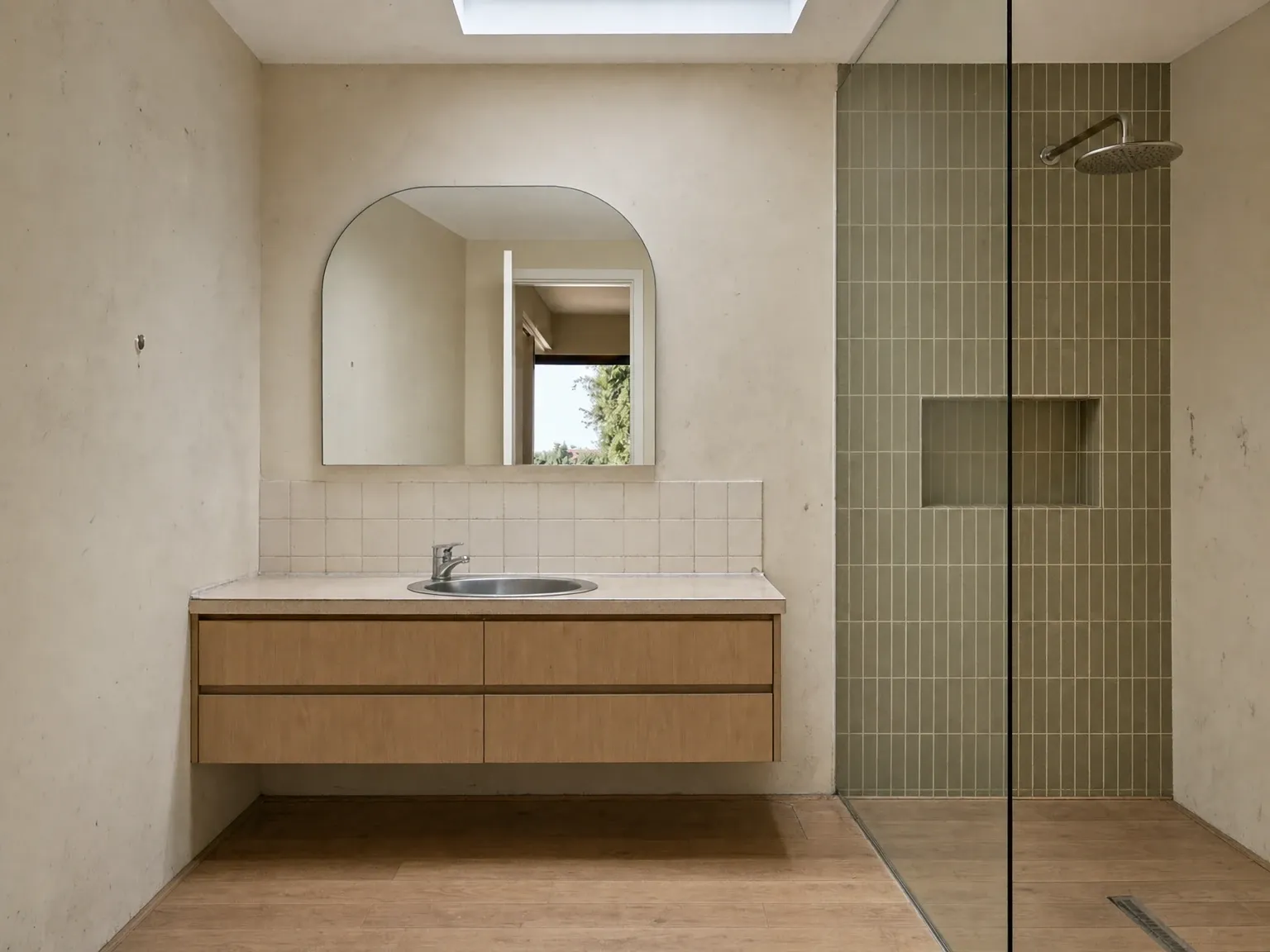 Before
After
Before
After
Material guide: what each tile is actually good at
Ceramic
The original wet-area tile. Made from clay fired at relatively low temperatures, typically with a glaze on the visible face. Absorbs 3 to 7% water by weight, which is fine on walls but borderline on bathroom floors continuously exposed to moisture. Lighter and softer than porcelain, which means easier to cut on site (good news for the tiler, slightly cheaper labour) but also easier to chip if you drop a tap-end on it.
Best for: wall surfaces above the shower splash zone, decorative or handmade-look tiles (subway, zellige-look, encaustic, ribbed ceramic) that are not load-bearing.
Watch for: ceramic on a bathroom floor is acceptable but not the strongest choice. Pick a P3/R10-rated ceramic and check the glaze is rated for floor use (not all are).
AU price range, materials only: roughly $25 to $60 per square metre for standard wall tiles, more for designer or handmade-look ranges. Labour adds $40 to $90 per square metre for a standard install. (Trade aggregator price data via hipages and Service Seeking is the source for these mid-2026 ranges.)
Porcelain
The default specification for the 2026 Australian bathroom and the right answer for most floors and most walls in most rooms. Made from finer clays at higher firing temperatures, which produces a denser, harder, less porous tile (water absorption under 0.5% by weight). Porcelain is also where most stone-look, marble-look, concrete-look and terrazzo-look tiles live, because the digital printing technology now reproduces natural stone convincingly without the maintenance overhead.
Best for: floors (always), shower walls, full-height walls, large-format installations, hobless showers where the floor needs to handle continuous water, and anywhere you want the look of stone without the seal-and-reseal lifecycle.
Watch for: porcelain is harder to cut on site and adds about 10 to 20% to the labour rate against ceramic, though the gap is closing. Rectified-edge porcelain (the standard for large format and the right call for any tile you want with a tight grout line) needs a perfectly flat substrate, otherwise the lippage between adjacent tiles is visible. Pay your tiler to screed the floor properly if you are running large-format porcelain.
AU price range, materials only: $40 to $120 per square metre for standard porcelain, $80 to $200 and up for marble-look and large-format. Labour roughly $60 to $120 per square metre for a standard install, more for large format on a wall (heavier tiles, requires two-person handling and slower setting).
Natural stone
Real marble, travertine, limestone, granite, slate. Each tile is unique, the variation is the point, and a well-laid stone bathroom carries a presence that porcelain rarely matches. The trade-off is upkeep.
Best for: hero applications where the budget supports the maintenance: a vanity wall, a freestanding-bath surround, a feature niche, premium ensuites and main bathrooms in $80,000-and-up renovations.
Watch for: most natural stone needs sealing before grouting (so the grout does not stain the stone face) and resealing every one to three years depending on porosity. Travertine and limestone etch under acid, which means anything from a splash of citrus cleaner to coffee can leave a permanent mark. Real marble stains, especially on bathroom floors near the vanity where toothpaste and skincare products land. A honed (matte) finish hides etching better than polished.
AU price range, materials only: $90 to $250 per square metre for entry-level stone, $250 to $600 for premium and exotic ranges, more for bookmatched or large slab applications. Labour adds 20 to 40% over standard porcelain because of the extra prep, sealing and slower lay rate.
Mosaic
Small tiles (typically 10 x 10 to 50 x 50 mm) on a mesh-backed sheet, in glass, porcelain, stone or metal. Mosaic earns its place in three specific spots: as a shower-floor tile (the small grout-line grid provides grip and follows the floor fall to the waste better than large tile), as a niche back, and as a feature accent on a confined wall.
Best for: shower floors (penny round, square mosaic in P4/R11 finish), niche backs, feature stripes, transition strips between two surfaces.
Watch for: mosaic costs 20 to 40% more to install than equivalent-size standard tile because of the cut-and-align labour. Wall-to-wall mosaic in a small bathroom reads as busy and dates fast. Stick to one confined zone.
AU price range, materials only: $80 to $250 per square metre for porcelain or ceramic mosaic, $150 to $450 for glass or metal mosaic, premium designer ranges higher again.
Zellige
Handmade Moroccan-style glazed ceramic, hand-pressed and hand-glazed, characteristically irregular in shape, glaze depth and surface. The look is the variation. Each tile catches light differently, the grout lines are deliberately uneven, and the wall reads as crafted rather than manufactured.
Best for: feature walls in dry zones (behind a vanity, behind a freestanding bath, an entrance niche), kitchen splashbacks, anywhere the room is calm enough to let the texture show.
Watch for: real zellige is fragile, hard to cut, expensive and requires an experienced tiler. The cheaper alternative is a porcelain zellige-look tile, which gets you 80% of the visual at 30% of the cost and a fifth of the install grief. For a shower wall, the porcelain zellige-look is almost always the right call: real zellige is hard to keep clean in a wet area because the irregular surface holds soap scum.
AU price range, materials only: real zellige $150 to $400 per square metre and up; porcelain zellige-look $80 to $180. Labour for real zellige runs 50 to 100% above standard tile because of the cutting and handling.
Terrazzo and terrazzo-look
Resin or cement bound with chips of marble, granite or glass, polished smooth. A retro-modern look that has come back hard in 2026, mostly via terrazzo-look porcelain rather than the real thing.
Best for: floors in larger bathrooms where the chip pattern has room to read, feature walls, accent zones. Pairs well with warm-neutral palettes and matte-black or brushed-brass tapware.
Watch for: real terrazzo is heavy, expensive and needs sealing. The porcelain version is more practical for almost every residential bathroom. Pick a tile where the chip scale matches the room: tiny chips in a small bathroom read as confetti; large chips in a powder room read as overwhelming.
AU price range, materials only: real terrazzo $200 to $500 per square metre; terrazzo-look porcelain $70 to $180.
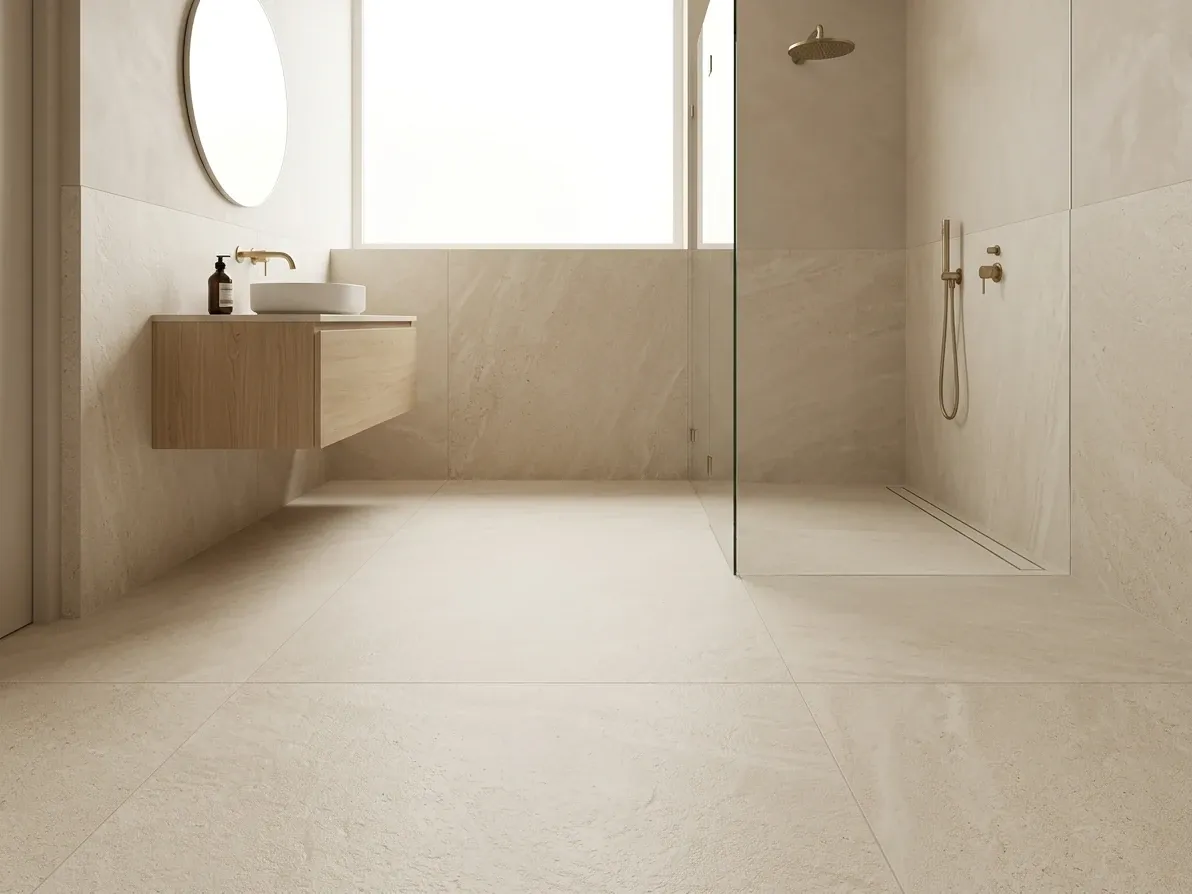
Larger tile, fewer grout lines, a calmer floor.
Size and format: large is the default
The most common upgrade we see in 2026 Australian bathroom briefs against the 2018 version is tile size. The shift is consistent across showrooms, tile retailers and the archipro tile sizing guide.
The volume size for bathroom floors in Australia is still 600 x 600 mm, but the move to larger formats is happening fast. 600 x 1200 mm, 800 x 800 mm and 1200 x 1200 mm are now common floor specs in mid-range new builds and renovations. The reason is simple: bigger tiles mean fewer grout lines, and fewer grout lines mean a calmer floor, easier cleaning and a room that reads as larger.
The trade-off is fall. Australian bathroom floors must drain to a floor waste at a minimum gradient of 1:60 to 1:80 (the standard varies; AS 3740:2021 effectively requires the fall to clear water to the waste). A large-format tile is a flat plane, and a flat plane cannot follow a curved fall to a central waste without lippage. The solutions are two:
A linear drain set against one wall, with the tile cut to fall in one plane from the opposite wall to the drain. Cleanest look, most modern, and the only practical way to use 800 mm and larger tile in a hobless shower.
A central or near-central waste with a slightly smaller tile (600 x 600 mm is usually the practical ceiling) cut into a dished fall on four planes. Works in any small bathroom, more cuts.
Inside the shower itself, the tile size question changes again. Continuous large-format floor tile is the architectural look (it makes the floor read as one continuous plane) but it forces the linear-drain solution. A small mosaic on the shower floor, with the same large-format tile on the walls and on the bathroom floor outside the shower, is the easier-to-build alternative and is what most mid-range AU bathrooms specify.
The shape of the tile also matters. A rectangular 600 x 1200 mm or 600 x 600 mm rectified-edge tile reads as more current than a 400 x 250 mm tile, which is now the size most often associated with budget builder-grade work. Square is calmer than rectangular at the same scale.
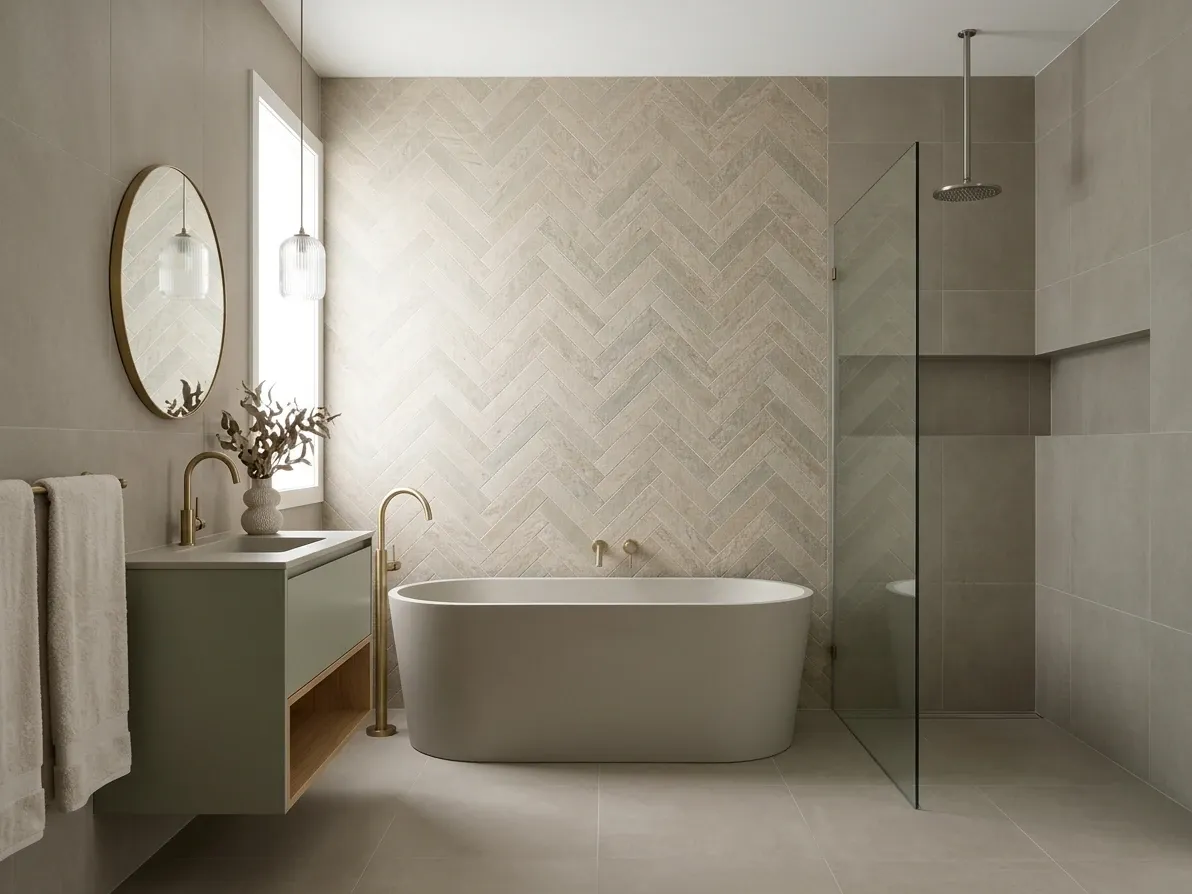
One feature pattern, one wall: where it earns its place.
Pattern: one statement, not five
Pattern choice is the most overdone decision in bathroom tile. The temptation is to introduce a different layout in every zone (herringbone on the feature wall, stack bond in the shower, basket-weave on the floor, penny round in the niche). The result is a room of competing rhythms.
The discipline that produces calmer bathrooms is one statement pattern per room, on a contained surface, with the rest of the room running the same tile in a simple running bond, stack bond or grid.
Running bond (offset brick)
The classic subway-tile layout: each row offset by half a tile from the row above. It is the default for a reason. The offset hides minor variations in tile size and grout spacing, which makes it forgiving to install and forgiving of any tile that has natural variation (handmade, zellige, encaustic). It also reads as conventional, which is either a virtue (it lets the tile material carry the room) or a limitation (it adds nothing of its own).
Stack bond (vertical or horizontal grid)
Tiles aligned in a strict grid, no offset. The cleaner, more architectural choice and the layout that 2026 trend pieces consistently call current. Stack-bond subway tiles look completely different to running-bond ones: the same tile reads as modern in a grid and traditional in an offset. Stack bond is less forgiving of inconsistent tile sizes (any variation shows immediately along a grid line), which is why it works best on rectified-edge tile.
Vertical stack
Subway tile laid vertically and stack-bonded. Draws the eye up, makes a low ceiling feel taller, and is one of the easier 2026-update moves on a tight budget. Works particularly well in a powder room or compact ensuite.
Herringbone
Rectangular tiles laid at 45 degrees in a V pattern, or at 90 degrees (sometimes called “straight lay herringbone”). Visually striking, more expensive to install (more cuts, more alignment time, 30 to 60% labour premium on the wall it lives on), and best confined to one zone: a feature wall in the shower, a vanity wall, a niche back. A whole-room herringbone is a lot to live with day to day.
Checkerboard
A 2026 revival, reinterpreted out of the black-and-white version that ran from the 1980s into the 2010s. The modern read is two warm tones (oat plus deep green, terracotta plus cream, sand plus charcoal) in a square format on the floor, or a small checker behind the vanity. Avoid the high-contrast version: it reads instantly retro and tends to date.
Penny round and mosaic patterns
Best contained to the shower floor or a niche back, as discussed in the mosaic section. A whole-wall penny round is rarely the right call in 2026.
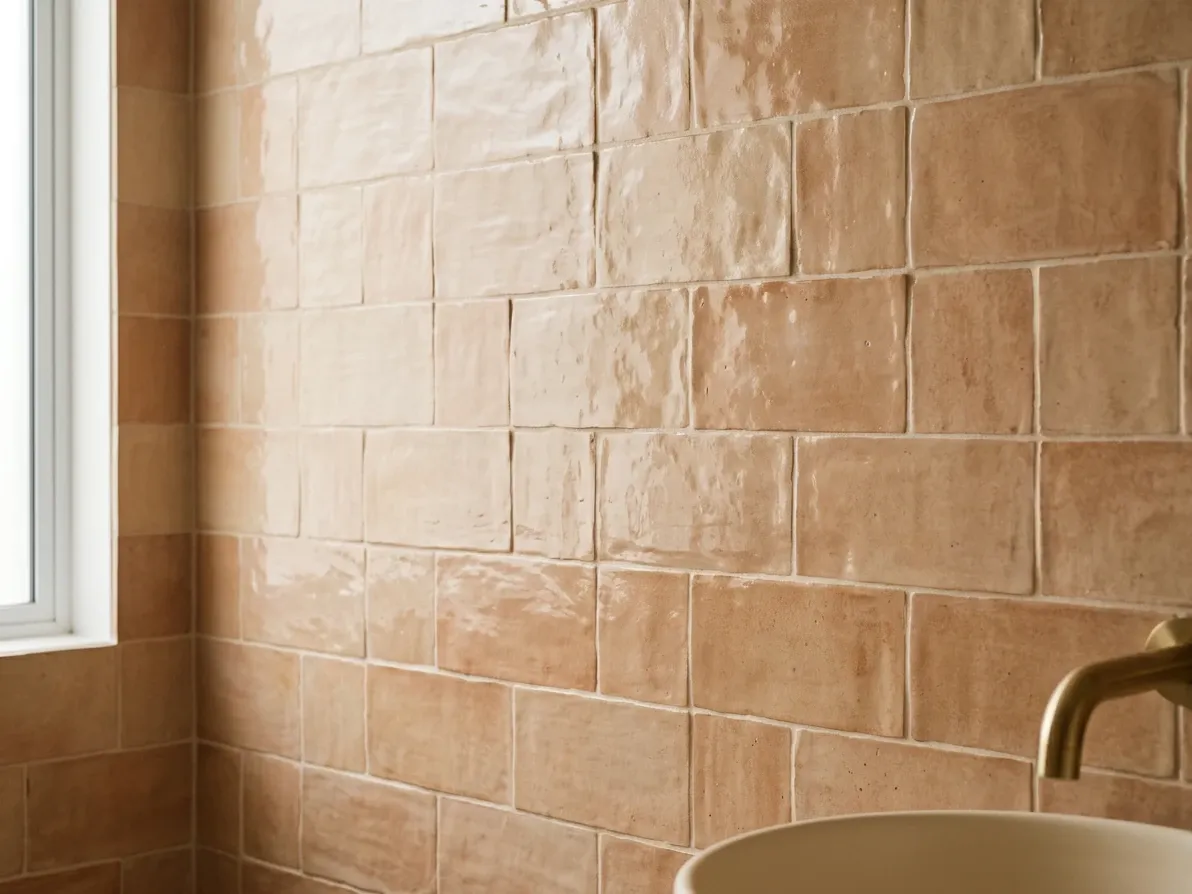
Matched-tone grout lets the colour read, not the grid.
Colour and grout
Tile colour is half the decision. Grout colour, which sits between every tile, is the other half. Most regret-and-redo stories we hear about bathroom tile are not about the tile itself, they are about the grout.
The principle that almost always holds: match the grout to the lightest tone in the tile rather than the darkest. White grout against white tile is a maintenance commitment (it stains, mineral-spots and yellows quickly), but white grout against off-white or sand tile reads as continuous and is forgiving because the difference between fresh and slightly-aged grout is barely visible. Dark grout against any tile is the look that 2026 designers most often call dated, and the reason is the same: the lattice fights the tile.
For high-traffic walls and any floor, epoxy grout is the 2026 default at mid-range and up. Epoxy is resin-based rather than cement-based, non-porous, stain-resistant, never needs sealing and holds its colour for decades. The trade-off is cost (20 to 40% more than cement grout) and install difficulty (a more skilled job, harder to clean off the tile face during installation, much harder to re-grout later). For a bathroom you intend to live with for ten years or more, the maths usually works.
Three specific colour pairings are worth flagging because they are the ones that most often hold up.
Off-white tile with light grey grout reads as warmer and more forgiving than off-white tile with white grout, and is the safer move for a family bathroom.
Warm tile (terracotta, sand, zellige) with grout matched to the lightest tone in the tile lets the tile colour read, rather than fighting it with a grid.
Saturated tile (sage, deep green, navy) with a tone-on-tone grout (a grout that is one shade lighter than the tile) keeps the wall reading as one colour from a distance, with the geometry visible up close. The dark grout against saturated tile look is harder to land and tends to read heavier than expected.
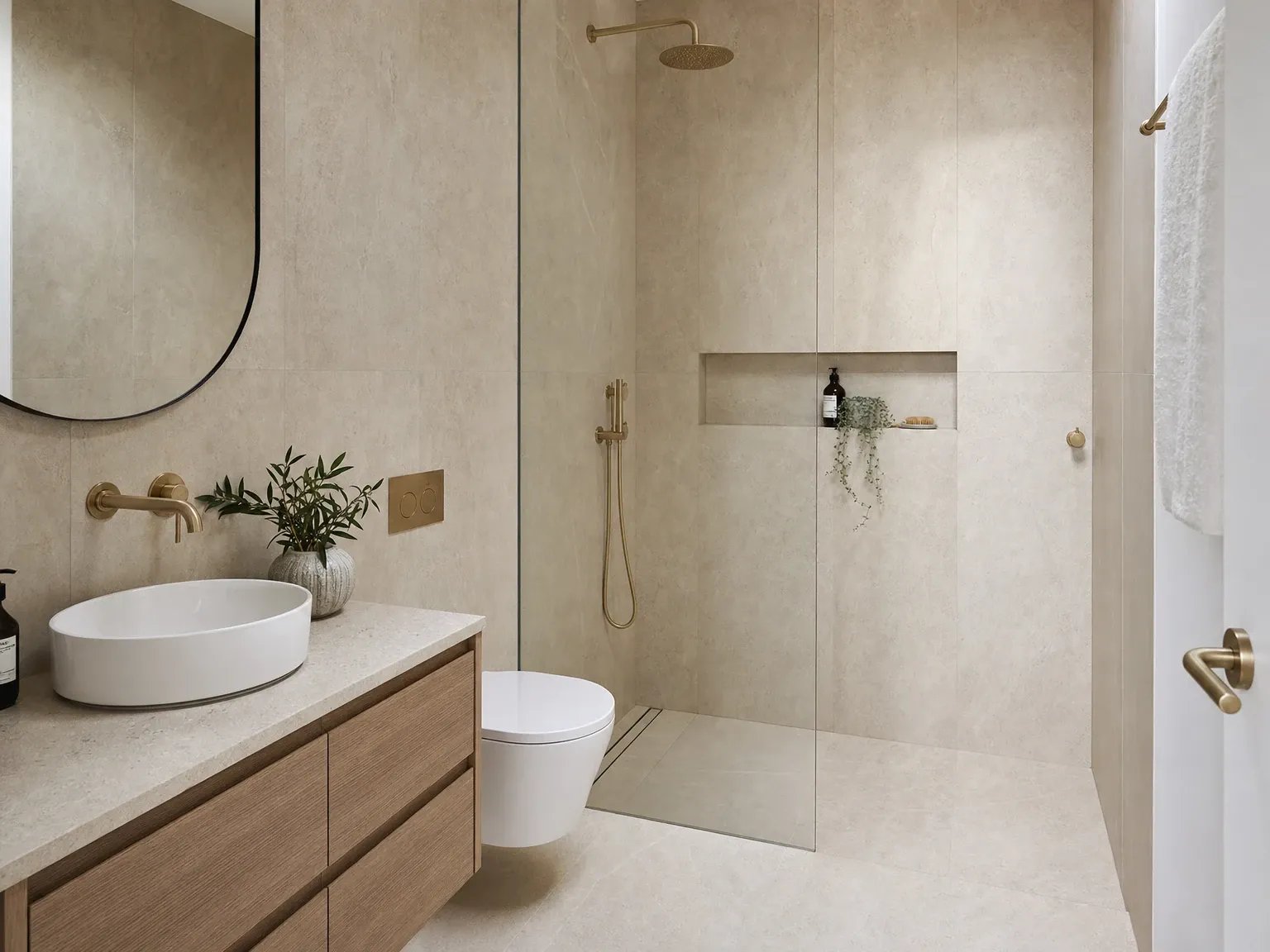
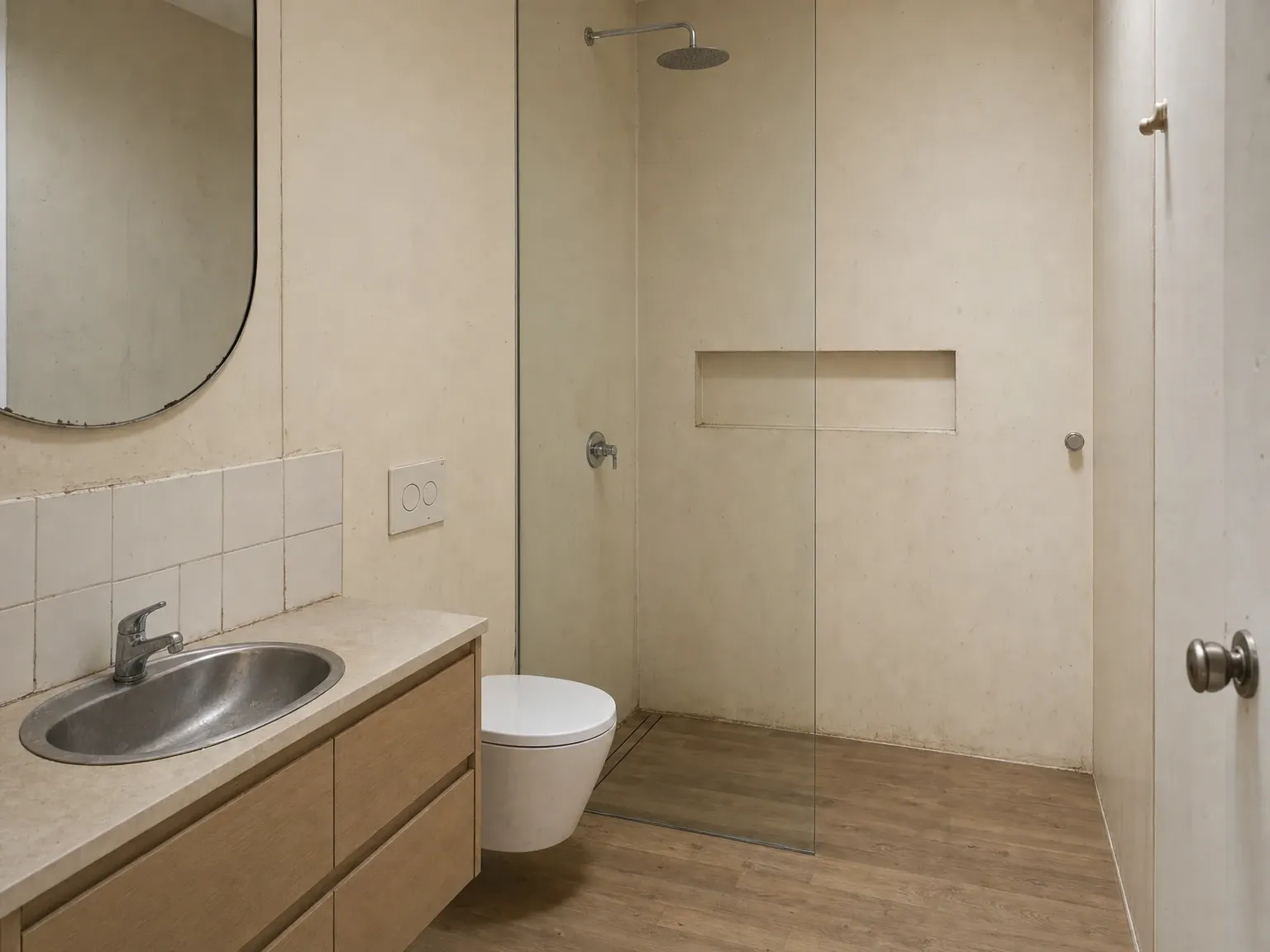 Before
After
Before
After
Small bathroom tile moves that genuinely work
A separate guide on this site goes through the layout decisions that make a small bathroom feel bigger. On tile specifically, four moves consistently move the perceived size needle.
Run the same tile floor to ceiling on every wall, with matched-tone grout. Every change of material or colour is a horizontal break that the eye reads as a boundary. Continuous tile reads as a resolved volume rather than a chopped-up room.
Use the same tile on the bathroom floor and the shower floor (where layout allows). The floor reads as one continuous plane and the room reads larger. This usually requires a linear drain rather than a central waste.
Choose a large-format tile, even if the room is small. The instinct to scale tile to the room is wrong. Smaller tiles in a small room produce more grout lines, more visual noise and a busier floor that highlights the room’s size. Large-format porcelain (600 x 600 mm minimum, 600 x 1200 mm and up if the floor waste allows) calms the room.
Tile the ceiling, or run the wall tile onto a soffit. A flush tiled ceiling above the shower is one of the more architectural moves available in a small bathroom and removes the strongest horizontal stop in the room.
The opposite move in a powder room: lean into contrast. A powder room is a room no one stays in, so making it interesting rather than spacious is the right priority. A bold tile feature, a saturated grout, a wallpapered upper wall over a tiled wainscot, all of these read as character in a room that is too small to need calming.
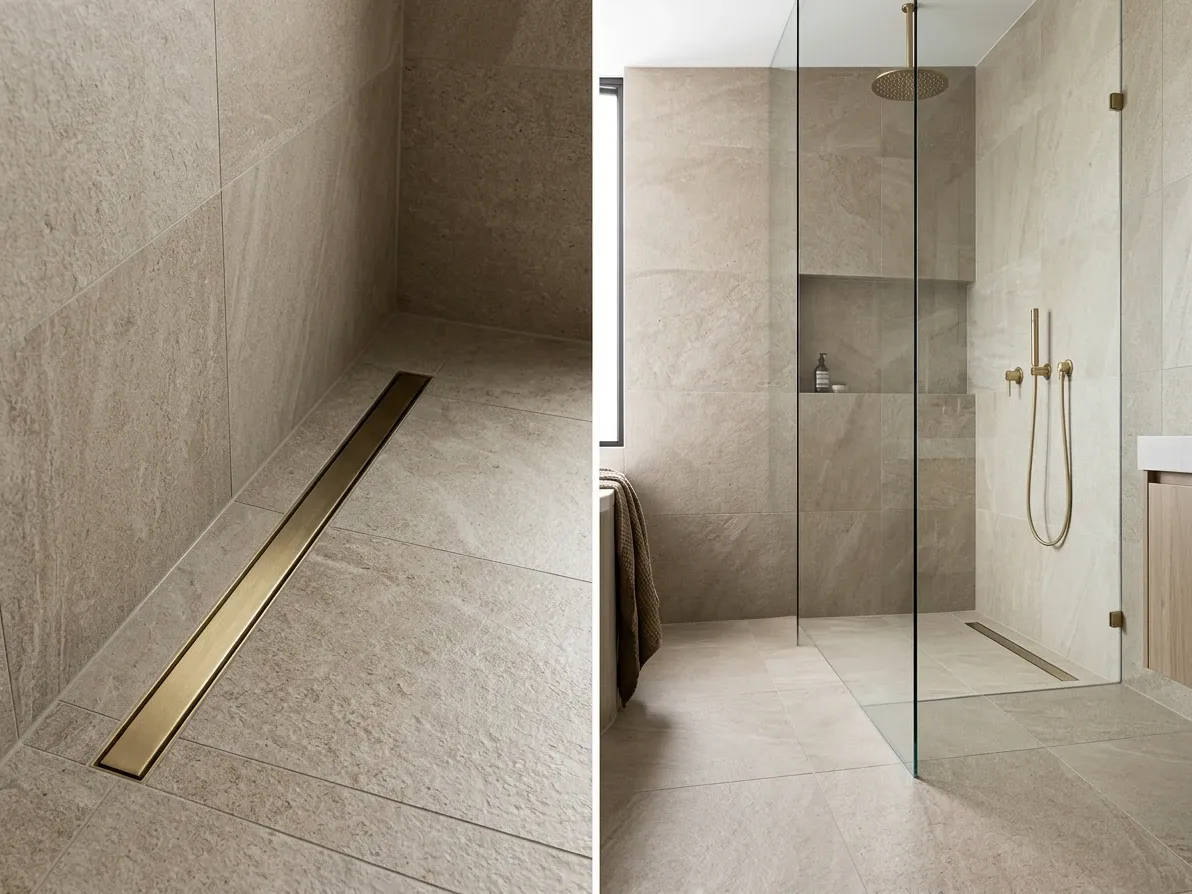
Hobless shower with linear drain meets AS 3740 and reads modern.
The Australian rules tile has to meet
Three Australian standards govern what tile you can put in a bathroom and how.
AS 3740:2021, Waterproofing of domestic wet areas. The whole shower floor and shower walls must be waterproofed to 1800 mm above floor level, and the bathroom floor must be waterproofed to at least 100 mm up every wall (more if the floor is timber-framed). The waterproofing membrane is applied to the substrate before tile, must reach a minimum dry film thickness of 1.0 to 1.5 mm, and must cure for 24 to 72 hours before tiling can start. The floor must fall to the floor waste at a gradient between roughly 1:60 and 1:80. Waterproofing is the single most common defect in Australian bathroom renovations according to multiple Master Builders state reports, which is why a separate licensed waterproofer signing off before the tiler arrives is now standard practice on any half-decent build.
AS 4586, Slip Resistance Classification. Tile manufacturers test floor tile for slip resistance under the Pendulum Test (P-rating) or the Ramp Test (R-rating). The numbers are independent of each other and either is acceptable. For a residential bathroom floor outside the shower, P3 or R10 is the working minimum, with P4 or R11 specified inside the shower itself. The Australian Building Codes Board only mandates slip ratings on stair nosings, landings and ramps, but every credible AU tile retailer, builder and warranty scheme follows the residential bathroom convention.
WaterMark and WELS. Tile is not directly regulated by either scheme, but the tapware and outlets you specify with it are. Tapware must carry the WaterMark licence and meet WELS minimum water efficiency (the 9 L/min shower head limit on new work is the one most often hit). This matters when picking a tile because the tapware finish is one of the four palette decisions tile has to coordinate with.
A renovation that ignores AS 3740 is the renovation that fails its insurance test, fails defect inspection on resale, and gets reported as a leaking-shower job to NSW Fair Trading two years later. None of these standards are optional in practice.
What it actually costs
The numbers below are realistic 2026 ranges for a tiled Australian bathroom, drawn from hipages, Service Seeking and trade aggregator price data, plus the published Housing Industry Association bathroom averages. Everything is inclusive of GST.
Materials per square metre run roughly $25 to $60 for standard ceramic, $40 to $120 for standard porcelain, $80 to $200 for large-format and marble-look porcelain, $90 to $250 for entry-level natural stone, and $80 to $180 for porcelain zellige-look or terrazzo-look ranges. Designer and imported ranges run higher again.
Labour per square metre runs $40 to $90 for standard wall tile, $50 to $120 for floor tile, $60 to $150 for large-format porcelain, and an extra 30 to 60% on the wall labour rate for a herringbone or other complex pattern. Metro Sydney and Melbourne run 10 to 20% above the national average.
A typical 6 to 8 square metre Australian bathroom carries 25 to 35 square metres of tile (floor plus walls to 1800 to 2400 mm). For a standard mid-range porcelain spec, that puts materials at roughly $2,000 to $5,000 and labour at $1,500 to $5,000 before waterproofing, adhesives and consumables. Add waterproofing at $500 to $1,200 and consumables at $200 to $500.
Where this sits in the total bathroom budget: tile supply and installation typically runs 20 to 25% of the total cost of a renovation according to Master Builders Australia breakdowns, with plumbing another 20 to 25%, waterproofing 5 to 10%, electrical around 10%, and the balance across the vanity, screen, fixtures, demolition, contingency and builder margin. The HIA national average for an Australian bathroom renovation sits around $26,000.
- Labour$11,70045%
- Materials and fittings$9,10035%
- Permits, waste, margin$5,20020%
Three places the budget consistently runs over. Mid-build changes to the tile spec (“we changed our mind on the feature wall”) almost always add 10 to 20% in variation cost plus rework. Choosing a tile not held in local stock and waiting weeks for it during a tiling window your builder has booked. Ordering 10% wastage and discovering on day two that herringbone wants 15 to 20%. Order generously, lock the selection before the contract is signed, and pick from in-stock or short-lead ranges.
Picture it before you commit
Tile is the decision most often regretted in a bathroom, and the regrets are almost always the same kind: the off-white looked too pink, the matt-black grout looked too dramatic, the herringbone feature took over the room, the floor tile clashed with the vanity. All of these are visible before the tile is laid if you take the time to look.
Build a focused Pinterest board (30 to 50 references, all in the warm-minimalist direction you have chosen) and look at it for a week before deciding. Patterns will emerge.
Order full-size physical samples of every tile under serious consideration, and order a vanity colour chip, a tapware finish and a benchtop offcut to sit beside them. Tape the samples to the actual wall they will live on, leave them for a week, and look at them at every time of day you use the bathroom (the early-morning shower, the evening face-wash, the Sunday-afternoon clean). Showroom lighting is the wrong lighting.
Use the free 3D bathroom planners from Reece, Beaumont Tiles and Highgrove if you are buying their product. They are brand-locked and the visualisation is decent.
For a brand-agnostic photoreal visualisation of your specific bathroom with your selected tile, vanity, tapware and screen, services like reIMG turn a phone photo and a brief into a finished image in 24 hours for around $100 to $150. The point of the exercise is not the image, it is the catch: the spec that looks beautiful as a moodboard and reads wrong as a finished room is cheaper to find now than after the tiler has laid 30 square metres.
Frequently asked questions
What bathroom tile is most popular in Australia in 2026?
Large-format porcelain in stone-look or marble-look finishes dominates Australian bathroom floors and walls in 2026, with 600 x 600 mm still the volume size and 800 x 800 mm, 600 x 1200 mm and 1200 x 1200 mm growing fast on the floor. On walls, the recurring pattern across Australian showroom data and 2026 trend reports is large-format porcelain as the main surface, with one accent moment: a handmade zellige or terracotta feature wall, a herringbone shower niche, or a textured stone-look behind the vanity. The palette has shifted from cool white and grey to warm off-whites, sand, travertine, ochre, sage and deep green. Plain glossy white subway tile with dark contrasting grout is the look most often called dated by Australian designers heading into 2026, though subway formats themselves remain relevant when laid in stack-bond, herringbone or vertical orientations and grouped with modern colours.
What’s the difference between ceramic and porcelain tiles?
Porcelain is denser, harder, less porous and more water-resistant than ceramic. Porcelain absorbs less than 0.5% water by weight, ceramic absorbs around 3 to 7%. That matters in a wet area: porcelain is the safer choice for bathroom floors, hobless showers and any tile that gets continuously wet, and it is the default choice for outdoor and pool-surround tile in Australia. Ceramic is fine for bathroom walls above the splash zone and is usually 30 to 40% cheaper than equivalent-look porcelain. Most marble-look, stone-look and terrazzo-look tiles sold in Australia are porcelain because the technology now reproduces natural stone convincingly without the sealing, staining and chip risk of real marble. Australian trade tile prices in 2026 run roughly $25 to $60 per square metre for standard ceramic and $40 to $120 per square metre for standard porcelain, with natural stone $90 to $250 and beyond.
What grout colour should I choose with white tile?
Light grey is the safest, most forgiving choice for white tile in an Australian bathroom and the one most designers default to. Pure white grout looks beautiful for about six months and then starts catching everything (soap scum, hair dye, mineral staining from hard water in Perth, Adelaide and parts of Sydney), needing weekly cleaning to stay white. Dark grey or black grout with plain white tile is the look 2026 trend pieces most often flag as dated. If you want crisp white grout that stays crisp, specify epoxy grout (resin-based, non-porous, never needs sealing) and pay the 20 to 40% premium on the grout line. For coloured, terracotta and zellige tile, match the grout to the lightest tone in the tile rather than the dominant one: it lets the colour read rather than fighting a grid against it.
What’s the minimum slip rating for a bathroom floor in Australia?
There is no federal regulation requiring a specific slip rating for residential bathroom floors in Australia, but the industry standard and the rating insurers and warranty providers expect is P3 (Pendulum Test) or R10 (Ramp Test) as the minimum for a bathroom floor and the dry side of a shower threshold. For inside the shower itself, P4 or R11 is the right target because the floor is continuously wet and soapy. Both ratings are measured under AS 4586. The trade-off with higher slip ratings is texture: an R11 tile has a coarser surface that traps soap scum and dirt faster than an R10, so cleaning effort steps up. The Australian Building Codes Board only mandates slip ratings on stair nosings, landings and ramps, but most tile retailers, builders and warranty schemes follow P3/R10 as the residential bathroom floor standard.
Are subway tiles still in style in 2026?
Subway tiles are not finished, but the plain glossy white subway tile in a running bond with dark contrasting grout is the version that 2026 Australian designers most often flag as dated. The format works in 2026 when one or more of three things is true: the tile is handmade or has visible variation in glaze (zellige, hand-pressed ceramic) rather than mass-produced flat white, the colour is warm or saturated (terracotta, sage, deep green, oat) rather than stark white, or the layout is stack-bond, vertical stack or herringbone rather than the default offset brick. Subway formats remain the most forgiving tile to install for first renovators because the running bond hides minor inconsistencies. The thing to retire is the look, not the format.
Should I use the same tile floor-to-ceiling in a small bathroom?
In a bathroom under 4 square metres, running one tile from floor to ceiling on every wall is one of the most reliable ways to make the room feel bigger. The visual reasoning is simple: every change of material, colour or texture is a horizontal break that the eye reads as a boundary, and breaks make a small room feel chopped up. Continuous tile lets the eye travel without stopping, and the room reads as a single resolved volume. The same trick works on the floor: extending the floor tile under a hobless or walk-in shower (rather than switching to a smaller shower-floor tile) holds the room together. Pair continuous tile with matched-tone grout to push the effect further. The exception is a powder room where you genuinely want a moment of contrast: a wallpapered upper wall with a tiled lower wall reads as a feature in a room that does not need to feel bigger because no one stays in it.
How much does it cost to tile a bathroom in Australia in 2026?
Including tiles, adhesive, grout and labour, expect roughly $80 to $150 per square metre of finished tiled surface for a standard porcelain installation, $50 to $90 for ceramic, and $150 to $300 for natural stone or premium imported tile. A typical 6 to 8 square metre Australian bathroom carries 25 to 35 square metres of tile (floor plus walls to 2.0 to 2.4 m high), which puts a complete porcelain tiling job at roughly $2,000 to $5,000 for materials and $1,500 to $5,000 for labour, before waterproofing. Master Builders Australia and Housing Industry Association breakdowns put tile supply and laying at around 20 to 25% of the total bathroom renovation budget, which sits within the HIA national bathroom average of roughly $26,000. Feature walls in herringbone or other complex layouts add 30 to 60% to the labour rate for that wall. Sydney and Melbourne metro labour rates run 10 to 20% above the national average.
Where should I put feature tile in a bathroom?
The rule of thumb that holds up across Australian designers is one feature moment per bathroom, not three. The four spots where a feature tile most often earns its place are: the wall behind the vanity (the wall you see most often, framed by the mirror), the wall behind the toilet or freestanding bath (the deepest wall in the room, which carries colour well), inside the shower as a full feature wall (the back wall opposite the screen), and the shower niche (the smallest commitment, easy to swap later). Spreading feature tile across multiple zones turns the room into a patchwork. The cleanest pattern is to pick one primary tile that runs the room and one accent that lives in a single contained zone. The accent is also where handmade tiles (zellige, terracotta, encaustic) belong, because their texture and variation read best when there is a calm field around them to set them off.